Introduction
When shopping for natural jadeite jewelry, understanding how professionals evaluate quality is the key to making a confident purchase. Unlike diamonds, jadeite has no single universal grading standard, but gemologists and experienced dealers consistently rely on a few core factors—color, transparency (often called ‘water’), and texture—to determine a stone’s value and beauty. At VirtuCasa’s jadeite collection, every piece is crafted from natural jadeite, offering you the chance to own authentic gems with distinctive character. This guide will walk you through the essential principles of jadeite grading so you can choose a piece that speaks to you and holds lasting worth.
Understanding Quality
Jadeite value is assessed by a combination of three primary characteristics. According to GIA’s jade quality factors, these are color, transparency, and texture—in that order of importance. Together they define a stone’s grade, rarity, and appeal.
Color
Color is the single most influential factor. The most prized jadeite exhibits an intense, even green described as ‘imperial green,’ but other hues such as lavender, yellow, and white are also highly valued. For example, VirtuCasa’s Natural Full-Green Jadeite Saddle Ring showcases an even ‘full green’ coloration with a warm vitreous luster. Similarly, the Natural Jadeite Tassel Earrings display a deep, vibrant green that is rich and compact. Even stones with multiple colors, like three-color combinations of yellow, white, and green, are prized for their rarity and artistic appeal, as seen in the Natural Three-Color Jadeite Bracelet.
Transparency (Water)
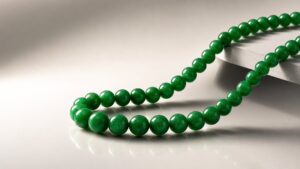
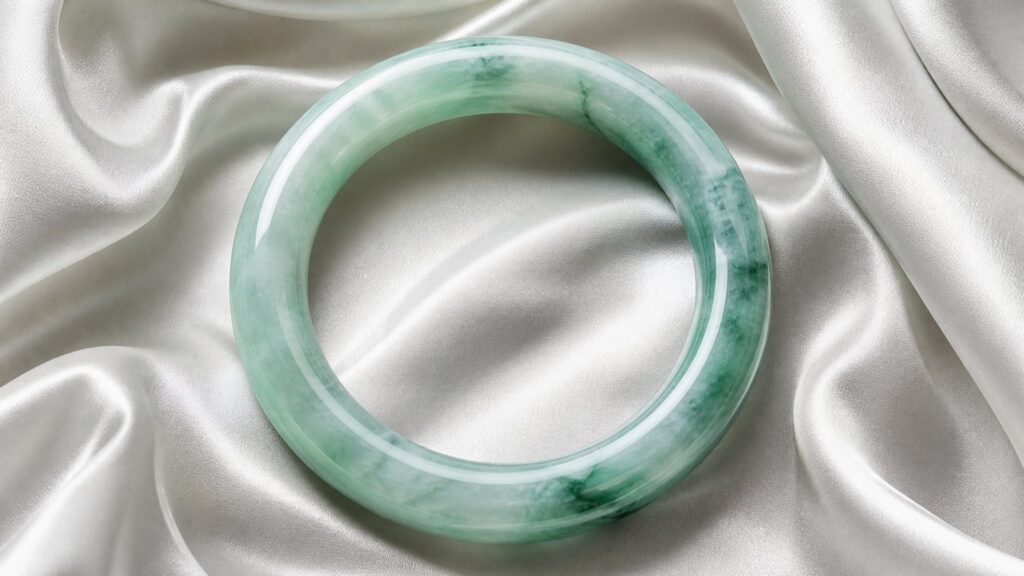
Transparency in jadeite is referred to as ‘water’ and ranges from opaque to highly translucent. Ice-type jadeite—a term used for stones with exceptional clarity and a glassy sheen—commands a premium. VirtuCasa’s Natural Ice-type Jadeite Bracelet with Floating Green Patterns is a prime example: its transparent, delicate texture and cool glassy luster illustrate why ice-type jadeite is so sought after. The Natural Ice-type Violet Jade Bead Necklace also demonstrates this quality with translucent, glossy lavender beads.
Texture
Texture refers to the fineness and compactness of the internal crystal structure. A smooth, almost waxy feel under the finger indicates high-quality jadeite. All VirtuCasa pieces, such as the Natural Jadeite Bracelet with its delicate and smooth lavender-white beads, are crafted from natural stones that reveal their texture through a gentle vitreous luster. A fine, even texture enhances light reflection and overall beauty, whether the stone is opaque or nearly transparent.
Types & Styles
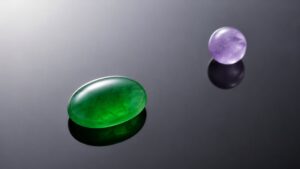
Jadeite jewelry comes in many styles, each highlighting different grading aspects. Ice-type pieces prioritize transparency; VirtuCasa offers multiple ice-type items, including the Natural Ice-type Tricolor Jade Necklace (yellow, green, white) and the Natural Ice-type Tricolor Jade Necklace (green, yellow, orange). Lavender jadeite is beloved for its soft, elegant hue, as seen in the Natural Ice-type Violet Jadeite Cabochon Ring Set and the larger bead necklace. Full-green pieces, like the saddle ring, represent classic jadeite that appeals to traditional tastes. Three-color jadeite, which combines two or three natural hues, is rare and often valued for its unique patterns—perfect for collectors who appreciate one-of-a-kind designs.
How to Choose the Right Size & Fit
Jadeite jewelry should be comfortable as well as beautiful. Bracelets like the Natural Jadeite Bracelet feature 19 beads of about 10mm diameter with an 18cm circumference, fitting wrists of 16–19cm. The three-color bracelet has 16 larger beads (12mm) with an adjustable elastic design for most wrists. Rings are sized traditionally: the Full-Green Saddle Ring is size 24, the Floating Green Saddle Ring is size 26, and the Ice-type Violet Cabochon Ring is size 15. Earrings, such as the tassel pair, measure about 6cm in total length for a graceful drop. Necklaces vary in bead diameter—from 3.5mm to 12mm—and in total weight, so choose a length and weight that feels neither too heavy nor too light for daily wear.
Price & Value
Several factors drive jadeite pricing: color intensity, transparency, texture uniformity, size, and craftsmanship. A premium piece like the Natural Ice-type Violet Jade Bead Necklace at $6649 reflects the rarity of large, uniformly translucent lavender beads. In contrast, entry-level options such as the Natural Three-Color Jadeite Bracelet ($668) and the Natural Jadeite Saddle Ring with Floating Green ($719) provide authentic jadeite beauty at accessible price points. Mid-range pieces include the tassel earrings ($852) and the ice-type tricolor necklaces ($740 and $825). As you move into premium territory, translucent ice-type and full-green pieces such as the Ice-type Bracelet with Floating Green Patterns ($1517), the violet cabochon ring set ($1926), and the full-green saddle ring ($2437) demonstrate how transparency and vivid color elevate cost. The highest investment—$6649—belongs to the substantial ice-type violet necklace, a collector’s treasure for those seeking top-tier water and color.
Common Mistakes to Avoid
- Confusing jadeite with nephrite. Jadeite is the rarer, more valuable form of jade; always verify your piece is natural jadeite, not nephrite or a treated stone.
- Ignoring transparency. Many buyers focus only on color, but transparency (ice or translucency) often separates average from exceptional jadeite.
- Overlooking texture. A rough or grainy surface can indicate lower-grade material. Look for a smooth, even feel.
- Relying solely on price. Expensive does not always mean perfect—check each piece’s color evenness, clarity, and craftsmanship.
- Forgetting size and fit. Especially for rings and bracelets, verify your measurements to ensure a comfortable wear.
Top Picks
Based on grading principles and variety, here are five standout VirtuCasa pieces for different buyers:
- Best for entry-level collectors: Natural Three-Color Jadeite Bracelet ($668) – Combines three natural colors in a smooth, polished bracelet that demonstrates jadeite’s unique beauty without a high investment.
- Best for everyday elegance: Natural Jadeite Tassel Earrings ($852) – Rich green color and a graceful swing design, set with 18K gold-plated chains for a touch of luxury that suits daily wear.
- Best for transparency lovers: Natural Ice-type Jadeite Bracelet with Floating Green Patterns ($1517) – A prime example of ice-type jadeite with floating green on a translucent base; substantial weight (101g) and 16mm beads make a statement.
- Best for traditional style: Natural Full-Green Jadeite Saddle Ring ($2437) – Even ‘full green’ color and classic saddle design, carved from a single jadeite piece—ideal for those who appreciate heritage aesthetics.
- Best for serious collectors: Natural Ice-type Violet Jade Bead Necklace ($6649) – 68 beads of translucent lavender, ranging from 10 to 12mm, weighing 158g; a rare investment piece that showcases top-tier ice-type jadeite.
Final Tips / Conclusion
Understanding jadeite grading empowers you to evaluate quality with confidence. When browsing, trust your eye: a piece that looks beautiful under natural and artificial light, feels smooth, and fits comfortably is likely a wise choice. Always buy from a reputable marketplace like VirtuCasa that confirms natural origin. For further reading, refer to Pala International’s jadeite buying guide and Jewea’s essential jadeite terms guide for more expert insights. Whether you seek a subtle lavender necklace or a vibrant green ring, the joy of natural jadeite lies in its timeless blend of art and nature.
FAQ
What are the three most important factors in jadeite grading?
According to gemological standards, the three primary factors are color, transparency (or ‘water’), and texture. Color holds the greatest weight, followed by transparency, then the fineness of the stone’s internal structure.
What does ‘ice-type’ jadeite mean?
Ice-type jadeite refers to a grade of jadeite with high transparency and a clear, glassy luster, resembling ice. It is highly valued for its purity and is often used in premium jewelry like the Natural Ice-type Violet Jade Bead Necklace.
How can I tell if a jadeite piece is natural?
Always purchase from a trusted seller who provides natural origin guarantees. Natural jadeite will have subtle color variations, microscopic inclusions, and a smooth, waxy texture. Treated stones often look too uniform or unnaturally bright. Reputable exporters like VirtuCasa list each piece as natural jadeite.
Are three-color jadeite pieces rare?
Yes, jadeite that naturally combines two or three distinct colors (e.g., yellow, green, white) is relatively rare and prized for its uniqueness. The Natural Three-Color Jadeite Bracelet and Natural Ice-type Tricolor Necklaces are excellent examples.