Introduction
Green is the color most synonymous with jadeite jade, and its varying shades and intensities determine much of a piece’s desirability and value. For collectors and enthusiasts, understanding the spectrum of green — from the deepest imperial tones to subtle floating patterns — is essential to making informed purchases. At VirtuCasa’s jadeite collection, you will find natural jadeite pieces that showcase this remarkable range, each with its own character and price point. This guide explains the grades, quality factors, and market value of green jadeite, helping you navigate the nuances of color and find a piece that resonates with your taste and budget.
Understanding Quality
Jadeite quality is evaluated through several interrelated factors, with color being the most prominent. However, transparency, texture, and the evenness of color distribution also play critical roles. According to gemological grading standards from the Gemological Institute of America, jadeite is assessed on color, translucency, and texture — known collectively as the “three T’s” in the trade. The most valuable green jadeite combines a vivid, saturated hue with a high degree of translucency and a fine, smooth internal structure.
Color
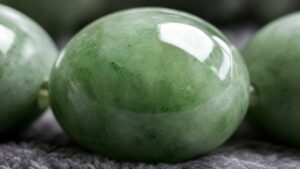
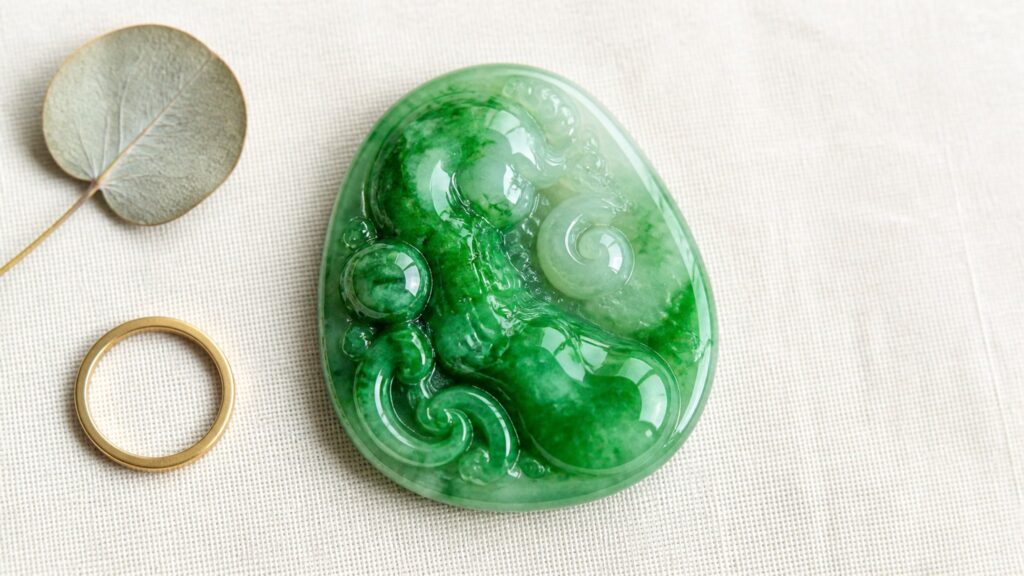
Green jadeite ranges from pale apple greens and minty tones to deep, almost blackish greens. The most prized is “imperial green” — an intense, slightly bluish-green that is both vivid and even. However, many beautiful pieces display “floating green” patterns, where patches or streaks of green appear against a lighter or icy base. These are highly appreciated for their natural artistry. Real jadeite can also combine green with other colors like yellow or white, resulting in tricolor pieces that are rare and sought after.
Transparency
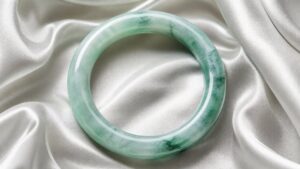
Transparency significantly affects a piece’s liveliness. Ice-type jadeite, which is highly translucent with a cool, glassy sheen, allows light to penetrate and reflect, creating a glowing effect. As described in the Christie’s collecting guide on jadeite jewellery, this aqueous quality is a hallmark of premium material. Opaque or heavily clouded pieces are less valuable, though some prefer them for their solid, earthy appearance.
Texture
A fine, compact texture gives jadeite its smooth feel and vitreous luster. When you run a finger over high-quality jadeite, it should feel almost waxy or soapy. This texture is achieved through millions of interlocking crystals — the denser and finer the structure, the better the polish and the more valuable the stone.
Types & Styles
The VirtuCasa collection offers several distinct expressions of green jadeite, each appealing to different aesthetic preferences. Full-green pieces, like the Natural Full-Green Jadeite Saddle Ring (priced at $2437), feature an even coloration across the entire gem, ideal for those who want a classic, uniform look. Floating green patterns are exemplified by the Natural Ice-type Jadeite Bracelet with Floating Green Patterns ($1517), where translucent icy beads carry wisps or patches of green — perfect for lovers of organic, natural designs. Three-color jadeite combines green with yellow and white or orange, as seen in the Natural Three-Color Jadeite Bracelet ($668) or the Ice-type Tricolor Jade Necklace ($825). These pieces offer a playful, multicolored alternative that is both rare and visually intriguing. For those who appreciate green in a darker, richer tone, the deep green tassel earrings ($852) provide a vibrant accent.
Beyond green, collectors also value violet (lavender) jadeite, which can be complementary to a green-focused collection. The Natural Ice-type Violet Jade Bead Necklace ($6649) and the Ice-type Violet Cabochon Ring Set ($1926) demonstrate the beauty of ice-type lavender jadeite.
How to Choose the Right Size & Fit
Jadeite jewelry comes in diverse forms, and proper fit is essential for comfort and security. For bracelets, bead size, number of beads, and total circumference matter. For example, the Natural Jadeite Bracelet ($1008) consists of 19 beads of 10mm each with an 18cm circumference, recommended for wrists 16–19cm. The three-color bracelet ($668) uses larger 12mm beads and is adjustable via an elastic cord. The ice-type floating green bracelet ($1517) has 13 large 16mm beads and weighs 101g — a substantial piece that will feel noticeable on the wrist.
Rings, like the saddle rings, come in specific sizes: a size 24 (full-green ring, $2437) or size 26 (floating green ring, $719). For gemstone rings such as the violet cabochon ring set ($1926), a size 15 is indicated. Always measure your finger size accurately and consider whether the ring can be resized later — jadeite is hard and resizing is difficult. Necklaces are often strung on cords with traditional knotting, allowing some adjustment; the ice-type tricolor necklaces come in 5.3mm and 3.5mm bead diameters, while the violet bead necklace features graduated 10–12mm beads for layering.
Price & Value
The price of green jadeite is driven by color intensity, evenness, transparency, and the presence of secondary colors. At VirtuCasa, you can find entry-level pieces starting at prices like $668 (three-color bracelet) and $719 (floating green saddle ring). Mid-range options include the deep green tassel earrings at $852 and the ice-type tricolor necklaces at $740 and $825. Premium pieces command higher prices: the ice-type floating green bracelet at $1517, the full-green saddle ring at $2437, and the most expensive item in the collection, the ice-type violet bead necklace at $6649. The violet cabochon ring set, at $1926, combines jadeite with diamonds and sapphires in an 18K white gold setting, reflecting the added cost of precious materials.
Price generally follows the quality spectrum defined by factors like those outlined in the comprehensive jade buying guide from the Gem Society. However, unique patterns, rarity of combination colors, and craftsmanship also contribute to value.
Common Mistakes to Avoid
- Confusing nephrite with jadeite: Nephrite is a different mineral; jadeite is rarer and generally more valuable. All pieces at VirtuCasa are natural jadeite.
- Ignoring transparency: Opaque stones are less valuable. Ice-type jadeite with good translucency is a premium choice.
- Overlooking treatment: Some jadeite is dyed or polymer-impregnated. VirtuCasa’s products are natural — check product descriptions carefully.
- Forgetting fit: Always verify size specifications (wrist circumference, ring size) rather than guessing.
- Assuming all green is equal: A pale green may be affordable, while an intense imperial green commands high prices. Buy the color that speaks to you, but understand its market position.
Top Picks
Here are five recommendations based on different buyer profiles:
- For the traditionalist seeking a classic green: The Natural Full-Green Jadeite Saddle Ring ($2437) offers even, rich color in a timeless design.
- For the nature lover who enjoys unique patterns: The Ice-type Jadeite Bracelet with Floating Green Patterns ($1517) pairs icy clarity with organic green wisps.
- For the budget-conscious starter: The Natural Three-Color Jadeite Bracelet ($668) delivers beauty and value with a harmonious multicolor palette.
- For the accessory lover who wants versatility: The Natural Jadeite Tassel Earrings ($852) feature deep green beads that swing gracefully, perfect for day-to-night wear.
- For the collector of rare pieces: The Natural Ice-type Violet Jade Bead Necklace ($6649) is a statement investment in a highly translucent lavender hue.
Final Tips
When buying jadeite, trust your eye and your budget. Browse the full jadeite category on VirtuCasa to see the variety of greens and styles available. Remember that natural, untreated jadeite holds its value over time, and pieces with good translucency and even color will always be desirable. Whether you choose a vibrant full-green ring or a subtle floating-green bracelet, you are acquiring a piece of natural art with deep cultural heritage.
FAQ
What is the most valuable green color in jadeite?
The most valuable green is ‘imperial green,’ a vivid, slightly bluish-green that is highly saturated and even. Full-green pieces with high translucency, like the Natural Full-Green Jadeite Saddle Ring ($2437), are highly prized.
Are floating green patterns less valuable than solid green?
Not necessarily. Floating green patterns are admired for their natural artistry and can be very valuable, especially when combined with high transparency. They often appeal to collectors who prefer unique, organic designs over uniform color.
How do I know if a jadeite product is natural?
Always buy from reputable sellers who provide clear product descriptions. VirtuCasa states that their jadeite is natural and untreated. Look for terms like ‘natural jadeite’ and check for any mention of treatments. If in doubt, request a certificate.
What should I expect to pay for a good quality green jadeite bracelet?
Prices vary widely based on color, transparency, and size. At VirtuCasa, you can find natural jadeite bracelets starting around $668 (three-color bracelet) up to $1517 for an ice-type floating green bracelet. Premium pieces with exceptional translucency command higher prices.