Introduction
Jadeite, the prized form of jade, has been treasured for centuries in Eastern culture and beyond. Its beauty, rarity, and symbolic meaning make it a highly sought-after gemstone for jewelry and art. However, grading jadeite quality and value can be challenging because, unlike diamonds, there is no single universal standard. According to GIA’s jadeite quality factors, color, transparency, and texture are the three most important attributes. This guide will walk you through the key factors to consider when evaluating jadeite, using real products from VirtuCasa as examples. Whether you are a first-time buyer or a collector, understanding these principles will help you make confident, informed decisions.
Understanding Quality
Color
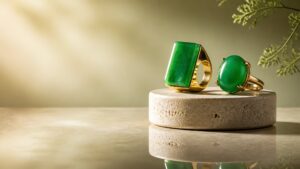
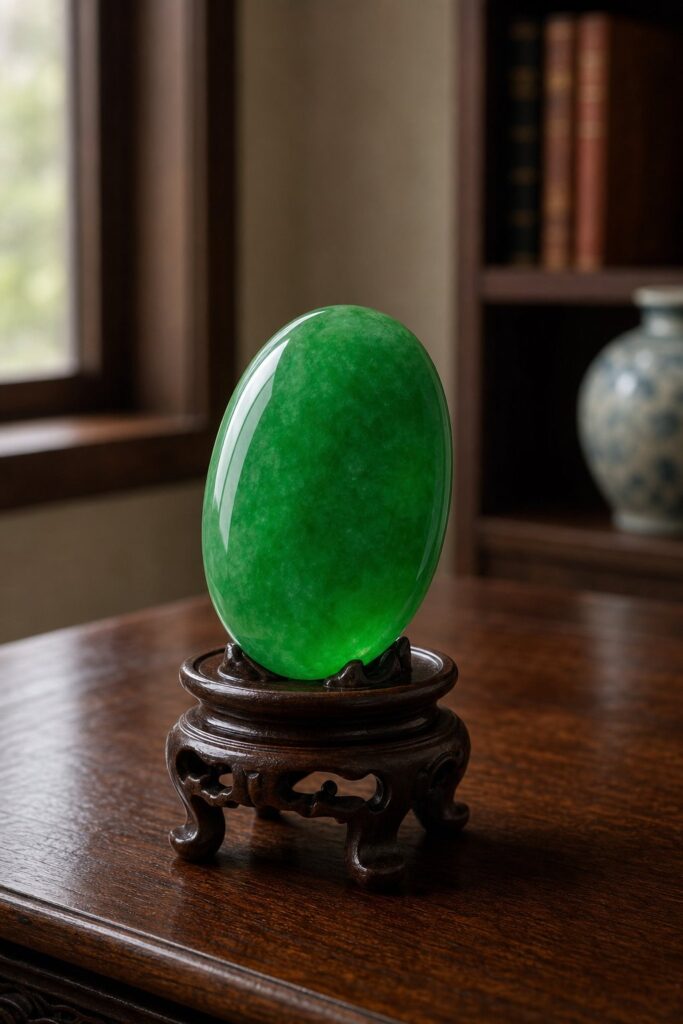
Color is the most influential factor in determining jadeite value. The most prized color is an even, intense green known as imperial green. However, jadeite occurs in many hues: lavender, yellow, white, orange, and three-color combinations. Uniformity and saturation matter — a vivid, consistent color across the stone commands higher prices. For instance, the Natural Full-Green Jadeite Saddle Ring ($2437) features an even ‘full green’ coloration with a fine texture, while the Natural Ice-type Violet Jadeite Cabochon Ring Set ($1926) showcases a vivid violet hue. As noted by Pala International’s jadeite buying guide, stones that are too dark or uneven in color are less valued.
Transparency
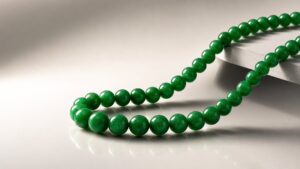
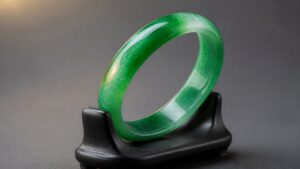
Transparency ranges from opaque to translucent to transparent. High-quality jadeite is often described as ‘ice-type’ — it has a glassy, translucent appearance that allows light to pass through, creating a cool, lustrous sheen. The Natural Ice-type Jadeite Bracelet with Floating Green Patterns ($1517) is a prime example: its transparent and delicate texture with floating green patterns demonstrates excellent clarity. The Natural Ice-type Violet Jade Bead Necklace ($6649) also exhibits a translucent, glossy appearance. According to Blue Jadeite’s buying guide, translucency combined with even color is the hallmark of top-grade material.
Texture and Luster
Texture refers to the fineness of the jadeite’s crystalline structure. A fine, compact texture results in a smooth surface and a vitreous or glassy luster. Coarse-textured jadeite appears grainy and has less brilliance. The VirtuCasa pieces consistently mention ‘fine and smooth’ or ‘delicate and smooth’ textures, which indicate high-quality germplasm. Luster is the gem’s surface shine; a refined glassy luster adds depth and life to the stone. The Natural Jadeite Tassel Earrings ($852) are described as having a ‘refined glassy luster’, underscoring their quality.
Types & Styles
Jadeite jewelry comes in many styles, each highlighting different aspects of the stone. Bracelets are classic and versatile. The Natural Jadeite Bracelet ($1008) offers a soft lavender-white hue with uniform color, perfect for everyday elegance. The Natural Three-Color Jadeite Bracelet ($668) combines yellow, white, and light green in a harmonious blend — an affordable entry point. For those seeking a statement piece, the ice-type bracelets provide superior transparency. Rings like the saddle ring or cabochon designs allow the jadeite to take center stage. The Natural Jadeite Saddle Ring with Floating Green ($719) offers a lighter option with elegant green patches. Necklaces range from delicate bead strands to multi-layered pieces. The Natural Ice-type Tricolor Jade Necklace ($825) features 5.3mm beads with yellow, green, and white, while the Ice-type Tricolor Jade Necklace ($740) uses smaller 3.5mm beads for a more subtle look. The Ice-type Violet Jade Bead Necklace ($6649) with 68 beads ranging from 10-12mm is a luxurious investment piece.
How to Choose the Right Size & Fit
Size and fit are crucial for comfort and wearability. For bracelets, consider the bead diameter and total circumference. The Natural Jadeite Bracelet uses 10mm beads with an 18cm circumference, fitting wrists 16-19cm. The Three-Color Bracelet uses larger 12mm beads with an adjustable elastic cord. For rings, sizes are listed (e.g., size 24 for the Full-Green Saddle Ring, size 26 for the Floating Green Saddle Ring, size 15 for the Violet Cabochon Ring). Necklaces vary: bead diameters range from 3.5mm to 12mm; lengths may not be specified in all products, but the bead count gives a sense — the Ice-type Violet necklace has 68 beads (10-12mm each) for a versatile multi-strand look. Always measure your wrist or finger using a soft tape or ring sizer, and refer to the product details for exact measurements. If a measurement is not listed, the qualitative description (e.g., ‘adjustable circumference’) indicates flexibility.
Price & Value
Several factors drive jadeite prices: color intensity and uniformity, transparency, texture, size, and craftsmanship. A simple natural jadeite bracelet may start at $668, while a premium ice-type violet necklace can reach $6649. The entry-level pieces, such as the Three-Color Bracelet at $668 or the Floating Green Saddle Ring at $719, offer natural beauty without a premium price tag. Mid-range options include the Lavender Bracelet at $1008 and the Tassel Earrings at $852. Higher-end pieces like the Ice-type Floating Green Bracelet at $1517 and the Full-Green Saddle Ring at $2437 command higher prices due to superior color and clarity. The most expensive item in this selection, the Ice-type Violet Necklace at $6649, reflects its rarity, large bead size, and exceptional transparency. Always compare within the same category — a ring and a necklace of equal quality will differ due to material volume and metal settings.
Common Mistakes to Avoid
- Ignoring treatment labels: Many lower-quality jadeites are dyed or polymer-impregnated. Always look for ‘natural’ jadeite, as all VirtuCasa items are described. If in doubt, ask for a certificate.
- Focusing only on color: A beautiful green stone may have poor transparency or coarse texture. Prioritize the combination of color, clarity, and fineness.
- Overlooking size and fit: A gorgeous bracelet that doesn’t fit will be unwearable. Check bead size and circumference.
- Assuming price equals quality blindly: While higher prices generally indicate better grade, personal taste matters. A $668 three-color bracelet can be more visually interesting to some than a $1008 monochrome piece.
- Buying without understanding grading: As beginner guides emphasize, familiarize yourself with the key factors before purchasing.
Top Picks
- Best for Beginners: Natural Three-Color Jadeite Bracelet ($668) – affordable, versatile, and showcases the natural multi-hue beauty of jadeite. Ideal for those new to jade collecting.
- Best Value Statement Piece: Natural Ice-type Jadeite Bracelet with Floating Green Patterns ($1517) – excellent transparency and unique green patterns at a mid-range price.
- Best for Formal Wear: Natural Jadeite Tassel Earrings ($852) – elegant deep green with 18K gold-plated chains, perfect for evening occasions.
- Best Ring for Collectors: Natural Full-Green Jadeite Saddle Ring ($2437) – classic saddle style with even, rich green coloration; a timeless investment.
- Best Luxury Necklace: Natural Ice-type Violet Jade Bead Necklace ($6649) – large, translucent lavender beads with substantial weight, for the discerning buyer.
Final Tips
Grading jadeite quality and value is a skill that improves with exposure and study. Always purchase from reputable sellers like VirtuCasa, who provide clear descriptions of germplasm, size, and weight. Examine pieces under both natural and incandescent light to see color variations. Remember that jadeite is a natural gemstone — minor inclusions or color variations are normal and add character. Whether you choose an entry-level bracelet or a high-end necklace, the most important factor is that the piece resonates with you. For further reading, explore the full jadeite collection on VirtuCasa to see the range of qualities and styles available.
FAQ
What are the most important factors in jadeite quality grading?
According to GIA and other gemological sources, the three most important factors are color (uniformity and saturation), transparency (from opaque to glassy ice-type), and texture (fineness and luster). These combined determine the overall grade and value.
Is jadeite graded like a diamond?
No, jadeite does not have a universal grading system like diamonds. However, experts evaluate color, transparency, texture, and cut. Some retailers may use terms like ‘A-grade’ (natural, untreated) but this is not standardized. Always verify with the seller and look for natural certification.
What does ‘ice-type’ jadeite mean?
Ice-type jadeite refers to a high degree of transparency with a cool, glassy or icy appearance. It is highly valued because it allows light to penetrate, creating a lustrous effect. Examples include the VirtuCasa ice-type bracelets and necklaces.
How can I tell if a jadeite piece is good value?
Compare the piece’s color, transparency, and texture within its price range. For instance, a $668 three-color bracelet offers good value for its uniqueness, while a $6649 ice-type necklace justifies its price through rarity, large bead size, and superior clarity. Always check for natural origin and avoid heavily treated stones.