Introduction
Jadeite, the most precious form of jade, has been treasured for centuries. Its rarity and beauty make it a prime target for counterfeiting. Whether you are a seasoned collector or a first-time buyer, understanding how to distinguish genuine jadeite from imitations is essential. This guide covers the key tests and certifications that can help you confidently identify authentic jadeite, drawing on industry standards and the expertise of gemological grading standards from GIA and other authoritative sources.
Understanding Quality
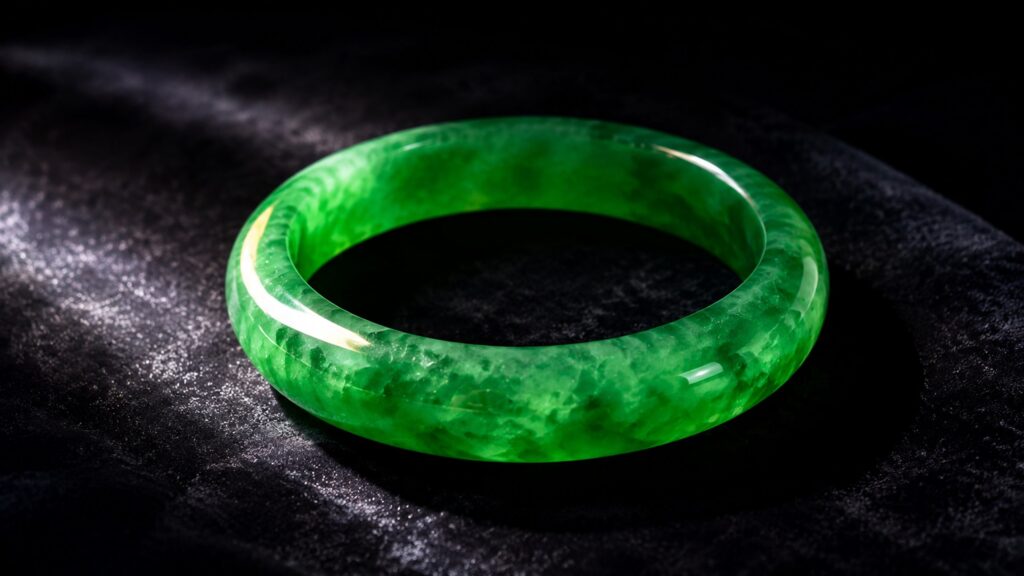
Genuine jadeite is evaluated primarily on three factors: color, transparency, and texture. As Pala International’s jadeite buying guide explains, the most prized jadeite exhibits an intense, even green combined with high translucency. However, jadeite comes in many colors—lavender, yellow, white, and even tricolor combinations. The texture should be fine and compact, with a vitreous (glassy) luster. Icy or “ice-type” jadeite is especially valued for its near-transparent, crystalline appearance.
Color Uniformity and Distribution
Natural jadeite often features subtle color variations and natural internal patterns. For example, VirtuCasa’s Natural Ice-type Jadeite Bracelet with Floating Green Patterns (priced at $1517) displays green patches that “float” within an icy base—a sign of natural formation. In contrast, dyed or treated jadeite may have unnaturally uniform color that pools in cracks or fissures.
Transparency and Luster
High-grade jadeite has a translucent to transparent clarity that diffuses light beautifully. The VirtuCasa Natural Ice-type Violet Jadeite Cabochon Ring Set (priced at $1926) is described as having “excellent transparency” with a “soft, gem-like glow.” Fake jadeite, often made of quartzite or glass, can appear too glassy or lack the subtle waxy sheen of real jadeite.
Types & Styles
Jadeite jewelry comes in many forms: bracelets, necklaces, rings, and earrings. At VirtuCasa, you can explore a variety of styles. The Natural Jadeite Bracelet (priced at $1008) features soft lavender-white beads with a gentle vitreous luster, while the Natural Ice-type Tricolor Jade Necklace (priced at $825) showcases a rare combination of yellow, green, and white. Saddle rings, such as the Natural Full-Green Jadeite Saddle Ring (priced at $2437), are classic Eastern designs carved from a single piece of jadeite. Understanding these styles helps you focus on the specific quality indicators relevant to each piece.
How to Choose the Right Size & Fit
When shopping for jadeite jewelry online, sizing is crucial. VirtuCasa provides detailed measurements for each product. For bracelets, bead diameter and total circumference are given. For example, the Natural Jadeite Bracelet has 19 beads of 10mm each, with a circumference of 18cm, fitting wrists from 16-19cm. Rings come in standard sizes (e.g., size 15 for the Ice-type Violet Cabochon Ring Set). Always measure your wrist or finger using a flexible tape and compare with the product specs. If unsure, look for adjustable designs, like elastic-cord bracelets that accommodate multiple wrist sizes.
Price & Value
Price is a strong indicator of jadeite authenticity—genuine natural jadeite is never cheap. VirtuCasa’s range starts at $668 for the Natural Three-Color Jadeite Bracelet and reaches up to $6649 for the Natural Ice-type Violet Jade Bead Necklace. Entry-level pieces (around $668–$852) offer good quality but may have less transparency or more inclusion. Mid-range options like the Natural Jadeite Tassel Earrings ($852) or the Natural Ice-type Tricolor Jade Necklace ($825) provide excellent value for everyday elegance. Premium pieces ($1008 and up) are highly translucent, with vibrant color and fine craftsmanship. Remember: if a deal seems too good to be true, it likely is.
Common Mistakes to Avoid
- Ignoring treatment disclosure: Not all jadeite is natural. Type A jadeite is untreated; Type B is bleached and polymer-impregnated; Type C is dyed. Always ask for a certification from a reputable lab, such as the Hong Kong Jade & Stone Laboratory, that confirms the treatment level.
- Relying on visual inspection alone: Some fakes, like “jadeite” made from serpentine or dyed quartz, can look very convincing. Use a loupe to check for bubbles (common in glass) or uneven color in cracks (signs of dye).
- Buying without a return policy: Reputable sellers like VirtuCasa offer clear product descriptions and customer support. If a seller cannot provide authenticity documentation, proceed with caution.
- Confusing jadeite with nephrite: Nephrite is another type of jade but is less translucent and often darker. True jadeite has a finer grain and higher luster.
Top Picks
Based on the VirtuCasa collection, here are three standout pieces that exemplify genuine jadeite quality:
- Natural Ice-type Jadeite Bracelet with Floating Green Patterns ($1517): Ideal for collectors who appreciate high transparency and unique natural patterns. The floating green on an icy base is a hallmark of premium jadeite.
- Natural Ice-type Violet Jadeite Cabochon Ring Set ($1926): Perfect for those seeking a modern yet classic design. The vivid violet cabochon set in 18K white gold with sapphires and diamonds is both elegant and substantial.
- Natural Full-Green Jadeite Saddle Ring ($2437): A traditional piece for jade enthusiasts who value rich, even color and a substantial feel. The saddle shape is carved from a single stone, showcasing the jadeite’s internal beauty.
- Natural Ice-type Violet Jade Bead Necklace ($6649): An investment-grade piece for serious connoisseurs. Its 68 beads range from 10-12mm, offering a luxurious multi-layer wear with a soft lavender hue and exceptional translucency.
Final Tips / Conclusion
Spotting fake jadeite is a skill that combines knowledge, careful inspection, and trusted sourcing. Always ask for certification from a gemological laboratory that follows the Type A/B/C classification system. For example, the Jade Buying Guide for Beginners emphasizes that a reputable lab report is the best safeguard. At VirtuCasa, every product is described with its germplasm, size, weight, and setting, allowing you to make an informed purchase. Start your journey by exploring the full jadeite collection and look for pieces that match your style and budget. With the right approach, you can own a piece of natural jadeite that will be cherished for generations.
FAQ
What is the best test to identify real jadeite?
The most reliable test is a gemological lab certification that confirms the stone is Type A (untreated) natural jadeite. Common at-home tests include checking for a cool-to-touch feel, a ringing sound when tapped (like a bell), and no visible bubbles or dye concentration in cracks.
Are there different treatments for jadeite, and how do I know if a piece is treated?
Yes. Type B jadeite is bleached and polymer-impregnated to improve clarity; Type C is dyed to enhance color. Type A is completely natural. Reputable sellers like VirtuCasa clearly disclose treatment status. Look for certification from labs such as the Hong Kong Jade & Stone Laboratory.
Can I spot fake jadeite by its weight?
Real jadeite is dense and feels heavier than most imitation materials like quartzite or glass. For example, VirtuCasa’s Natural Ice-type Jadeite Bracelet (101g for 13 beads of 16mm) has a substantial feel. However, weight alone is not conclusive—always combine it with visual checks and certification.
What should I look for in a jadeite buying guide?
A good guide covers color, transparency, texture, treatment types, and how to interpret lab certificates. It should also provide specific product examples with measurements. For a comprehensive overview, refer to authoritative sources like GIA’s jade quality factor page.