Studying Ancient Jade: Representative Patina and Tool Mark Examples
古玉學習:具代表性的皮殼與工痕高清圖解析
Introduction: The Art of Observation
導言:觀察的藝術
To master ancient jade identification, you need prolonged exposure to authentic, museum-quality pieces. Carefully observe surface patina, luster, tool marks, coloration, and jade material characteristics to build a reliable visual memory.
學習古玉,還是要長期看館藏品的代表,去細細體會皮殼、光氣、工痕、沁色和玉種的表現質態,形成記憶。
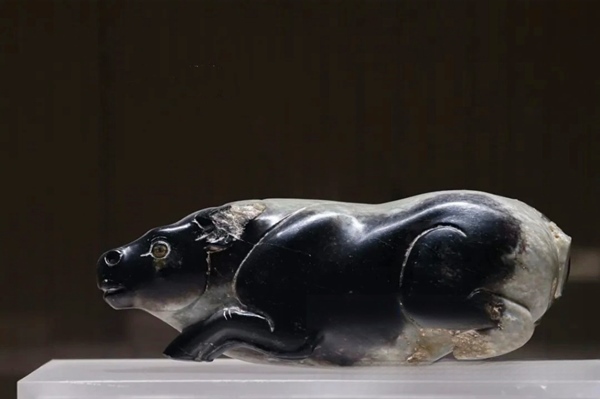
1. Mid-Western Han Dynasty: Jade Buffalo
一、西漢中期:圓雕玉牛
- Period: Mid-Western Han Dynasty (206 BCE – 9 CE)
年代:西漢中期(公元前206年–公元9年) - Provenance: Excavated from Han site, Jiaqu Village, Shaanxi
出土:陝西蒲城縣賈曲公社賈曲村漢遺址出土 - Features: Round carving demonstrates advanced sculpting techniques; smooth patina indicates long-term burial.
特徵:圓雕技法展現高超工藝;溫潤皮殼顯示長期埋藏特徵。
This piece exemplifies the bold, naturalistic style of Han dynasty animal carvings. Explore VirtuCasa’s Han jade collection for similar examples.
此件代表漢代動物雕刻渾厚寫實的典型風格。
2. Liangzhu Culture: Crown-Shaped Comb Ornament
二、良渚文化:冠狀玉梳背
- Period: Liangzhu Culture (c. 3400–2250 BCE)
年代:良渚文化(約公元前3400–2250年) - Collection: Zhejiang Provincial Institute of Cultural Relics and Archaeology
收藏:浙江省文物考古研究所藏 - Features: Distinctive Liangzhu motifs; typical weathering patterns of ancient nephrite.
特徵:典型良渚紋飾;展現古玉風化特徵。
Note the precise linear engravings characteristic of Liangzhu craftsmanship.
注意良渚工藝特有的精確線性雕刻。
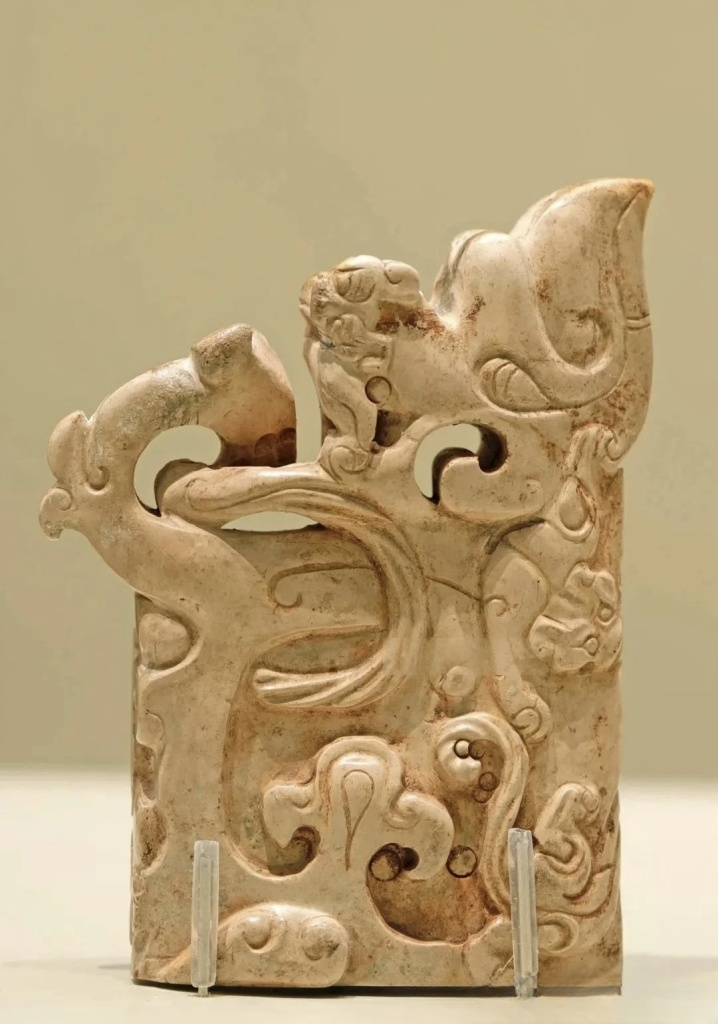
3. Western Han Dynasty: Sword Scabbard Chape
三、西漢:玉劍珌
- Dimensions: Height 6.6 cm, Width 4.4 cm, Thickness 1 cm
尺寸:高6.6厘米、寬4.4厘米、厚1厘米 - Provenance: Excavated from Xishan Tomb, Mangshan Town, Henan (1986)
出土:1986年河南省永城縣芒山鎮僖山漢墓出土 - Collection: Shangqiu Museum, Henan
收藏:河南省商丘博物館藏 - Features: Classic Han decorative patterns; well-preserved burial patina.
特徵:典型漢代裝飾紋樣;保存完好的埋藏皮殼。
This type of jade fitting adorned the ends of ceremonial sword scabbards.
此類玉飾用於禮儀劍具鞘尾裝飾。
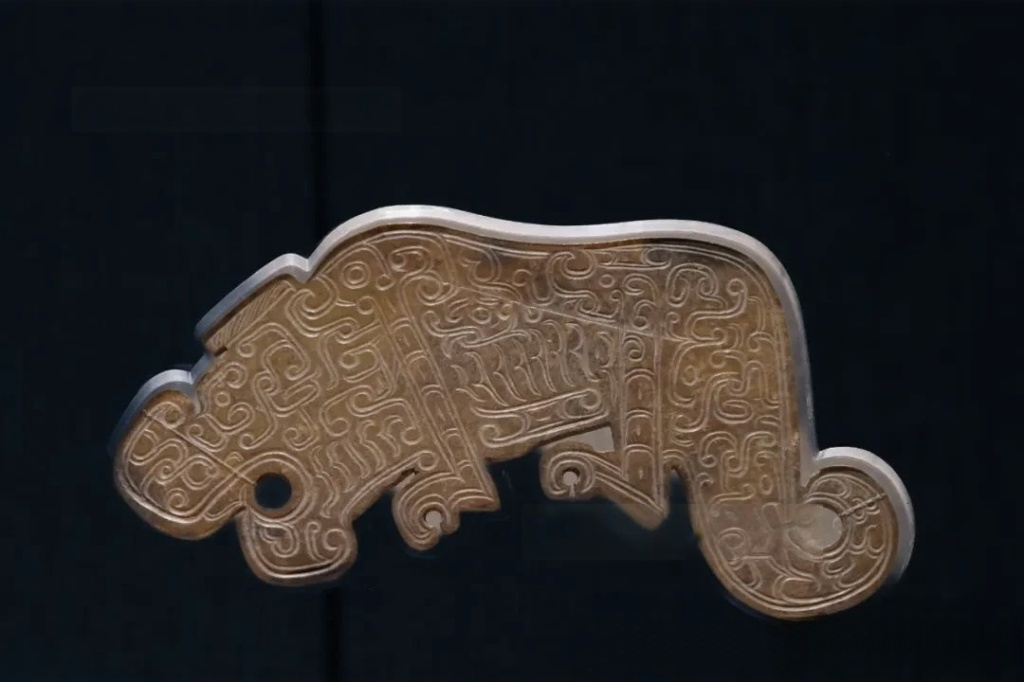
4. Spring and Autumn Period: Tiger-shaped Pendant
四、春秋:青玉虎形佩
- Dimensions: Length 12.7 cm, Width 6.2 cm, Thickness 0.3 cm
尺寸:長12.7厘米、寬6.2厘米、厚0.3厘米 - Provenance: Huang Junmeng Couple’s Tomb, Guangshan County, Henan
出土:河南省光山縣寶相寺黃君孟夫婦墓出土 - Collection: Henan Museum
收藏:河南博物院藏 - Features: Thin profile with intricate carving; natural mineral coloration.
特徵:器形薄透,雕刻精細;天然礦物沁色。
Early examples show simpler forms compared to later Warring States pieces.
與戰國時期相比,早期造型更為簡練。
5. Western Zhou: Dragon-pattern Pendant
五、西周:龍紋玉佩
- Provenance: Excavated from Guo State Cemetery M2009 (1990)
出土:1990年虢國墓地M2009虢仲墓出土 - Collection: Guo State Museum, Sanmenxia, Henan
收藏:河南省三門峽虢國博物館藏 - Features: Curved dragon motif; typical Western Zhou composite designs.
特徵:捲曲龍紋;典型西周組合式設計。
Western Zhou jades often feature abstract, rhythmic patterns.
西周玉器常見抽象而富有韻律感的紋樣。
6. Western Zhou: Dragon-phoenix Pattern Huang Pendant
六、西周:龍鳳紋玉璜
- Collection: Henan Museum
收藏:河南博物院藏 - Features: Harmonious dragon-phoenix combination; balanced symmetry.
特徵:龍鳳和諧組合;對稱平衡的構圖。
The huang pendant was a semicircular ritual ornament worn in sets.
玉璜為半圓形禮儀配飾,常成組佩戴。
Study Guidelines
學習要點
- Compare Authentic Examples
Build visual memory through repeated observation of museum pieces. Browse VirtuCasa’s ancient jade gallery for reference.
對比真品:通過反覆觀察建立視覺記憶。 - Focus on Details
Tool marks should show natural wear; patina should be consistent across the surface.
關注細節:工痕應顯示自然磨損;皮殼需整體一致。 - Understand Historical Context
Different periods have distinct stylistic characteristics—compare with VirtuCasa’s period-specific collections.
理解歷史背景:不同時期具有獨特風格特徵。
FAQ
What is patina in ancient jade?
Patina refers to the surface film that develops on jade over centuries of burial, handling, or exposure. It appears as a smooth, often glossy layer with subtle color variations, and is a key indicator of authenticity.
How can I identify genuine tool marks?
Ancient tool marks show natural, irregular wear, often with microscopic striations from manual carving. In contrast, modern fakes may have overly uniform or mechanically sharp lines. Consistent patina over the marks is also a good sign.
Why study jade from different historical periods?
Each era—from Liangzhu to Han—exhibits unique carving styles, motifs, and surface treatments. Understanding these differences helps you recognize authentic pieces and avoid anachronistic forgeries.