The Secret Language of Jade: Decoding Symbolism in Chinese Carvings
A jade carving is never just a depiction of an object; it is a coded message, a three-dimensional poem, and a vessel of cultural wisdom. For millennia, Chinese artisans have imbued jade with layers of meaning through clever homophonic puns, symbolic associations, and auspicious motifs. Understanding this language transforms a beautiful object into a deeply meaningful artifact. This guide unlocks the primary methods used to interpret jade carvings, allowing you to appreciate the stories and blessings carved in stone.
The Four Keys to Interpretation: How Meaning is Encoded
Chinese culture employs a multi-layered system to embed meaning into jade art. Here are the four primary interpretive lenses:
1. Homophonic Pun (諧音解釋) – The Power of Sound
This is the most playful and widespread method. It relies on words that sound identical or similar but have different meanings. The carving represents one word, but the blessing comes from its homophone.
- Example: A carving of 鞋 (xié, shoe) sounds like 谐 (xié, harmony). Thus, it symbolizes 和諧 (héxié, harmony). In some southern dialects, ‘shoe’ sounds like 孩 (hái, child), making it a wish for a child.
- Another Classic: 魚 (yú, fish) sounds like 余 (yú, surplus/abundance). Hence, a fish represents 年年有餘 (nián nián yǒu yú, may you have surplus year after year).
2. Symbolic Meaning (意義解釋) – Cultural Associations
When a pun doesn’t fit, interpretation shifts to the object’s inherent cultural symbolism, often rooted in literature, history, or folklore.
- Example: The 牡丹 (mǔdān, peony) is the ‘King of Flowers,’ symbolizing wealth, honor, and prosperity.
- Example: The 桃子 (táozi, peach) is the fruit of immortality in myth, representing longevity.
3. Color Significance (顏色解釋) – Hues as Messengers
The color of the depicted object or the jade itself carries meaning. This is especially potent in multicolored jadeite.
- Example: A 玉米 (yùmǐ, corn) is golden yellow. Gold (金 jīn) symbolizes wealth. Combined with the ‘jade’ (玉 yù) of the material, it creates the blessing 金玉滿堂 (jīn yù mǎn táng, may your hall be filled with gold and jade – great wealth).
- Example: Red is for joy and celebration; green is for vitality and growth; purple is for nobility and romance.
4. Form and Shape (形狀解釋) – The Visual Metaphor
The physical form of the carving directly suggests its meaning.
- Example: A carving shaped like a hand can be a 佛手 (fóshǒu, Buddha’s hand/citron), which sounds like 福壽 (fú shòu, fortune and longevity). It is also seen as a 抓財手 (zhuā cái shǒu, hand that grasps wealth).
- Example: A simple hollowed disc is a 平安扣 (píng’ān kòu, peace buckle), representing safety and smooth, unbroken cycles of life.
Decoding Classic Motifs: From Ruyi to Wucai Jade
Let’s apply these keys to some of the most revered motifs in jade carving:
The Ruyi Scepter (如意)
Form & Meaning: Originally a back-scratcher (literally ‘as you wish’), its shape with a cloud or lingzhi mushroom head evolved into a powerful symbol. It represents the fulfillment of all wishes, authority, and good fortune. In the Qing dynasty, it was an essential ceremonial object, gifted to signify blessings for a new reign or diplomatic friendship.
Fu Lu Shou (福祿壽) – The Triad of Blessings
This trio represents the pinnacle of auspicious wishes: Happiness (福), Prosperity (祿), and Longevity (壽).
- In Jadeite: They are brilliantly represented by three colors in one stone: Fú by red (fei), Lù by green (cui), and Shòu by black/green (mo cui). A ‘Fú Lù Shòu’ jadeite piece is exceptionally rare and precious. Browse our jadeite jewelry to see examples.
- Cultural Meaning: Fu encompasses happiness, good luck, and family harmony. Lu signifies official rank, salary, and social success. Shou is the wish for a long, healthy life, the ultimate blessing.
Lulutong (路路通) – ‘All Paths Open’
Form & Meaning: A small, hollow cylinder or bead, often carved with ancient coin patterns. Its hollow center symbolizes that all roads are open and clear. It is a wish for unobstructed success, smooth sailing in all endeavors, and lifelong peace. Explore our jade pendants for similar shapes.
Wucai Jade (五彩玉) – ‘Five-Color Jade’
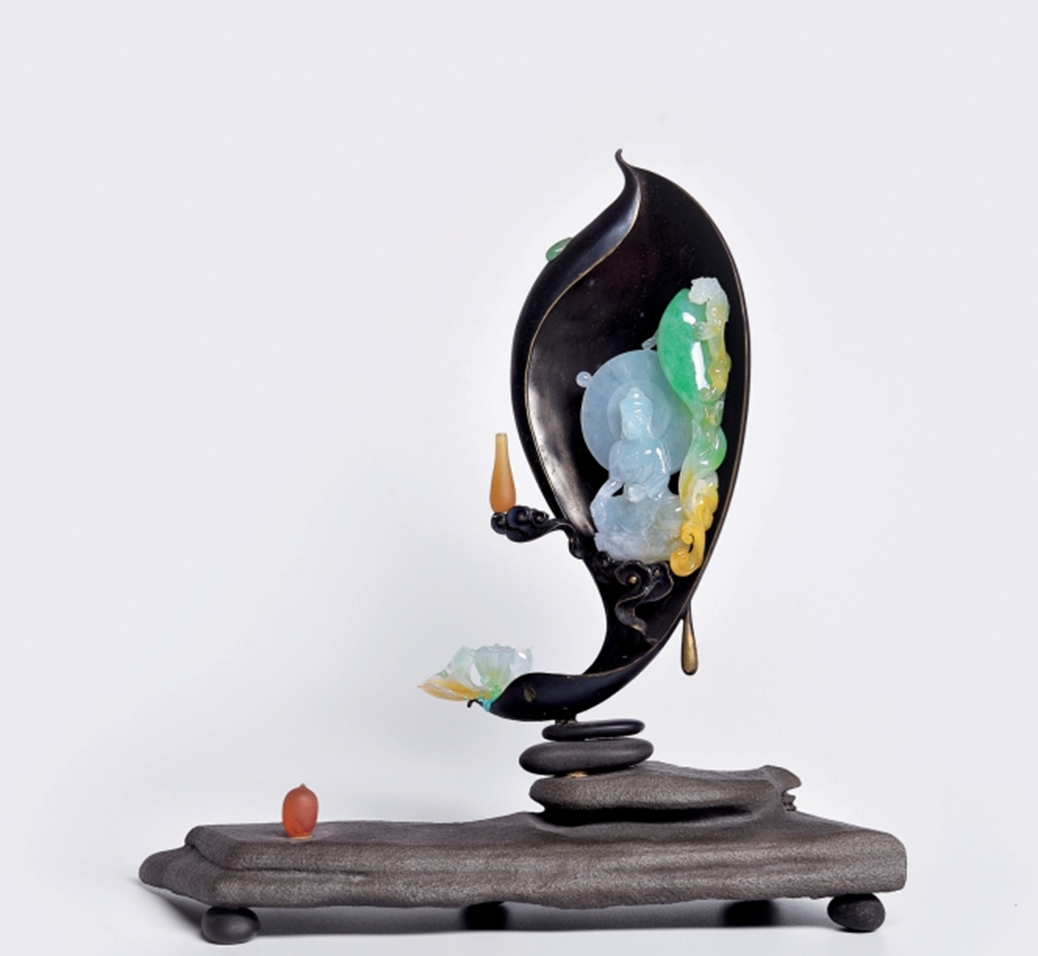
Color & Meaning: A jade piece displaying five or more distinct colors (e.g., white, green, purple, red, yellow) is considered a marvel of nature. The phrase ‘家有五彩玉,勝似萬兩金’ (A home with Wucai Jade is better than ten thousand taels of gold) speaks to its supreme auspiciousness. It represents the harmonious gathering of all blessings (五福臨門) and a life of joy, wealth, longevity, happiness, and peace. See our jade bracelets for multicolored pieces.
Conclusion: Your Journey into Meaningful Collection
Armed with this knowledge, you can now look at a jade carving and begin a dialogue. Is that bat (蝠) a pun for fortune (福)? Is that gourd (葫蘆) a symbol of health and immortality due to its shape and use as a medicine container? This interpretive framework enriches every piece.
For the collector, this transforms acquisition from an aesthetic choice to a cultural exploration. When you choose a piece of jade, you are not just selecting a stone; you are inviting a story, a wish, and a piece of timeless wisdom into your life.
FAQ
What is the most common method of encoding meaning in jade carvings?
The homophonic pun is the most widespread, where a carved object’s name sounds like an auspicious word. For example, a fish represents surplus because ‘fish’ (yú) sounds like ‘abundance’ (yú).
How can I tell if a jade carving has symbolic color meaning?
Look for intentional use of color in the jade itself or in objects depicted. Red symbolizes joy, green represents vitality, and purple denotes nobility. Multicolored pieces often combine multiple blessings.
What does a Ruyi scepter mean in jade?
The Ruyi scepter, with its cloud-like head, represents the fulfillment of all wishes, authority, and good fortune. It was historically used in ceremonies to bless new beginnings.