Introduction
Jadeite has been cherished for centuries, admired for its delicate colors, natural translucency, and cultural significance. However, the market is filled with imitations and treated stones that can fool even experienced buyers. Learning how to spot fake jadeite is essential whether you are a first-time buyer or a seasoned collector. This guide provides 7 critical tips to help you identify authentic natural jadeite and avoid common pitfalls. VirtuCasa offers a curated selection of natural jadeite jewelry and Chinese antiques, so you can shop with confidence.
Understanding Quality
To evaluate jadeite, you need to understand its key quality factors. According to GIA’s jadeite quality factors, the three most important attributes are color, transparency, and texture. These work together to determine both beauty and value.
Color
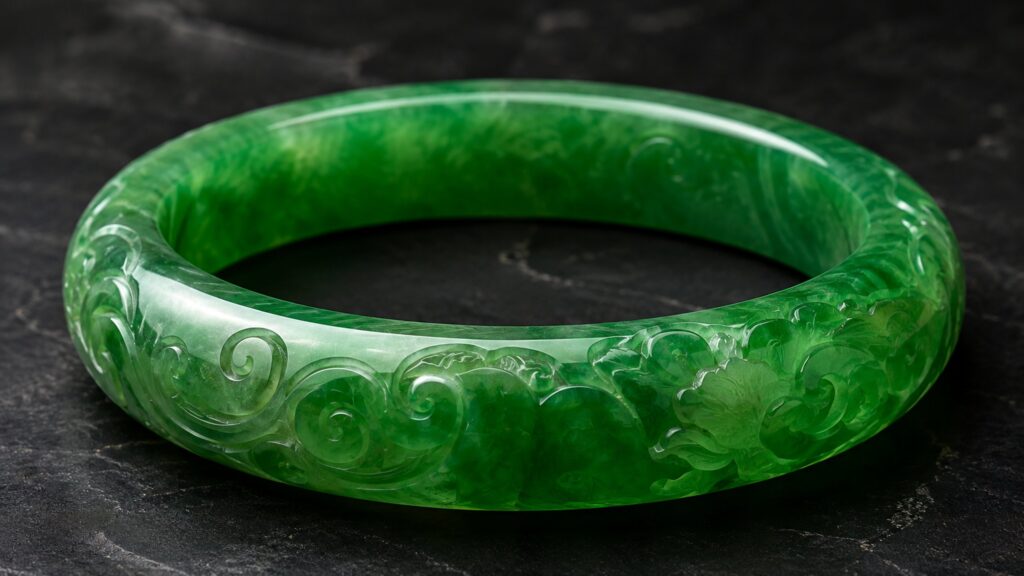
The most prized color is vivid green, but jadeite also appears in lavender, white, yellow, orange, and even three-color combinations. A uniform, saturated hue without visible zoning indicates high quality. For example, the Natural Full-Green Jadeite Saddle Ring ($2437) displays an even rich green throughout. In contrast, uneven or unnatural color patches may signal treatment.
Transparency & Texture
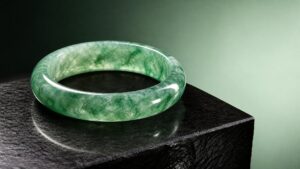
High-quality jadeite is translucent to semi-transparent. Ice-type jadeite, such as the Natural Ice-type Jadeite Bracelet with Floating Green Patterns ($1517), has a glassy luster and a cool, clear appearance. Texture should be fine and compact—not waxy or porous. A smooth, vitreous surface is typical of natural stone, while rough or bumpy textures may indicate resin-filled material.
Experts also check for internal structures. As Pala International’s jadeite buying guide notes, stones that are too dark or lack translucency are less valuable. Use a bright light to see if light passes evenly through the stone.
Types & Styles
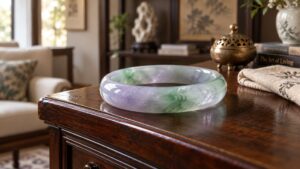
Jadeite is fashioned into many styles. Bracelets like the Natural Jadeite Bracelet ($1008) feature delicate lavender-white beads with a uniform translucent look. For a striking multi-hue piece, the Natural Three-Color Jadeite Bracelet ($668) blends yellow, white, and light green. Rings such as the Natural Jadeite Saddle Ring with Floating Green ($719) offer classic saddle designs. Earrings and necklaces provide variety; for example, the Natural Jadeite Tassel Earrings ($852) combine deep green beads with gold-plated chains. Each style lets you appreciate jadeite’s natural beauty in different ways.
How to Choose the Right Size & Fit
Proper fit enhances both comfort and appearance. For bracelets, measure your wrist circumference. VirtuCasa’s Natural Jadeite Bracelet (approx. 18 cm circumference, 19 beads of 10 mm each) fits wrists 16–19 cm. The Three-Color Jadeite Bracelet uses 12 mm beads with an adjustable elastic cord. Rings are offered in specific sizes: the Saddle Ring with Floating Green is size 26, while the Full-Green Saddle Ring is size 24. The Ice-type Violet Cabochon Ring is size 15. Always check the listed dimensions—if not provided, compare with your own jewelry. Necklaces like the Natural Ice-type Violet Jade Bead Necklace (158 g, 68 beads 10–12 mm) offer adjustable length for versatile wear.
Price & Value
Jadeite prices vary widely based on quality. At the entry level, pieces like the Natural Three-Color Jadeite Bracelet ($668) and the Natural Jadeite Saddle Ring with Floating Green ($719) offer excellent value. Mid-range options include the Natural Jadeite Bracelet ($1008) and the Ice-type Tricolor Jade Necklace ($740 or $825). Premium pieces such as the Natural Full-Green Jadeite Saddle Ring ($2437) and the striking Natural Ice-type Violet Jade Bead Necklace ($6649) command higher prices due to intense color and translucency. Reputable jade buying guides confirm that color intensity and transparency are the main drivers of cost. Be wary of prices that seem too low for the quality advertised—it may indicate a fake or treated stone.
Common Mistakes to Avoid
- Relying only on color: Bright green can be dyed. Always check translucency and texture.
- Ignoring transparency: Opaque stones are less valuable and may be low-grade jadeite or serpentine.
- Not examining the back: Some stones have a hollowed back to hide treatment or lack of color.
- Assuming all hard stones are real: Fake materials like quartzite or glass can be as hard as jadeite.
- Skipping the weight test: Natural jadeite is denser than most imitations—feel the heft.
- Buying without a certificate: Always ask for documentation from a reputable gemological lab.
- Overlooking the seller’s reputation: Purchase from trusted sources like VirtuCasa’s jadeite collection that guarantee natural, untreated stones.
Top Picks
Based on quality and variety, here are 3–5 recommended items from VirtuCasa’s inventory:
- Natural Ice-type Jadeite Bracelet with Floating Green Patterns ($1517) – Ideal for collectors who prize high translucency and elegant green “floating” inclusions. The substantial 101 g weight and 16 mm beads make a bold statement.
- Natural Three-Color Jadeite Bracelet ($668) – Perfect for those who love unique color combinations. Its warm yellow, white, and light green blend harmoniously, and the adjustable cord ensures a comfortable fit.
- Natural Full-Green Jadeite Saddle Ring ($2437) – A classic choice for someone seeking a solid, rich green piece with a traditional saddle style. The even color and vitreous sheen suit formal wear.
- Natural Jadeite Tassel Earrings ($852) – Excellent for daily wear with a graceful swinging design. Lightweight (8 g total) and secure with 18K gold-plated chains, they add elegance without weight.
- Natural Ice-type Violet Jade Bead Necklace ($6649) – For the serious investor, this rare lavender necklace with 68 beads and ice-type transparency is a centerpiece piece. Its 158 g weight reflects dense, high-quality material.
Final Tips / Conclusion
Mastering how to spot fake jadeite requires patience and practice. Always examine color, transparency, and texture. Compare with known authentic pieces, and use a magnifying glass to check for bubbles or unnatural dye concentrations. Buy from reputable sellers who provide clear product information and certification. VirtuCasa offers a wide selection of natural jadeite, each item described with precise germplasm, size, and weight details. Bookmark this guide and refer to it when shopping—you’ll soon develop a confident eye for genuine jadeite.
FAQ
What is ice-type jadeite?
Ice-type jadeite is a premium quality of natural jadeite that is highly translucent with a cool, glassy luster. It often appears clear with subtle color, like the Natural Ice-type Violet Jade Bead Necklace. This transparency is a key sign of authenticity and high value.
How can I tell if jadeite is real or fake at home?
You can perform a few quick checks: examine the texture under light—genuine jadeite feels smooth and waxy, not plastic. Natural jadeite is dense (heavier than glass). Look for small natural inclusions; perfect uniform color may indicate dye. However, a certified lab test is the only definitive way.
Are expensive jadeite pieces worth the investment?
Yes, high-quality natural jadeite holds its value and can appreciate over time. Pieces with intense color, high translucency, and fine texture—like the Natural Full-Green Saddle Ring or Ice-type Violet Necklace—are considered collectible.
How should I care for my jadeite jewelry?
Clean jadeite with a soft cloth and warm water, avoid harsh chemicals. Store it separately to prevent scratches. Because jadeite can be brittle, remove rings and bracelets during heavy tasks. Proper care preserves its luster and integrity for decades.