Introduction
When shopping for natural jadeite jewelry, understanding the three pillars of quality—color, transparency, and texture—can transform your buying experience. Unlike diamonds or gold, jadeite does not have a single universal grading system. Instead, its value is determined by a nuanced combination of these traits, as noted in gemological grading standards from GIA. Whether you are a first-time buyer or a seasoned collector, knowing what to look for helps you select a piece that truly resonates with your style and budget.
VirtuCasa specializes in natural jadeite jewelry and Chinese antiques, offering a curated selection that showcases the full spectrum of jadeite quality. In this guide, we break down the key factors that define jadeite quality and show you how to apply them when choosing your next treasured piece.
Understanding Quality
Color
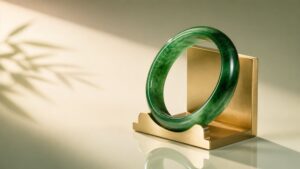
Color is the most significant factor affecting a jadeite’s desirability and value. The finest jadeite exhibits vivid, even saturation with no dark or dull patches. Green is the most prized hue, but lavender, yellow, white, and three-color combinations are also highly sought after. For instance, the Natural Full-Green Jadeite Saddle Ring displays an even ‘full green’ coloration with a warm vitreous sheen, indicating premium color quality. As explained in a jade buying guide for beginners, color is evaluated under both fluorescent and incandescent light to see its true character.
Transparency
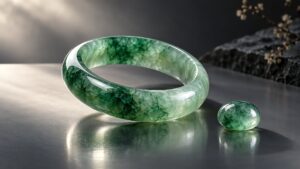
Transparency refers to how much light passes through the stone. Ice-type jadeite, also called ‘glassy’ jade, is highly translucent and often more valuable. The Natural Ice-type Jadeite Bracelet with Floating Green Patterns exemplifies this quality with its cool, lustrous sheen and crystalline transparency. On the other hand, opaque jadeite can still be beautiful if its color and texture are fine, but higher transparency generally commands a premium.
Texture
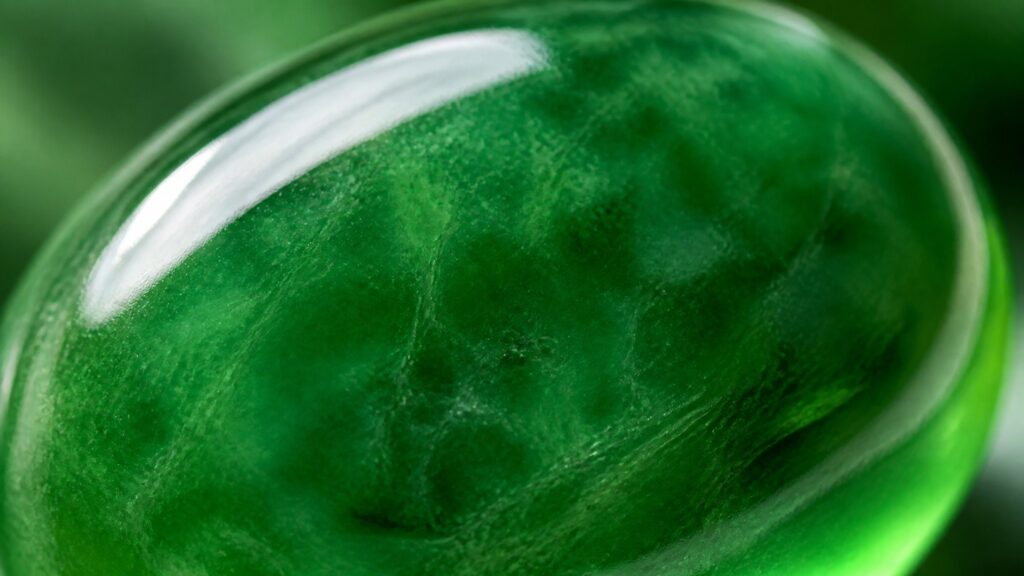
Texture describes the grain structure and smoothness of the jadeite. Fine, compact grains produce a smooth polish and a lustrous glow, whereas coarser grains may appear dull. According to industry experts on jadeite evaluation, texture is often referred to as ‘germplasm’—the inherent crystalline quality of the stone. VirtuCasa products note their ‘germplasm’ in descriptions; for example, the Natural Jadeite Bracelet boasts a ‘delicate and smooth’ texture with a gentle vitreous luster, reflecting fine jadeite germplasm.
Types & Styles
Jadeite jewelry comes in many styles, from classic bracelets and necklaces to statement rings and earrings. Among the most coveted types is ice-type jadeite, prized for its transparency. VirtuCasa offers several ice-type pieces, including the Natural Ice-type Tricolor Jade Necklace featuring yellow, green, and white interwoven tones. Another rare variety is three-color jadeite, such as the Natural Three-Color Jadeite Bracelet that harmoniously blends yellow, white, and light green.
Violet jadeite is also highly collectible. The Natural Ice-type Violet Jade Bead Necklace showcases a soft lavender hue with excellent translucency, perfect for those who prefer pastel elegance. For dramatic contrast, the Natural Jadeite Tassel Earrings feature deep green beads with a refined glassy luster, ideal for evening wear.
How to Choose the Right Size & Fit
Jadeite bracelets and rings must fit comfortably to be enjoyed. VirtuCasa provides specific measurements for each piece. For example, the Natural Jadeite Bracelet has 19 beads of 10mm diameter and an 18cm circumference, fitting wrists of 16-19cm. The Natural Ice-type Jadeite Bracelet with Floating Green Patterns features 16mm diameter beads and weighs 101g, offering a substantial feel. For rings, sizes are given (e.g., 24-ring size for the full-green saddle ring, 26 for the floating green saddle ring). Always measure your wrist or finger against the listed dimensions. Necklaces often use adjustable cords or classic rope knotting that allows some flexibility in length.
Price & Value
Several factors drive jadeite pricing. Color purity and saturation are primary; a vivid even green commands the highest prices. Transparency and texture also significantly increase value. Ice-type jadeite with floating colors or rare three-color combinations is especially prized. For instance, the Natural Ice-type Violet Jade Bead Necklace is priced at $6649, reflecting its size (68 beads up to 12mm), premium violet color, and ice-type clarity. In contrast, smaller bead necklaces like the Natural Ice-type Tricolor Jade Necklace (3.5mm beads) are more affordable at $740. Rings range from $719 (floating green saddle ring) to $2437 (full green). Earrings like the tassel pair are $852. A three-color bracelet is $668, while a full lavender necklace is $6649. As a rule, the larger the piece and the rarer the combination of high color, transparency, and texture, the higher the price.
Common Mistakes to Avoid
- Ignoring transparency: Some buyers focus only on color, but transparency can elevate a piece from average to exceptional.
- Misjudging color under poor lighting: Evaluate jadeite in natural daylight or under multiple light sources to see its true tone.
- Overlooking texture description: Words like ‘germplasm’ and ‘refined glassy luster’ indicate quality; coarse textures are less desirable.
- Skipping size verification: Always check bead diameter, bracelet circumference, or ring size against your measurements.
- Assuming a higher price always means better quality: While price correlates with quality, personal preference in color and style also matters.
Top Picks
Here are five VirtuCasa pieces that exemplify outstanding jadeite quality across different styles and budgets:
- For the serious collector: Natural Ice-type Violet Jade Bead Necklace ($6649) – Exceptional violet color and ice-type transparency in a substantial 158g necklace.
- Best for everyday elegance: Natural Jadeite Bracelet ($1008) – Soft lavender-white beads with delicate texture, comfortable for daily wear.
- Statement piece: Natural Jadeite Tassel Earrings ($852) – Deep green glassy luster with 18K gold-plated chains, perfect for special occasions.
- Unique color combination: Natural Three-Color Jadeite Bracelet ($668) – A rare blend of yellow, white, and light green at an accessible price.
- For ring lovers: Natural Full-Green Jadeite Saddle Ring ($2437) – Classic saddle design with rich green color and fine texture.
Final Tips
When selecting jadeite, trust your eyes and the detailed product descriptions. Look for terms like ‘fine and smooth texture,’ ‘translucent,’ and ‘even color distribution.’ VirtuCasa provides clear germplasm and setting details for each piece, helping you make an informed choice. Remember, the best jadeite is not just about perfect grades—it should feel special to you. Whether you are drawn to the icy clarity of an ice-type bracelet or the warm glow of a three-color necklace, let quality be your guide. Explore the full jadeite collection at VirtuCasa to find your perfect match.
FAQ
What is the most important factor in jadeite quality?
Color is generally considered the most important factor, with vivid and even saturation being most desirable. However, transparency and texture also play crucial roles in determining overall value.
Is ice-type jadeite always more valuable?
Ice-type jadeite—which has high transparency—is often more valuable than opaque jadeite, especially when combined with good color. However, opaque jadeite with exceptional color or unique patterns can still be highly prized.
How can I verify the size of a jadeite bracelet fits me?
Check the listed bead diameter and bracelet circumference. For example, a bracelet with 10mm beads and an 18cm circumference fits wrists of 16-19cm. You can measure your wrist with a flexible tape and compare.
Does VirtuCasa sell treated jadeite?
VirtuCasa explicitly lists each product as ‘Natural’ jadeite. Their descriptions highlight natural germplasm and no treatments, so you can trust that the pieces are untreated ‘A jade.’