Introduction
For over five thousand years, jade has been more than a beautiful stone in China—it is a symbol of virtue, status, and protection. Unlike diamonds or gold, which are valued for their brilliance or rarity, jade is cherished for its spiritual significance and its deep connection to Chinese philosophy. Whether you are a collector, a jewelry lover, or simply curious about Eastern traditions, understanding the symbols behind jade can transform how you view and choose jadeite pieces.
In this article, we explore ten of the most important jade symbols in Chinese culture. You will learn what each symbol means, where it appears in jewelry and antiques, and how to select a piece that resonates with your own values. By the end, you’ll be able to appreciate jade not just as a gemstone, but as a carrier of centuries-old meaning.
Background / Key Concepts
What is Jadeite?
Jade is actually a term that covers two different minerals: nephrite and jadeite. Jadeite is the rarer and more highly valued variety, known for its vivid greens and its use in fine jewelry. In Chinese culture, the word for jade, yu, has historically been used for both, but jadeite, especially the translucent ‘ice’ or ‘imperial green’ types, is considered the pinnacle of jade craftsmanship. According to the Gem-A, jade has been central to Chinese culture for millennia, symbolizing purity and moral integrity.
The Cultural Significance of Jade
Jade is often called the ‘Stone of Heaven.’ It is associated with Confucian virtues such as benevolence, wisdom, and courage. Ancient Chinese scholars believed that jade’s smooth texture and gentle luster mirrored the ideal human character. Wearing jade was thought to protect the wearer from harm and bring good fortune. This cultural backdrop makes jade symbols more than just decorative motifs—they are talismans with deep spiritual weight.
How Symbols Appear in Jade Jewelry
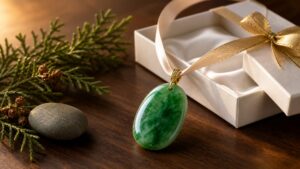
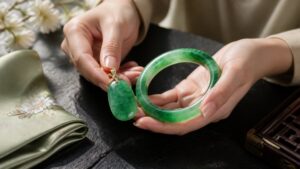
Jade symbols are typically carved into pendants, beads, bangles, and rings. Common motifs include animals, plants, and abstract shapes, each with its own story. When you buy a jadeite piece, you are not just buying a gemstone—you are acquiring a piece of cultural heritage. For example, a jadeite pendant might feature a carved bat for good luck or a lotus for purity.
The Main Body: 10 Jade Symbols in Chinese Culture
1. The Dragon – Power and Strength
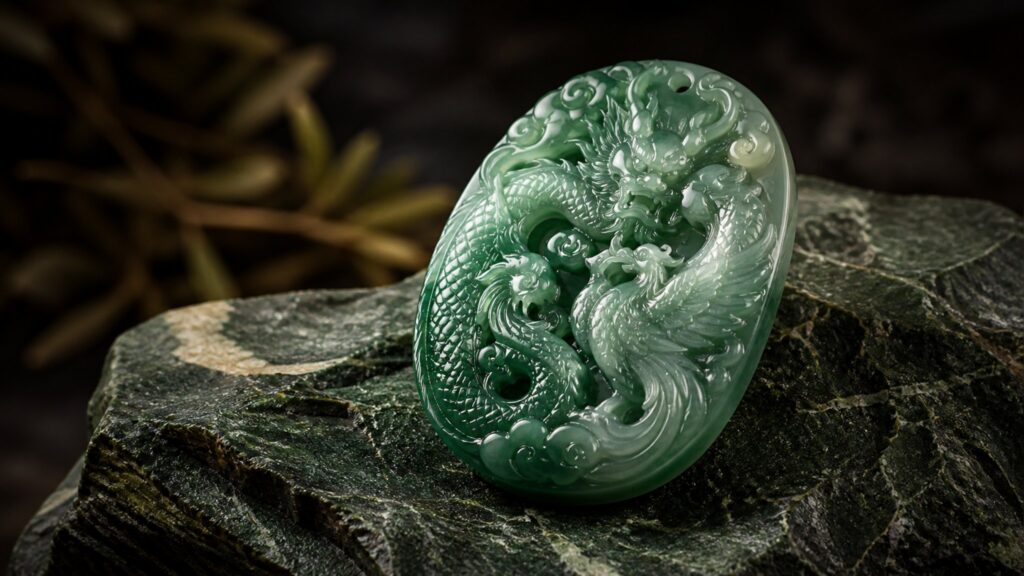
The dragon is the ultimate symbol of imperial authority and masculine energy. In Chinese mythology, dragons control water, rainfall, and storms. Jade dragons are often given to those in leadership roles or to celebrate great achievements. A jadeite dragon pendant or carving is believed to bring strength, courage, and success.
2. The Phoenix – Rebirth and Grace
The phoenix, or fenghuang, represents the feminine counterpart to the dragon. It symbolizes rebirth, transformation, and grace. Jade phoenixes are popular gifts for weddings and for women who are starting a new chapter in life. The bird’s elegant form is often carved into jadeite pendants and earrings.
3. The Koi Fish – Prosperity and Abundance
Koi fish are a symbol of wealth, prosperity, and perseverance. In Chinese folklore, koi that swim upstream and leap over the ‘Dragon Gate’ transform into dragons, representing the rewards of hard work. Jade koi pendants are often given to students, entrepreneurs, and anyone facing a challenge.
4. The Bat – Good Fortune and Happiness
Bats might seem odd as a lucky symbol, but in Chinese, the word for bat (bianfu) sounds like ‘fortune.’ A jade bat is a powerful charm for attracting good luck and happiness. Often carved with a peach or a coin, jade bats can be found in bracelets and pendants.
5. The Double Fish – Marital Bliss
Two fish swimming together symbolize a harmonious marriage and fertility. They are a classic wedding gift, representing unity and the wish for many children. Jadeite double-fish pendants are delicate and often set in gold or silver.
6. The Ruyi Scepter – Fulfillment of Wishes
The ruyi is a curved scepter that originally was a back-scratcher but evolved into a symbol of authority and the fulfillment of wishes. It is often carved from jade and given to bring success and good luck. A jade ruyi pendant is a thoughtful gift for someone starting a new job or business.
7. The Lotus Flower – Purity and Enlightenment
The lotus grows from muddy water but blooms clean and beautiful—a perfect metaphor for purity and spiritual awakening. Jade lotus flowers are popular among those seeking peace and clarity. They are also associated with the Buddha and are often found in jadeite carvings.
8. The Peony – Wealth and Honor
The peony is known as the ‘king of flowers’ in China and symbolizes wealth, honor, and high social status. Jade peonies are often carved in full bloom, representing abundance and prosperity. They make excellent gifts for business partners or for celebrating a promotion.
9. The Pine Tree – Longevity and Resilience
Pine trees stay green all year, symbolizing endurance and long life. In jade carvings, a pine tree often appears alongside cranes or deer, both of which are also longevity symbols. A jadeite piece with pine imagery is a thoughtful gift for an elder or someone who has overcome adversity.
10. The Chinese Character ‘Shou’ – Longevity
The character shou (寿) means ‘longevity’ and is often carved into jade pendants or rings. It is one of the most direct symbols of a long and healthy life. Jadeite rings featuring the shou character are popular birthday gifts, especially for older family members.
Practical Tips
When choosing jadeite jewelry with symbolic meaning, consider these tips:
- Research the symbol’s meaning to ensure it aligns with the intended message.
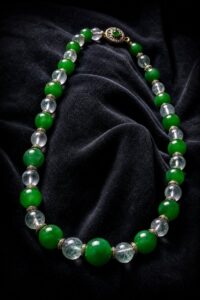
- Check the quality of the jadeite—look for translucency, color saturation, and evenness of tone. Learn more about how to grade jadeite bead necklaces for a deeper understanding.
- Decide between a bangle and a bead necklace based on your style. Our guide on jadeite bangle vs. bead necklace can help you compare.
- Consider the size and fit—especially for rings. Use our jadeite ring size chart to measure perfectly.
- If you are a collector of Chinese antiques, remember that symbols also appear on bronze artifacts. The antiques collection at VirtuCasa offers pieces that may carry similar motifs.
Common Mistakes to Avoid
- Assuming all jade is jadeite—nephrite is also jade but less valuable. Always check the mineral type.
- Ignoring the quality of the carving—a poorly carved symbol can lose its intended meaning.
- Buying a piece without checking its authenticity. Look for natural color and avoid dyed or treated jade.
- Choosing a symbol that conflicts with the recipient’s beliefs or personality.
- Forgetting that jade is fragile—avoid dropping it or exposing it to harsh chemicals.
Conclusion / Key Takeaways
Jade in Chinese culture is a language of symbols, each carrying a message of luck, love, or virtue. From the dragon’s power to the lotus’s purity, these ten symbols allow you to choose jadeite pieces that speak to your own story or the story of someone you care about. When you wear jade, you carry a piece of that ancient wisdom with you.
Whether you are looking for a jadeite bracelet or a jadeite ring, let the symbol guide your choice. And for those who appreciate the broader world of Chinese antiques, remember that symbols are everywhere—from jade to bronze. Explore our antique collection to discover more pieces steeped in meaning.
As you continue your journey with jade, always seek authentic, natural stones, and let the symbolism enrich your appreciation. For more insights, read about jade meaning and symbolism from trusted sources.
FAQ
What is the most powerful jade symbol in Chinese culture?
The dragon is often considered the most powerful jade symbol, representing imperial authority, strength, and good fortune. It is traditionally given to leaders and those seeking success.
Can I wear jade symbols of good luck every day?
Yes, many people wear jade symbols daily as talismans. However, jade is a relatively soft gemstone, so avoid exposing it to hard knocks or harsh chemicals to keep it beautiful.
How can I tell if a jade symbol is authentic jadeite?
Authentic jadeite is dense, cool to the touch, and has a distinctive luster. Look for natural color variations and avoid pieces that are unnaturally bright or uniform, which may be dyed or treated.
What jade symbol is best for a wedding gift?
The double fish or the phoenix are excellent choices for weddings. The double fish symbolizes marital harmony and fertility, while the phoenix represents grace and rebirth.