Why Choosing the Right Jade Testing Lab Matters
When you’re shopping for natural jadeite, the difference between a genuine gem and a treated or imitation piece can be subtle—yet the value difference is enormous. A reliable jade testing lab can confirm whether your jade is Type A (untreated) or has been polymer-impregnated, bleached, or dyed. Without a trusted certification, you risk overpaying or unknowingly buying a piece that won’t hold its value. This guide compares the most recognized jade testing labs, explains what their reports actually tell you, and helps you make an informed choice before you buy.
By the end of this article, you’ll know which labs are considered authoritative, how to interpret their findings, and what red flags to avoid. Whether you’re a first-time buyer or a seasoned collector, understanding lab certification is a critical step in protecting your investment. For a deeper dive into verifying Type A jadeite on your own, see our guide on how to spot Type A jadeite before you buy.
Understanding Jade Certification: The Basics
What Does a Jade Testing Lab Do?
A jade testing lab uses advanced equipment—such as infrared spectroscopy, X-ray diffraction, and Raman spectroscopy—to analyze the mineral composition and detect any treatments. The most important classification is whether the jadeite is Type A (natural, no treatment), Type B (bleached and polymer-impregnated), or Type C (dyed). A reputable lab will clearly state these findings on a certificate.
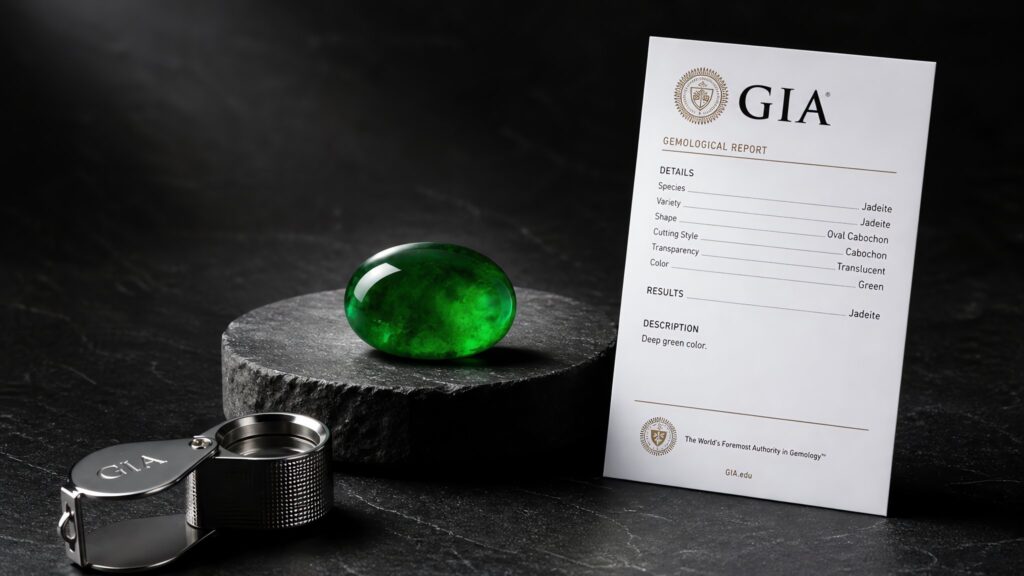
According to a complete jade certification guide, a reliable lab report should include the gemstone’s weight, dimensions, color, and any treatments detected. It should also mention the type of jade (jadeite vs. nephrite) and whether the stone is natural or synthetic. Always look for a report that explicitly states ‘Type A’ or ‘natural color’—vague wording can be a red flag.
Why Certification Matters
Certification isn’t just about authenticity; it also affects resale value and insurance. A certified stone with a recognized lab report is easier to appraise and resell. Uncertified pieces are harder to verify, and many buyers will discount the price accordingly. For high-value purchases, certification is non-negotiable. As certified jade explained notes, certification provides peace of mind and a clear record of what you own.
Comparing Top Jade Testing Labs
Gemological Institute of America (GIA)
The GIA is one of the most respected gemological laboratories worldwide. While they are known for diamonds, they also offer jadeite reports. Their reports are detailed, but they may not always specify Type A/B/C unless specifically requested. GIA reports are widely accepted and carry strong credibility.
Gübelin Gem Lab
Swiss-based Gübelin is renowned for its high standards and detailed analysis. They are particularly respected in the high-end jewelry market. Their reports are extremely thorough, but they come at a premium price. For collectors of rare, investment-grade jade, Gübelin is often the gold standard.
SSEF (Swiss Gemmological Institute)
SSEF is another Swiss lab with an excellent reputation, especially for colored stones and pearls. They also test jadeite and are known for their rigorous scientific approach. Their reports are clear and include treatment disclosure, making them a solid choice for jade buyers.
Hong Kong Jade & Stone Laboratory
Because Hong Kong is a major jade trading hub, the Hong Kong Jade & Stone Laboratory is highly specialized in jade testing. They are particularly familiar with the local market and often provide faster turnaround times. Their reports are accepted by many Chinese and international dealers.
China National Gemstone Testing Center (NGTC)
NGTC is China’s official gemological laboratory and is widely trusted in the Chinese market. They have multiple branches and are known for strict testing standards. For buyers purchasing jade from Chinese sellers, an NGTC certificate is often expected.
When comparing labs, consider not only the reputation but also the specific type of jade you’re buying. Some labs have more experience with certain treatments or origins. It’s also wise to check whether the lab is accredited by international bodies like the International Organization for Standardization (ISO). A guide to buying jade jewelry emphasizes that a certificate is only as good as the lab behind it.
Practical Tips for Using Lab Reports
- Always ask for a certificate – For any jadeite purchase above a modest budget, request a lab report from a recognized lab.
- Check the report for ‘Type A’ – Look for explicit wording that the jade is natural and untreated. If it’s not stated, ask the seller for clarification.
- Verify the lab’s contact info – Reputable labs have verifiable websites and contact details. Be wary of certificates without any way to confirm authenticity.
- Compare with the stone – The certificate should include a photo and measurements. Make sure they match the piece you’re buying.
- Use certification as a negotiation tool – If a seller can’t provide a certificate, you can use that as leverage to lower the price or request a third-party test.
Common Mistakes to Avoid
- Trusting any certificate – Not all labs are equal. Some operate with lower standards or are even fraudulent. Stick to well-known labs.
- Ignoring the fine print – Some reports may say ‘jadeite’ but not specify if it’s Type A. Always read the details.
- Skipping the test for small items – Even small jadeite pendants or earrings can be treated. Don’t assume size matters.
- Confusing jadeite with nephrite – A lab report will identify the mineral. Nephrite is a different stone and generally less valuable.
- Overlooking the lab’s location – Some labs may have limited recognition in certain markets. Choose a lab that is respected in the region where you’ll be selling or insuring the jade.
Conclusion: Make Certification Your Safety Net
Choosing the right jade testing lab is as important as choosing the right jade. A trusted certificate protects your purchase, ensures you’re getting what you paid for, and provides peace of mind. As you shop, keep in mind that even a beautiful piece can be treated—certification is your only guarantee.
Before making your next jadeite purchase, take the time to understand the reports and the labs behind them. For more guidance on evaluating jadeite quality, explore our guide to jadeite color intensity or learn about the differences between Type A, B, and C jadeite. And if you’re ready to browse certified pieces, visit our jadeite collection—always ask for lab reports when you buy.
FAQ
What is the most reliable jade testing lab?
There is no single ‘best’ lab, but GIA, Gübelin, SSEF, and NGTC are all highly respected. The choice depends on your market and the type of jade. For high-end investment pieces, Swiss labs like Gübelin and SSEF are often preferred.
How can I verify a jade certificate is authentic?
Check the lab’s official website to see if they have a verification portal where you can enter the certificate number. Also, contact the lab directly if you have doubts. Reputable labs will confirm the report’s authenticity.
Do all jadeite pieces need a lab certificate?
Not necessarily for low-cost pieces, but for any significant investment, certification is strongly recommended. It protects you from buying treated or imitation jade and helps with resale and insurance.
What does ‘Type A’ mean on a jade report?
‘Type A’ means the jadeite is natural and has not been treated with any chemicals or polymers. Only the surface may have been waxed. This is the most valuable and sought-after type of jadeite.