Why This Choice Matters for Jadeite Bracelet Buyers
Buying a jadeite bracelet is not like picking a metal bangle off a shelf. Jadeite is a natural, heterogeneous material, and two bracelets of similar size can look and feel completely different depending on translucency, color distribution, and bead proportions. The two poles most buyers weigh are ice-type jadeite — prized for its transparent, glassy texture — and full-green jadeite, valued for an even, saturated green. Neither is objectively ‘better’; they satisfy different tastes and budgets, and understanding the trade-offs is the key to a purchase you will still love in ten years.
This guide uses only the real product data available in the VirtuCasa jadeite collection to compare these two characters in concrete terms — bead counts, diameters, weights, and listed prices — so you can see exactly what your money buys. We will also cover sizing, common buying mistakes, and specific recommendations for different wearers.
One quick orientation note: in the VirtuCasa range, the clearest ice-type bracelet example is the Natural Ice-type Jadeite Bracelet with Floating Green Patterns, while the full-green character is best represented by the Natural Full-Green Jadeite Saddle Ring (a ring rather than a bracelet, but an excellent reference for what ‘full green’ means in practice). We will use both as benchmarks throughout.
Understanding Quality: What Actually Drives Jadeite Value
Jadeite quality is usually discussed in terms of several interacting factors. According to jade bracelet buying guides that explain Type A jade and quality evaluation, buyers should look at texture (grain fineness), translucency, color, and the absence of treatments. These factors compound: a fine-grained, translucent stone with even color is rare, and rarity is what the market pays for.
Texture and Translucency
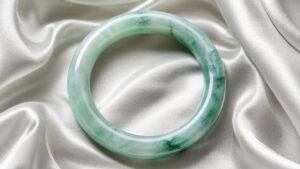
Texture describes how fine and compact the crystalline structure is. The ice-type bracelet in our data is described as ‘transparent and delicate’ with a ‘cool and lustrous glassy sheen,’ while the full-green saddle ring is described as ‘fine and smooth’ with a ‘warm, lustrous vitreous sheen.’ Both are high-quality descriptions, but they point to different visual experiences: ice-type reads as cool, clear, and glass-like; full-green reads as dense, warm, and color-forward.
Color Saturation and Distribution
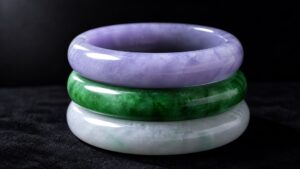
Full-green jadeite is valued for even, rich coloration — the saddle ring’s ‘even full green’ with a ‘dense yet translucent’ green is the classic benchmark. Ice-type pieces often feature ‘floating’ color patterns on a pale, icy base, as with the bracelet’s ‘floating green patterns that blend subtly with the icy base.’ Neither is a defect; they are different aesthetic goals. Buyers who want maximum color presence gravitate to full-green, while those who love light play and transparency prefer ice-type.
Bead Size, Count, and Weight
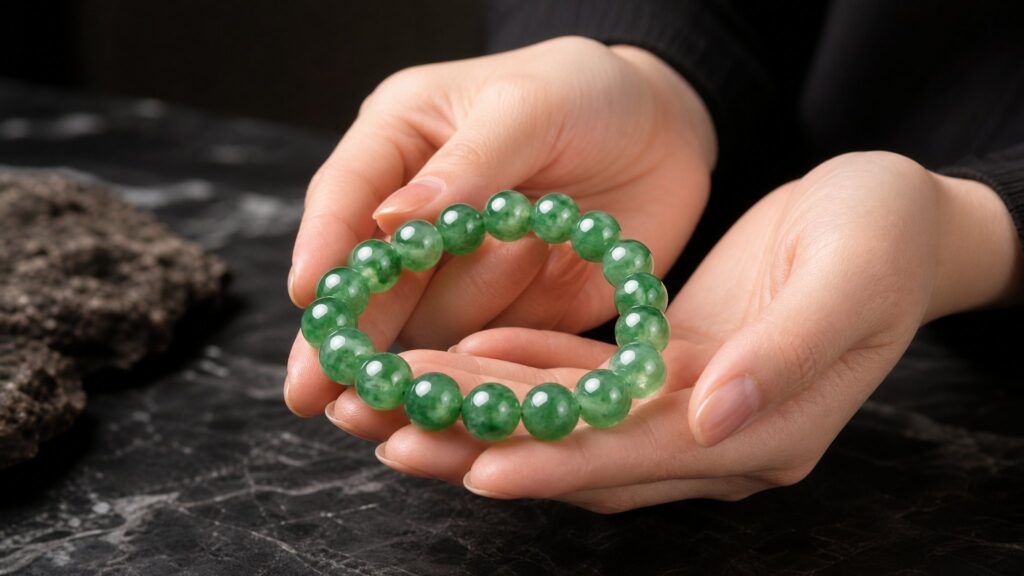
Bracelet construction matters as much as the stone. The ice-type bracelet comprises 13 round beads of 16mm diameter and weighs 101g — a genuinely large-bead statement bracelet with substantial hand presence. By contrast, the Natural Jadeite Bracelet uses 19 beads of about 10mm and weighs roughly 30g, a lighter, more flexible feel. Larger beads require larger, cleaner rough, which is one reason big-bead bracelets command more.
Treatments and Disclosure
Always confirm a piece is natural (often called Type A) and untreated. Reputable educational resources such as jade necklace significance and buying guides stress understanding what you are buying before you commit; the same discipline applies to bracelets. VirtuCasa’s listings describe each piece as natural jadeite, and you should read those descriptions carefully.
Types & Styles: Ice-Type vs Full-Green in Practice
The ice-type character is about light. The Natural Ice-type Jadeite Bracelet with Floating Green Patterns is the flagship example here: 13 beads at 16mm, 101g, transparent and delicate with a glassy sheen and subtle green patterns. It is a bold, modern-feeling piece — the kind of bracelet that reads as a statement from across a room. The same icy character appears across the collection in necklaces such as the Natural Ice-type Tricolor Jade Necklace (3.5mm beads, 10.4g), showing how ice-type jade can be interpreted at very different scales.
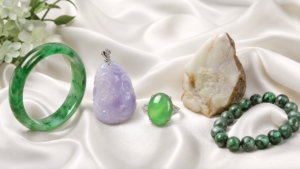
The full-green character is about color density. The Natural Full-Green Jadeite Saddle Ring (size 24, 9.5g) is carved from a single piece of jadeite with an even full-green coloration and a warm vitreous sheen. While it is a ring, it is the clearest full-green reference in the data and illustrates the aesthetic: rich, saturated, and classic. Buyers who want that green presence in a bracelet should prioritize even color and fine texture when comparing options.
Between these poles sit versatile pieces. The Natural Three-Color Jadeite Bracelet (16 beads at 12mm, about 35g, yellow-white-light green) offers multi-hue interest at a mid-range price point, while the Natural Jadeite Bracelet (19 beads at 10mm, about 30g, lavender-white) is a soft, translucent everyday option. For a coordinated look, the Natural Ice-type Tricolor Jade Necklace (5.3mm beads, 25.8g) pairs the same three-color idea at necklace scale.
How to Choose the Right Size & Fit
Fit is where many first-time buyers stumble. Bead bracelets are generally more forgiving than solid bangles because they flex, but bead diameter still changes how a bracelet sits. The Natural Jadeite Bracelet lists a total circumference of about 18cm and is described as suitable for wrists of 16–19cm — a useful, explicit fit range. The ice-type bracelet, with 13 beads at 16mm, is described as offering a flexible fit suitable for various wrist sizes, though its large beads mean it will sit more prominently on the wrist.
Weight is part of fit, too. A 101g bracelet feels very different from a 30g one over a full day. If you are not used to heavy jewelry, the lighter Natural Jadeite Bracelet or the Three-Color bracelet (about 35g) may be more comfortable for daily wear, while the ice-type piece is better suited to someone who enjoys a substantial, stable hand feel.
Elastic-cord construction, used across several of these bracelets, adds adjustability and ease of wear. Check the listed circumference and bead size together rather than either alone, and if you are between sizes, favor the piece whose stated range includes your wrist measurement.
Price & Value: What Drives the Numbers
In the VirtuCasa range, the ice-type bracelet is listed at $1517, reflecting its large 16mm beads, high transparency, and 101g weight. The Natural Jadeite Bracelet is listed at $1008, the Three-Color Jadeite Bracelet at $668, and the full-green saddle ring at $2437. These figures illustrate the general pattern: transparency, even saturated color, and large clean beads all push value upward, while smaller beads and mixed colors sit at more accessible price points.
It is worth remembering that price is not a quality score. A $668 three-color bracelet can be a better choice for a daily-wear buyer than a premium piece that feels too heavy or formal. The right question is which combination of color, translucency, bead size, and weight matches how you will actually wear the piece.
For context on how color and occasion influence jade selection, editorial guides such as this jade gift guide by occasion are useful for thinking about matching a piece to a wearer’s style.
Common Mistakes to Avoid
- Confusing ‘ice-type’ with ‘low color’ — ice-type is a texture and translucency category, not a color grade.
- Ignoring bead size and weight; a 16mm, 101g bracelet is a very different wearing experience from a 10mm, 30g one.
- Buying without checking the stated wrist fit range or circumference.
- Assuming full-green always means best; even color and fine texture matter as much as saturation.
- Skipping the natural/untreated confirmation in the product description.
- Overlooking how a piece will be worn day to day — formal statement versus everyday comfort.
Top Picks: Which Jadeite Bracelet Suits You
For the statement-maker: the Natural Ice-type Jadeite Bracelet with Floating Green Patterns ($1517) is the clear ice-type choice — 13 beads at 16mm, 101g, transparent and glassy with subtle green patterns. It suits buyers who want a bold, modern piece and enjoy a substantial feel.
For everyday softness: the Natural Jadeite Bracelet ($1008) offers a lavender-white hue, 19 beads at about 10mm, roughly 30g, and a stated 18cm circumference fitting 16–19cm wrists. It is the most approachable all-rounder.
For color variety on a budget: the Natural Three-Color Jadeite Bracelet ($668) brings yellow, white, and light green in 16 beads at 12mm (about 35g) — a versatile, mid-range pick.
For full-green lovers: the Natural Full-Green Jadeite Saddle Ring ($2437) demonstrates the full-green ideal in a single carved piece. If you want that color story but prefer a bracelet, use it as your benchmark when comparing green options.
Final Tips and Conclusion
Choose ice-type if you value transparency, light play, and a cool, glassy look — and be prepared for larger beads and more weight. Choose full-green if saturated, even color is what draws your eye. Either way, verify texture, confirm natural jadeite, and match bead size and weight to your daily comfort. Browse the full jadeite category at VirtuCasa to compare these pieces side by side, and let your own wrist and wardrobe make the final call.
FAQ
Is ice-type jadeite better than full-green jadeite?
Neither is inherently better. Ice-type refers to a transparent, glassy texture, while full-green refers to even, saturated color. They are different aesthetic goals, and the right choice depends on whether you value translucency or color presence.
How do I know which jadeite bracelet will fit my wrist?
Check the listed circumference and bead size together. For example, the Natural Jadeite Bracelet lists an 18cm circumference and is suitable for wrists of 16–19cm. Bead bracelets flex, but larger beads like 16mm sit more prominently.
Why is the ice-type bracelet more expensive than the Natural Jadeite Bracelet?
The ice-type bracelet is listed at $1517 versus $1008 for the Natural Jadeite Bracelet. The difference reflects its large 16mm beads, high transparency, and 101g weight compared with 10mm beads and about 30g.
Are these jadeite bracelets natural and untreated?
VirtuCasa’s listings describe each piece as natural jadeite. Always read the product description carefully and confirm the natural/untreated status before purchasing.