Introduction
Jadeite, the rarer and more precious of the two jade minerals, has captivated collectors and jewelry lovers for centuries. Unlike diamonds or gold, jadeite does not follow a simple grading chart. Its value hinges on three core attributes: color, transparency, and texture. Whether you are shopping for a jadeite bracelet or a statement ring, understanding these factors will help you make an informed purchase. This guide walks you through each quality factor, shows how they appear in real VirtuCasa pieces, and gives you practical tips for buying natural jadeite.
In the U.S. market, jadeite grading can be confusing because there is no universal standard. According to the Gemological Institute of America’s jade quality factors, color is the most significant value driver, followed by transparency and texture. The Gem Society’s jade buying guide reinforces that these three elements—often called the ‘holy trinity’ of jadeite—determine both beauty and price. Let’s explore them in detail.
Understanding Quality
Color
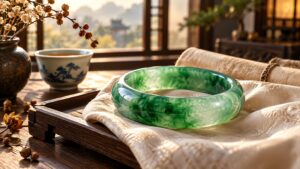
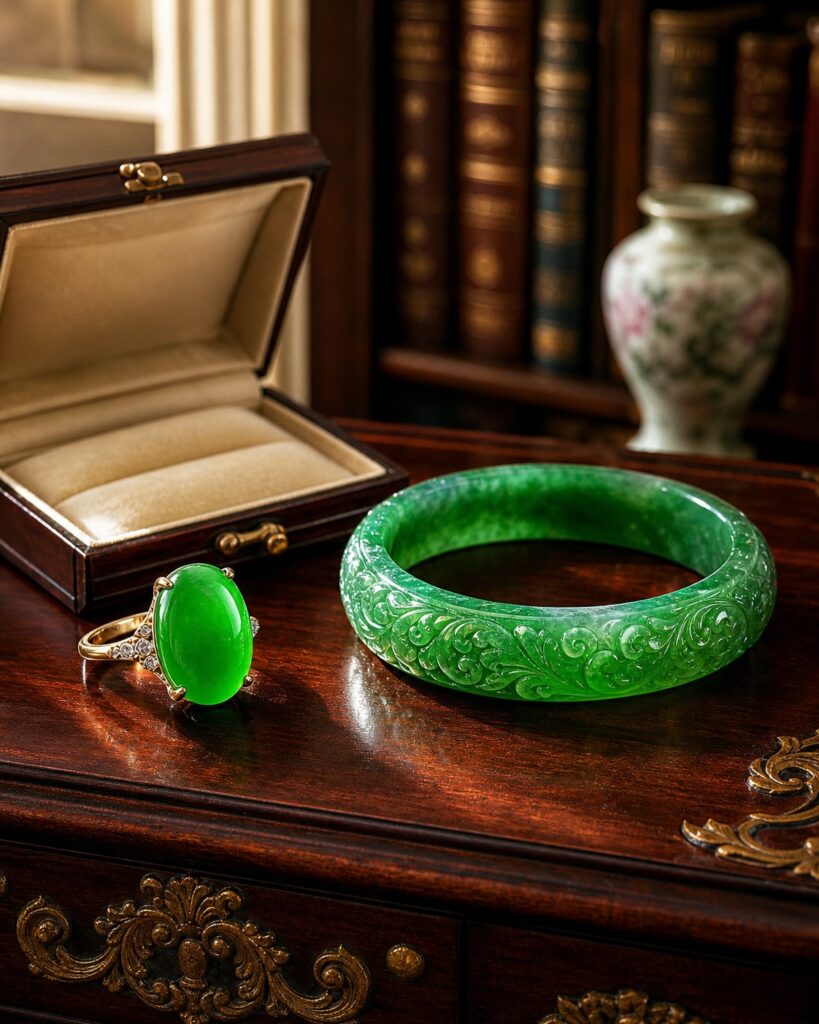
Color is the most important factor in jadeite valuation. The finest jadeite is known as ‘imperial green’—an intense, even green with a slight translucency. However, jadeite comes in a rainbow of hues, including lavender, yellow, white, and even multi-color combinations. The saturation, evenness, and purity of the color all matter. For example, VirtuCasa’s Natural Full-Green Jadeite Saddle Ring showcases an even ‘full green’ hue with a warm vitreous luster, while the Natural Ice-type Violet Jade Bead Necklace offers a soft, elegant lavender that is equally prized by collectors. Color uniformity across a piece is a sign of superior material.
Transparency
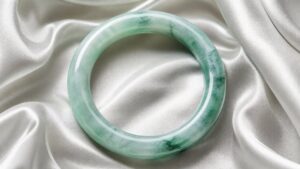
Transparency in jadeite ranges from opaque to nearly transparent. The most desirable jadeite is ‘ice-type’ or ‘glassy’—where light passes through the stone, revealing a cool, crystalline structure. This quality is often described as having a ‘glassy luster’ or ‘icy base.’ VirtuCasa’s Natural Ice-type Jadeite Bracelet with Floating Green Patterns exemplifies this: it is transparent and delicate, with a glassy sheen and floating green patterns that seem to hover inside the stone. Likewise, the Natural Ice-type Tricolor Jade Necklace features a transparent texture with clear, bright luster. Even jadeite that is not fully translucent can be valuable if the color is exceptional—such as the Natural Jadeite Bracelet with its lavender-white hue and translucent quality.
Texture
Texture refers to the fineness and compactness of the jadeite’s internal structure. A fine, smooth texture—often described as ‘delicate’ or ‘compact’—indicates high quality. Coarse or grainy textures reduce value. VirtuCasa’s product descriptions consistently highlight texture: the Natural Jadeite Tassel Earrings are noted for a ‘fine and compact texture’ with a refined glassy luster, while the Natural Three-Color Jadeite Bracelet has a ‘fine and smooth texture’ that produces a warm, gentle luster. Texture is best assessed by touch and by looking at the surface under bright light—a smooth, almost waxy feel is a good sign. The Blue Jadeite buying guide for beginners recommends closely inspecting texture under magnification to see if the surface is uniform.
Types & Styles
Jadeite jewelry comes in many forms. Bracelets are perennial favorites—from simple bead strands to elaborate carved bangles. VirtuCasa offers bead bracelets like the Natural Jadeite Bracelet with 19 round beads (each 10mm) and the larger Natural Ice-type Jadeite Bracelet with 13 beads of 16mm each. Earrings, like the tassel style, add movement and elegance. Rings include saddle designs (classic and unisex) as well as cabochon rings set in precious metals. The Natural Ice-type Violet Jadeite Cabochon Ring Set is a stunning example of a gem-set piece, combining jadeite with sapphires and diamonds. Necklaces range from delicate strands (3.5mm beads) to substantial multi-strand designs with 68 beads ranging from 10mm to 12mm.
Multi-color jadeite is especially prized. The ‘three-color’ combination—yellow, white, and green—appears in several VirtuCasa pieces, such as the Natural Three-Color Jadeite Bracelet and the Natural Ice-type Tricolor Jade Necklace. These pieces showcase how natural jadeite can contain multiple hues in a single stone, making each piece unique.
How to Choose the Right Size & Fit
Size and fit are crucial for comfort and wearability. VirtuCasa provides detailed measurements for every piece. For bracelets, check the number of beads and their diameter. The Natural Jadeite Bracelet has a total circumference of about 18cm (7 inches) and fits wrists of 16-19cm. The Natural Three-Color Jadeite Bracelet has an adjustable elastic cord for a flexible fit. For rings, sizes are given (e.g., size 24 or 26 for saddle rings, size 15 for the cabochon ring set). These measurements correspond to standard US ring sizes. If you are unsure, measure your finger circumference and compare to the product’s description. Necklaces come with bead diameters and weights; the Natural Ice-type Tricolor Jade Necklace (3.5mm beads) is lightweight and ideal for layering, while the Natural Ice-type Violet Jade Bead Necklace (10-12mm beads, 158g) makes a bolder statement.
Price & Value
Jadeite prices vary widely based on the three quality factors. A fine ice-type violet necklace can reach premium-tier pricing, while a smaller three-color necklace is more accessible. Entry-level natural jadeite pieces, such as the Natural Three-Color Jadeite Bracelet (listed at $668) or the Natural Jadeite Saddle Ring with Floating Green ($719), offer beautiful color and texture without a premium price tag. Mid-range options include the Natural Jadeite Tassel Earrings ($852) and the Natural Jadeite Bracelet ($1008). High-end investments are represented by the Natural Ice-type Violet Jade Bead Necklace ($6649) and the Natural Full-Green Jadeite Saddle Ring ($2437). Remember that price is not just about size—it’s the combination of color purity, transparency, and fine texture that drives value.
Common Mistakes to Avoid
- Confusing jadeite with nephrite: Nephrite is more common and less valuable. Always ask for a certificate or confirmation of natural jadeite. VirtuCasa clearly labels its pieces as natural jadeite.
- Ignoring transparency: All else equal, a more transparent piece is worth more. Don’t assume that a deep green opaque piece is better than a lighter translucent one.
- Overspending on poor texture: A rough or grainy surface indicates lower quality. Always check the texture description—look for words like ‘fine,’ ‘smooth,’ and ‘compact.’
- Buying without size measurements: Bracelets and rings must fit properly. Use the provided circumference and diameter to match your hand or finger.
- Thinking all multi-color pieces are low quality: Three-color jadeite is rare and can be highly desirable if the colors are even and the texture is fine. VirtuCasa’s pieces with yellow, green, and white demonstrate beautiful harmony.
Top Picks
For the first-time buyer: Natural Three-Color Jadeite Bracelet – an affordable entry into natural jadeite, with a unique color combination and smooth texture.
For the modern minimalist: Natural Ice-type Tricolor Jade Necklace ($740) – 3.5mm translucent beads perfect for layering or solo wear.
For the collector seeking high transparency: Natural Ice-type Jadeite Bracelet with Floating Green Patterns ($1517) – a stunning example of ice-type jade with floating green motifs.
For a classic investment: Natural Full-Green Jadeite Saddle Ring ($2437) – an even green hue with a warm vitreous luster, carved from a single piece.
For the luxury lover: Natural Ice-type Violet Jadeite Cabochon Ring Set ($1926) – combines fine jadeite with 18K white gold, sapphires, and diamonds.
Final Tips / Conclusion
When shopping for jadeite, trust your eyes and your fingers. Look for even color, good translucency, and a smooth, fine texture. Always buy from a reputable seller like VirtuCasa, which clearly describes the germplasm (material quality) and provides exact measurements. Remember that jadeite is a natural stone; slight inclusions or variations add character and prove authenticity. Whether you choose a classic green bangle or a unique three-color necklace, you are investing in a piece of earth’s beauty. Explore the full collection of jadeite jewelry at VirtuCasa and find the piece that speaks to you.
FAQ
What is the most important quality factor in jadeite?
Color is the most important according to gemological standards. The most valuable is a rich, even green, but lavender and multi-color jadeite can also be highly prized if the color is saturated and uniform.
How can I tell the difference between jadeite and nephrite?
Jadeite is generally more translucent and has a finer texture; it also shows a wider range of colors. A professional gemological test is the only sure way. VirtuCasa labels all its pieces as natural jadeite.
Is ice-type jadeite better than opaque jadeite?
Not necessarily ‘better’ in an absolute sense, but high transparency is a premium feature. Ice-type jadeite with floating green patterns is especially sought-after. However, opaque jadeite can still be valuable if the color is exceptional.
Can I wear jadeite jewelry every day?
Yes, jadeite is durable but can be chipped if struck hard. Rings and bracelets are suitable for daily wear, but avoid exposure to harsh chemicals. Most VirtuCasa pieces are designed for comfortable everyday use.