Why the Color vs Clarity Question Matters for Jadeite Bracelets
Few buying decisions in jewelry are as personal as choosing a jadeite bracelet. Jadeite is valued not by a single number on a certificate but by a balance of color, transparency, texture, and craftsmanship — and buyers quickly discover that the trade-offs between these factors are what separate a pleasant bracelet from an exceptional one. The central question, jadeite bracelet color vs clarity, is worth understanding before you spend, because it shapes both how a bracelet looks on the wrist and how it holds value over time.
Unlike diamonds, where a global cut-and-clarity system gives buyers a common language, jadeite is judged more holistically. The Gemological Institute of America notes that jadeite buyers weigh color under both fluorescent and incandescent light, alongside texture and transparency — a reminder that no single factor stands alone. You can explore the full range of options in our jadeite collection to see how these qualities play out across real pieces.
This guide walks through the quality factors that matter, the main styles of jadeite bracelets, sizing, price drivers, and the mistakes that cost buyers the most — so you can decide for yourself whether color or clarity should lead your search.
Understanding Jadeite Quality: The Factors That Decide Everything
Before comparing color against clarity, it helps to know the vocabulary. Jadeite quality is generally assessed across a handful of interlocking traits, and understanding them makes the color-versus-clarity debate far less abstract.
Color: Hue, Saturation, and Evenness
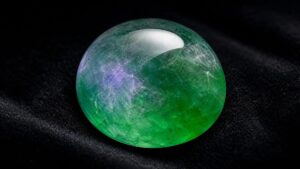
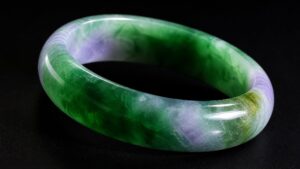
Color is often called the single most influential factor in jadeite value. What matters is not just whether a stone is green, but the hue (the exact shade), the saturation (how rich and vivid it is), and the evenness of distribution. A deep, vivid green that is evenly spread across a piece is typically prized far above a patchy or washed-out tone. Lavender, yellow, white, and multi-color combinations each have their own devoted following, and a well-blended three-color piece can be as desirable as a solid one.
According to the GIA’s guide to jadeite quality factors, evaluators judge color under different light sources because jadeite can shift in appearance between daylight and indoor lighting. That is why a bracelet that looks vibrant in a shop window may read flatter at home — and why evenness and saturation, not just hue, drive long-term satisfaction.
Clarity and Transparency: The “Water” of the Stone
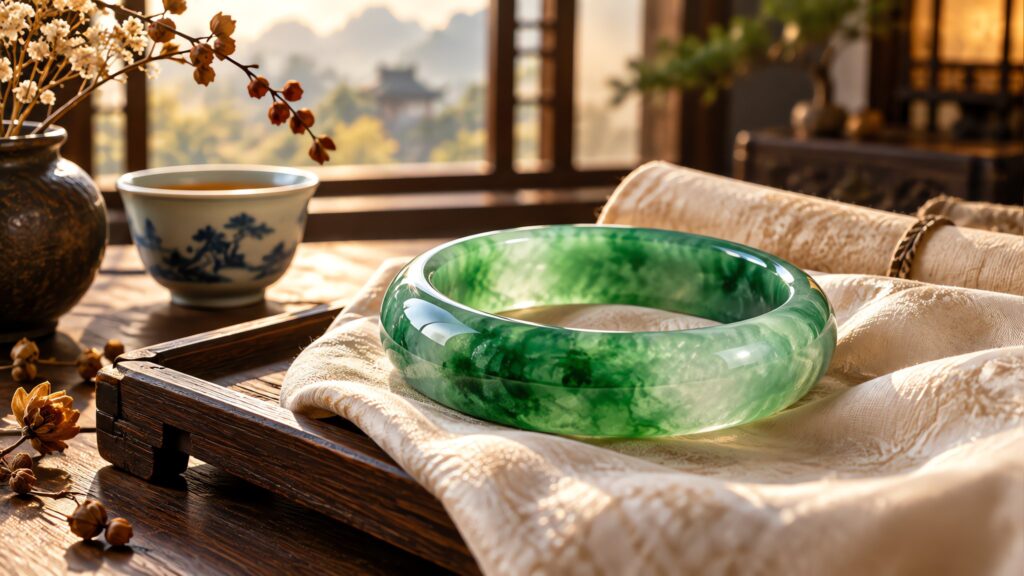
Clarity in jadeite is closely tied to transparency, often described in the trade as the stone’s “water.” Highly transparent material — sometimes called ice-type — allows light to pass through, giving the jade a cool, glassy sheen. Less transparent jadeite reads as denser and more opaque. Importantly, clarity in jadeite is not about being flawless in the diamond sense; natural internal textures, fine grain, and subtle patterns are part of the stone’s character.
Transparency interacts directly with color. A vivid green in an opaque stone can look rich and solid, while the same hue in a highly transparent stone can appear lighter but more luminous. This is the heart of the color-versus-clarity trade-off: you are often choosing between intensity and glow.
Texture, Luster, and Treatment Status
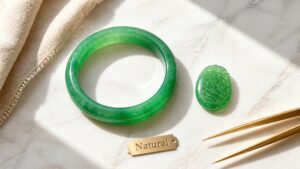
Texture describes how fine and smooth the stone feels and how its surface reflects light. A fine, compact texture produces a vitreous or glassy luster; a coarser one looks duller. Equally important is treatment status. Type A jadeite is untreated and natural, while Types B and C involve bleaching, polymer impregnation, or dyeing. As noted in guidance on identifying natural Type A jade online, confirming treatment status should come before any color or clarity comparison — an untreated stone is the baseline for everything else.
Types & Styles of Jadeite Bracelets
Jadeite bracelets come in several recognizable forms, and the style you choose often determines which quality factor you should prioritize. Bead bracelets, for instance, showcase color and uniformity across many individual stones, while carved or solid forms emphasize the character of a single piece of material.
Beaded bracelets are among the most accessible and versatile. The Natural Jadeite Bracelet is a good example: crafted from natural jadeite beads with a delicate, smooth texture, it presents a soft lavender-white hue with a gentle vitreous luster, and its uniform color distribution and translucent quality highlight the stone’s natural beauty. At the more transparent end of the spectrum, the Natural Ice-type Jadeite Bracelet with Floating Green Patterns shows what high clarity looks like, featuring floating green patterns that blend subtly with an icy base.
Color-forward buyers are drawn to multi-hue designs. The Natural Three-Color Jadeite Bracelet combines yellow, white, and light green in a harmonious blend that showcases jadeite’s natural multi-hued patterns. Beyond bracelets, the same principles apply to rings and necklaces — from the Natural Full-Green Jadeite Saddle Ring with its even, dense green, to the Natural Ice-type Violet Jade Bead Necklace with its soft lavender hue and translucent, glossy appearance.
How to Choose the Right Size & Fit
Fit is where many online jadeite purchases go wrong, and it deserves as much attention as color or clarity. Beaded bracelets are the most forgiving because elastic cord allows a flexible fit. The Natural Jadeite Bracelet, for example, is composed of 19 round beads each approximately 10mm in diameter, forming a flexible bracelet with a total circumference of about 18cm — suitable for wrists with a circumference of 16–19cm. The Natural Three-Color Jadeite Bracelet takes a different approach, with 16 spherical beads each approximately 12mm in diameter and an adjustable elastic circumference suited to most wrist sizes.
Bead size affects both look and feel. Larger beads create a bolder, more substantial presence, while smaller beads read as refined and understated. Weight is another practical cue: the Natural Ice-type Jadeite Bracelet with Floating Green Patterns weighs 101g and feels substantial and stable, whereas lighter pieces sit more discreetly on the wrist. If you are new to jadeite, measuring your wrist circumference before shopping — and comparing it against the stated fit range — prevents the most common return scenario.
For rings, ring size and shape matter more than bead count. Saddle rings, with their curved top surface, rest comfortably on the finger and offer a classic silhouette. Checking the listed ring size against your own measurement is essential, since jadeite cannot be resized the way metal bands can.
Price & Value: What Drives Cost
Jadeite pricing reflects the combined weight of color, transparency, texture, treatment status, and size — which is why two bracelets of similar diameter can sit at very different points on the market. In our collection, prices span from entry-level beaded pieces to premium ice-type material, and the differences usually trace back to rarity of color and degree of transparency.
At the more accessible end, the Natural Three-Color Jadeite Bracelet is listed at $668, and the Natural Ice-type Tricolor Jade Necklace at $740. Pieces balancing color and clarity sit in the mid-range, such as the Natural Ice-type Tricolor Jade Necklace at $825 and the Natural Jadeite Tassel Earrings at $852. As transparency and color intensity increase, so does price: the Natural Jadeite Bracelet is $1008, the Natural Ice-type Jadeite Bracelet with Floating Green Patterns is $1517, and the Natural Ice-type Violet Jadeite Cabochon Ring Set with 18K White Gold, Sapphires, and Diamonds is $1926. Highly saturated green and rare violet material command the top of the range, including the Natural Full-Green Jadeite Saddle Ring at $2437 and the Natural Ice-type Violet Jade Bead Necklace at $6649.
The practical takeaway is that you rarely pay for one factor alone. A vivid but opaque stone and a pale but highly transparent one can land at similar prices — the value lies in how well the factors are balanced and how much the piece appeals to you personally.
Common Mistakes to Avoid
- Chasing color and ignoring treatment status. Always confirm a piece is natural Type A jadeite before comparing hue or transparency.
- Judging color under only one light source. Jadeite shifts between daylight and indoor lighting, so view pieces under both where possible.
- Assuming higher clarity always means higher value. A richly saturated, opaque stone can be more desirable than a washed-out transparent one.
- Skipping the size check. Compare stated bead diameters, circumference, and ring size against your own measurements before buying.
- Overlooking texture and luster. A fine, compact texture with a glassy sheen signals quality that photos alone may not convey.
- Buying on price alone. The cheapest piece is rarely the best value if color, clarity, or fit fall short of what you actually want.
Top Picks for Different Buyers
Best for color lovers on a budget: the Natural Three-Color Jadeite Bracelet at $668 pairs yellow, white, and light green in a harmonious blend with a fine, smooth texture — ideal if you want visual interest and an adjustable fit without stretching your budget.
Best for clarity seekers: the Natural Ice-type Jadeite Bracelet with Floating Green Patterns at $1517 offers transparent, delicate ice-type material with a cool, glassy sheen and floating green patterns — a strong choice if luminosity matters more to you than solid color.
Best everyday beaded piece: the Natural Jadeite Bracelet at $1008 delivers a soft lavender-white hue, uniform color distribution, and a comfortable flexible fit for wrists of 16–19cm — a balanced, wearable introduction to natural jadeite.
Best statement green: the Natural Full-Green Jadeite Saddle Ring at $2437 features an even full-green coloration with a warm, lustrous vitreous sheen — suited to buyers who prioritize saturated color in a classic carved form.
Best premium collector piece: the Natural Ice-type Violet Jade Bead Necklace at $6649 combines rare violet ice-type jadeite with a translucent, glossy appearance across 68 beads — a serious acquisition for collectors who value both rarity and transparency.
Final Tips and Conclusion
So, does color or clarity matter more? The honest answer is that it depends on what you want the piece to do. If you are drawn to richness and presence, prioritize saturation and evenness of color. If you love the luminous, glassy look of fine jadeite, prioritize transparency and texture. Most satisfying purchases strike a balance, and understanding Type A status, light behavior, and sizing ensures that balance is a deliberate choice rather than an accident.
Buy from sellers who describe treatment status, texture, and measurements clearly, and compare several pieces before deciding — as a Burmese jade bracelet buying guide also advises, comparing bead sizes, craftsmanship, and natural Type A material side by side is the surest way to train your eye. Browse our full jadeite category to start comparing, and let your own priorities — color, clarity, or the balance of both — guide the final decision.
FAQ
Is color or clarity more important in a jadeite bracelet?
Neither factor wins universally. Color — especially saturation and evenness — is often the strongest driver of perceived value, while clarity and transparency determine how luminous the stone looks. The right balance depends on whether you prefer rich, solid color or a cool, glassy glow.
What does Type A jadeite mean?
Type A jadeite is natural and untreated. Types B and C involve bleaching, polymer impregnation, or dyeing. Confirming Type A status should be your first step before comparing color or clarity.
Does jadeite color change under different lighting?
Yes. Jadeite can appear different under fluorescent versus incandescent light, which is why gemological guidance recommends evaluating color under multiple light sources before buying.
How do I choose the right bracelet size online?
Check the listed bead diameter, total circumference, and stated wrist fit range against your own wrist measurement. Elastic-cord beaded bracelets are the most forgiving, while rings and rigid forms require a closer size match.