Why a Jadeite Cabochon Ring Deserves Careful Attention
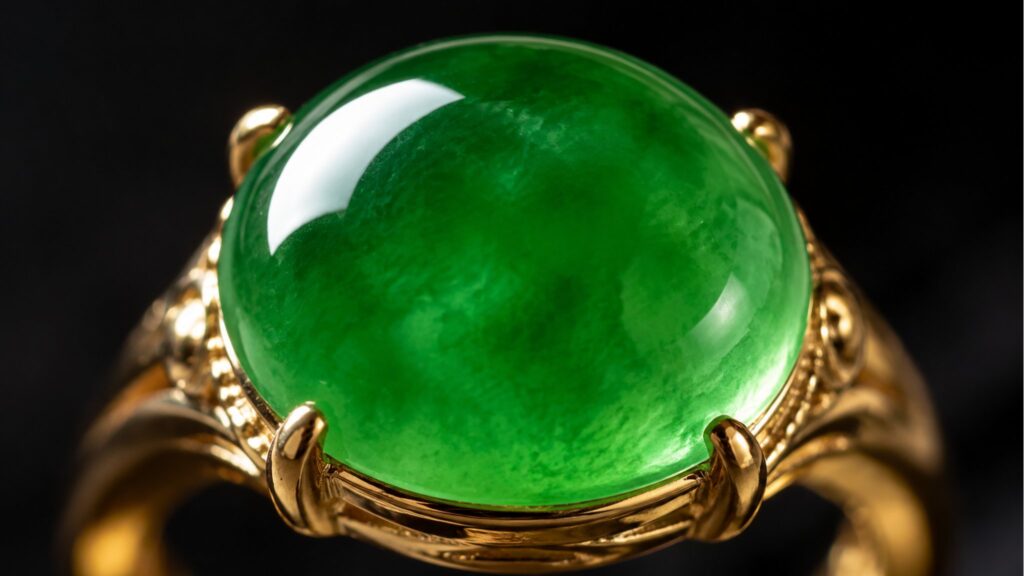
A jadeite cabochon ring is one of the most personal pieces of jewelry a buyer can choose. Unlike faceted gemstones, jadeite is almost always cut into a smooth, rounded cabochon, which lets the stone’s color, transparency and texture do the talking. That makes the shape of the stone and the design of the setting just as important as the jade itself. A well-proportioned cabochon in a sympathetic setting can make an entry-level stone look refined, while a poorly chosen mount can overwhelm even a premium piece.
Jadeite also carries deep cultural meaning across East Asia, where it has been treasured for centuries as a symbol of purity, protection and good fortune. For modern buyers, that heritage adds emotional value, but it also means the market is full of treated and imitation material. Knowing what to look for protects both your budget and your trust in the piece.
At VirtuCasa, our jadeite collection spans bead bracelets, necklaces, earrings and rings, so you can compare how the same material behaves across different forms. If you are new to the category, browsing the full jadeite collection is a useful first step before narrowing down to a single ring.
Understanding Jadeite Quality
Before you fall in love with a shape or setting, it helps to understand what actually drives jadeite’s value. The gemological consensus is that color, transparency and texture are the three most important quality factors, and they interact with each other in complex ways. A stone can be vivid in color but cloudy, or beautifully transparent but pale; the best pieces balance all three.
Color
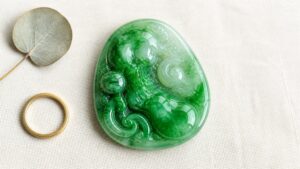
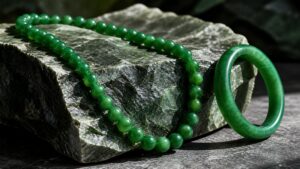
Color is usually the first thing buyers notice. In jadeite, vivid green is the most traditionally prized hue, but lavender, white, yellow and multi-color combinations all have devoted collectors. The Gemological Institute of America’s jadeite quality factors explain that color, transparency and texture are assessed together, and that evenness of color distribution matters as much as the hue itself. A stone with a rich, consistent color usually reads as more valuable than one with patchy or washed-out tone.
Transparency and Texture
Transparency describes how much light passes through the stone. Terms like ‘ice-type’ refer to jadeite with a notably clear, glassy character. Texture refers to the internal structure: fine, compact jadeite looks smooth and dense, while coarse material can appear grainy. A practical jade buying guide is useful for comparing these factors side by side, and it reinforces that clarity and cut quality should be judged alongside color.
Treatments and Authenticity
Jadeite is commonly described as Type A (untreated), Type B (bleach-and-polymer treated) or Type C (dyed). Type A is the most desirable and the standard most serious buyers should aim for. Always ask whether a stone is natural and untreated, and look for clear product descriptions. VirtuCasa lists its pieces as natural jadeite, and the product pages describe the material, dimensions and setting in detail so you can compare like with like.
Types and Styles of Jadeite Rings
Jadeite rings fall into two broad families: carved saddle rings and cabochon rings set in metal. Saddle rings are carved from a single piece of jadeite, with a curved top that rests comfortably on the finger. They are traditional, sculptural and often favored by collectors who want the stone to stand alone. Cabochon rings, by contrast, feature a polished dome of jadeite held in a metal setting, often accented with diamonds or sapphires. These tend to feel more contemporary and can be dressed up or down.
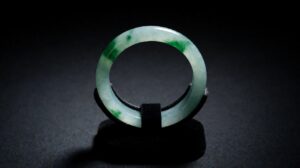
Within VirtuCasa’s range, the Natural Full-Green Jadeite Saddle Ring is a classic example of the carved style: an even full-green coloration, a fine and smooth texture, a 24-ring size and a weight of 9.5g. For a more patterned look, the Natural Jadeite Saddle Ring with Floating Green shows green patches floating on a light base, in a 26 ring size and 13.5g.
On the cabochon side, the Natural Ice-type Violet Jadeite Cabochon Ring Set with 18K White Gold, Sapphires, and Diamonds pairs a vivid violet oval cabochon with a white-gold, sapphire and diamond setting. At 4g and a 15 ring size, it is a light, elegant piece that shows how a metal setting can frame a translucent stone.
How to Choose the Right Size and Fit
Ring sizing is where many buyers make avoidable mistakes. Jadeite is a hard, rigid material, so a saddle ring cannot be resized the way a metal band can. That makes getting the size right before purchase essential. The product data above lists specific ring sizes, such as 24 and 26 for the saddle rings and 15 for the violet cabochon ring, so measure your finger carefully and compare against those figures rather than guessing.
Fit also depends on the shape of the ring. Saddle rings have a curved top that sits across the finger, so comfort comes from how the curve rests rather than from a tight band. Cabochon rings with metal shanks should feel secure but not restrictive. Consider the height of the stone too: a tall cabochon can catch on clothing, while a lower dome is easier for daily wear.
If you are buying as a gift, remember that finger size varies with temperature and time of day. Measure at room temperature, ideally in the afternoon, and if you are between sizes, favor comfort over a snug fit. For buyers who prefer a flexible fit, VirtuCasa’s bead bracelets and necklaces, such as the Natural Jadeite Bracelet with its elastic cord, offer an easier alternative when sizing is uncertain.
Price and Value: What Drives Cost
Jadeite pricing is not linear. Small differences in color saturation, transparency and texture can produce large differences in value, and the setting adds its own layer of cost. A carved saddle ring is priced largely on the jade itself, while a cabochon ring may carry additional value from precious metals and accent stones. This is why two rings of similar size can sit at very different points on the price scale.
Within VirtuCasa’s listed pieces, prices range from entry-level to premium. The Natural Jadeite Saddle Ring with Floating Green is $719, while the Natural Full-Green Jadeite Saddle Ring is $2437. The Natural Ice-type Violet Jadeite Cabochon Ring Set with 18K White Gold, Sapphires, and Diamonds is $1926. These figures reflect the combination of material quality, craftsmanship and setting rather than size alone.
When comparing value, look at the whole package: the naturalness of the jade, the evenness of color, the transparency, the quality of the setting, and the accuracy of the listed specifications. A ring that is honestly described and well made is usually the better long-term purchase, even if it is not the least expensive option on the page.
Common Mistakes to Avoid
- Buying on color alone without checking transparency and texture, which together determine how a stone actually looks in person.
- Assuming all jadeite is untreated. Ask about Type A status and read the product description carefully.
- Guessing your ring size. Saddle rings generally cannot be resized, so measure precisely against the listed size.
- Ignoring the setting. A heavy or busy mount can overpower a delicate cabochon, while a sympathetic setting enhances it.
- Comparing rings by weight or dimensions alone, without considering color, clarity and craftsmanship.
- Overlooking the return and authentication policies of the seller before committing to a purchase.
Top Picks
If you want a traditional carved ring with strong presence, the Natural Full-Green Jadeite Saddle Ring at $2437 suits collectors and buyers who value even, rich green color and a classic silhouette. It is a substantial piece at 9.5g in a 24 ring size.
For a more expressive, patterned look at a lower entry point, the Natural Jadeite Saddle Ring with Floating Green at $719 is a good fit for first-time jadeite buyers or anyone who loves natural variation in the stone. Its 26 ring size and 13.5g weight give it a comfortable, distinctive feel.
For a modern, gem-set cabochon ring, the Natural Ice-type Violet Jadeite Cabochon Ring Set with 18K White Gold, Sapphires, and Diamonds at $1926 is ideal for someone who wants a fine-jewelry look with a translucent violet stone. Its 15 ring size and 4g weight make it easy to wear every day.
If you are still exploring the category, the jadeite collection lets you compare rings with bracelets, necklaces and earrings, so you can see how the same material performs across different forms before you decide.
Final Tips and Conclusion
Buying a jadeite cabochon ring is a balance of art and evidence. Start with the stone: check color, transparency and texture, and confirm that the jade is natural and untreated. Then look at the shape and setting, making sure the mount frames the stone rather than competing with it. Finally, confirm the size against the listed ring size, because jadeite rings are far less forgiving than metal bands when it comes to fit.
Take your time, compare several pieces side by side, and read the product descriptions closely. A ring you choose with care is more than an accessory; it is a piece you can wear for years and pass on with confidence.
FAQ
What is a jadeite cabochon ring?
A jadeite cabochon ring features a smooth, domed piece of jadeite held in a metal setting, often accented with diamonds or sapphires. It differs from a carved saddle ring, which is shaped from a single piece of jadeite without a metal mount.
How do I know if jadeite is natural and untreated?
Ask whether the stone is Type A, meaning untreated. Read the product description carefully and look for clear statements about the material. Reputable sellers describe the jade, its dimensions and its setting in detail.
Can a jadeite saddle ring be resized?
Generally no. Jadeite is a hard, rigid material, and carved saddle rings are not resized the way metal bands are. Measure your finger carefully and compare against the listed ring size before purchasing.
What factors most affect jadeite ring value?
Color, transparency and texture are the primary drivers, followed by the quality of the setting and any accent stones. Even small differences in these factors can produce large differences in price.