Introduction: Why Authenticity Matters When Buying Jadeite
Jadeite has been treasured for centuries, symbolizing purity, protection, and prosperity. But not all jadeite is created equal. In the market, you’ll encounter terms like “Type A,” “Type B,” and “Type C” jade. These classifications determine whether a stone is natural or has been treated to enhance its appearance. For collectors and jewelry lovers, understanding the difference is essential to making an informed purchase.
Type A jadeite is completely natural — no artificial treatments, no dyes, no polymers. It’s the most valuable and sought-after form. Treated jade (Type B and C) undergoes acid bleaching, polymer impregnation, or dyeing to improve color and clarity, which can significantly reduce its durability and long-term value. As a buyer, knowing how to spot the difference protects your investment and ensures you’re getting a genuine piece of nature’s art.
At VirtuCasa, we specialize in natural jadeite jewelry and Chinese antiques. Our collection features pieces crafted from untreated, natural jadeite, each with unique colors and textures. In this guide, we’ll walk you through the key factors that define Type A jadeite, how to identify it, and what to look for when choosing your perfect piece.
Understanding Quality: Key Factors in Natural Jadeite
Gemologists evaluate jadeite based on several factors that influence its beauty and value. According to GIA’s jadeite quality factors, the three most important qualities are color, transparency, and texture. These elements work together to create the stone’s overall appeal.
Color
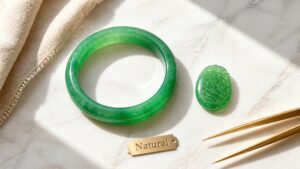
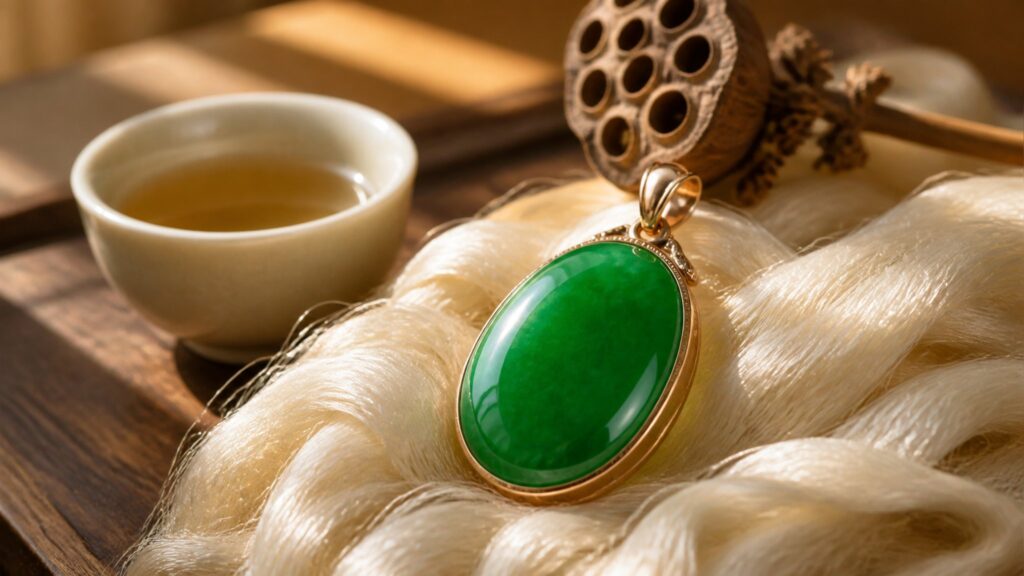
Color is the most impactful factor. The most prized jadeite is a vivid, even green known as “imperial green.” However, jadeite also occurs in lavender, yellow, white, and even three-color combinations. The intensity, evenness, and saturation of color all contribute to value. For instance, our Natural Full-Green Jadeite Saddle Ring features an even “full green” coloration that is dense yet translucent, showcasing the richness of natural jade.
Transparency
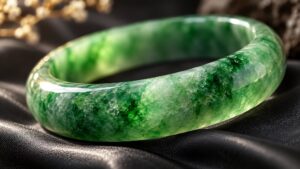
Transparency ranges from opaque to translucent. Ice-type jadeite is highly translucent, resembling ice, and is especially prized. Our Natural Ice-type Jadeite Bracelet with Floating Green Patterns exemplifies this quality with its transparent, delicate texture and glassy sheen.
Texture
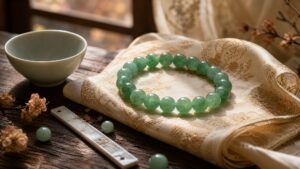
Texture refers to the fineness and compactness of the jade’s internal structure. Fine, smooth textures with a vitreous luster are considered high quality. Natural jadeite, like the beads in our Natural Jadeite Bracelet, has a delicate, smooth feel that reflects its authenticity.
Types & Styles: Exploring Natural Jadeite Varieties
Natural jadeite comes in an array of styles, from classic bracelets to elegant rings and necklaces. Each type showcases the stone’s unique characteristics.
Bracelets
Beaded bracelets are a popular choice, offering versatility and comfort. Our Natural Jadeite Bracelet features soft lavender-white beads with a gentle vitreous luster. For those who prefer a bolder look, the Natural Three-Color Jadeite Bracelet combines yellow, white, and light green in harmonious patterns.
Necklaces
Necklaces allow for striking displays of color and craftsmanship. The Natural Ice-type Tricolor Jade Necklace features rare yellow, green, and white interwoven colors, while the Natural Ice-type Violet Jade Bead Necklace offers a soft lavender hue with a translucent glow.
Rings & Earrings
Saddle rings are a classic style, carved from a single piece of jadeite. The Natural Jadeite Saddle Ring with Floating Green features elegant green patches on a light base. For a touch of luxury, the Natural Ice-type Violet Jadeite Cabochon Ring Set pairs violet jade with 18K white gold and diamonds. Earrings like the Natural Jadeite Tassel Earrings add graceful movement with their layered chain design.
How to Choose the Right Size & Fit
When selecting jadeite jewelry, fit is crucial for both comfort and aesthetic appeal. Bracelets and rings come in specific sizes, so it’s important to measure accurately.
For bracelets, consider the circumference of your wrist. Our Natural Jadeite Bracelet is composed of 19 round beads, each approximately 10mm in diameter, with a total circumference of about 18cm, suitable for wrists measuring 16-19cm. The Natural Ice-type Jadeite Bracelet features 13 larger beads (16mm each) and offers a flexible fit for various wrist sizes.
Rings are sized differently. The Natural Full-Green Jadeite Saddle Ring is a size 24, while the Natural Jadeite Saddle Ring with Floating Green is size 26. The Natural Ice-type Violet Jadeite Cabochon Ring Set is size 15. Always measure your finger circumference to ensure a comfortable fit.
Price & Value: What Drives the Cost
Several factors influence the price of natural jadeite: color intensity, transparency, texture, and craftsmanship. Rarer colors like imperial green or vivid violet command higher prices. Larger, more substantial pieces also tend to be more valuable.
In our collection, prices vary from entry-level to premium. For example, the Natural Three-Color Jadeite Bracelet is priced at $668, while the Natural Ice-type Violet Jade Bead Necklace is $6649. The Natural Ice-type Jadeite Bracelet is $1517, and the Natural Full-Green Jadeite Saddle Ring is $2437. These prices reflect the quality and rarity of each piece.
When comparing, remember that Type A jadeite is always more valuable than treated counterparts. As Mason-Kay Inc.’s buying tips advise, always buy Type A jade to ensure authenticity and long-term value.
Common Mistakes to Avoid
- Assuming all jade is jadeite: Nephrite and other minerals can be sold as jade. Always verify it’s jadeite.
- Ignoring treatments: Ask if the stone is Type A, B, or C. Type B and C are treated and less valuable.
- Overlooking transparency: Higher transparency usually indicates better quality, but some opaque jade can be valuable if color is exceptional.
- Skipping size measurements: A beautiful bracelet that doesn’t fit is useless. Measure your wrist before buying.
- Focusing only on price: A high price doesn’t guarantee quality. Evaluate color, texture, and authenticity.
- Not checking return policies: Ensure you can return the item if it doesn’t meet expectations.
Top Picks: Recommendations for Every Collector
Here are our top recommendations from the VirtuCasa collection, each suited to different preferences and occasions.
For the First-Time Buyer: The Natural Jadeite Bracelet ($1008) is an excellent entry point. Its soft lavender-white hue and delicate texture make it versatile for daily wear, and its comfortable 18cm circumference fits most wrists.
For the Color Enthusiast: The Natural Three-Color Jadeite Bracelet ($668) offers a unique blend of yellow, white, and light green. It’s a striking piece that showcases jadeite’s multi-hued beauty.
For the Ice-Type Connoisseur: The Natural Ice-type Jadeite Bracelet with Floating Green Patterns ($1517) is a masterpiece of transparency and color. Its 16mm beads and substantial weight (101g) make it a statement piece.
For the Elegant Minimalist: The Natural Jadeite Tassel Earrings ($852) feature deep green beads on 18K gold-plated chains. Lightweight at 8g, they’re perfect for long-term wear.
For the Serious Collector: The Natural Ice-type Violet Jade Bead Necklace ($6649) is a rare find. Its 68 beads range from 10mm to 12mm, offering a substantial yet comfortable feel. The lavender hue is ethereal and luxurious.
Final Tips: Ensuring You Get True Type A Jadeite
When shopping for jadeite, always ask for certification or documentation that confirms the stone is Type A. Reputable sellers, like VirtuCasa, provide detailed descriptions of the germplasm, size, and setting, which help you assess authenticity.
As recommended by Jade Artisan’s buying guide, compare multiple pieces to notice differences in color, clarity, and imperfections. The more you compare, the better you’ll understand what natural jadeite looks like.
Finally, trust your instincts. If a deal seems too good to be true, it likely is. Natural jadeite is a precious gemstone, and its value reflects its rarity. By following this guide, you’ll be well-equipped to spot the difference between Type A and treated jadeite, ensuring your purchase is a wise investment.
Explore our full jadeite collection to find your perfect piece of natural beauty.
FAQ
What is Type A jadeite?
Type A jadeite is completely natural jadeite that has not undergone any artificial treatment such as acid bleaching, polymer impregnation, or dyeing. It is the most valuable and durable form of jadeite.
How can I tell if jadeite is treated?
Treated jadeite (Type B or C) may show signs like a glassy, unnatural shine, uneven color distribution, or a ‘plastic’ feel. Professional gemological testing is the most reliable way to confirm. Always ask for certification or detailed product descriptions.
Why is Type A jadeite more expensive?
Type A jadeite is rarer because it is naturally formed without enhancements. Its color, transparency, and texture are all natural, making it more valuable and a better long-term investment compared to treated jade.
Does VirtuCasa sell only Type A jadeite?
Yes, VirtuCasa specializes in natural jadeite jewelry. All products in our jadeite category are crafted from natural, untreated jadeite, as described in each product’s germplasm details.