Introduction
When you begin exploring jadeite jewelry, you quickly realize that color and transparency are the two most important factors determining beauty and value. Unlike many gemstones where clarity is king, jadeite is prized for its vivid, even hues and the way light penetrates its dense crystalline structure. Whether you are drawn to the serene lavender of a violet cabochon or the vibrant greens of a classic beaded necklace, understanding how experts grade jadeite will empower you to make a confident purchase. This guide walks you through the key quality indicators, the main types and styles available on VirtuCasa’s jadeite collection, and how to choose a piece that aligns with your taste and budget.
Understanding Quality
Color – The Primary Value Driver
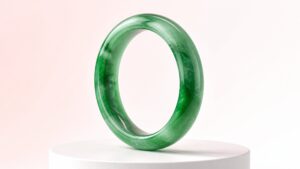
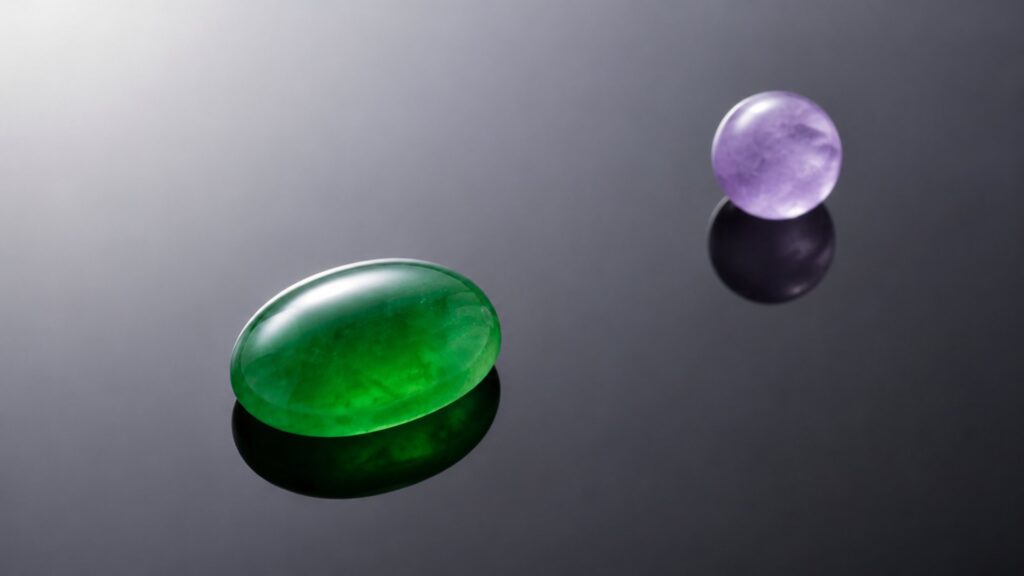
Color is the single most important trait in jadeite grading. According to the Gemological Institute of America, the most valuable color is an intense, vivid green known as “imperial green,” but jadeite occurs in a remarkable spectrum including lavender, white, yellow, orange, and black. The three key aspects are hue, tone, and saturation. Hue refers to the primary color—green, violet, or a mix. Tone is the lightness or darkness, and saturation describes the purity and intensity of the color. For green jadeite, a rich, even emerald tone with high saturation commands the highest prices. However, softer pastel shades like lavender have their own devoted following. On VirtuCasa, you can see this range firsthand: from the Natural Full-Green Jadeite Saddle Ring with its dense, even green to the Natural Ice-type Violet Jade Bead Necklace showcasing a soft lavender hue.
Transparency and Texture
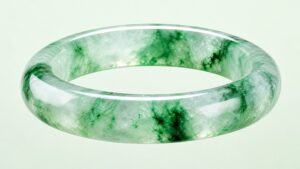
Transparency – often called “water” or “moisture” in Chinese jade culture – describes how deeply light penetrates the stone. The GIA considers transparency second only to color in importance. Jadeite ranges from opaque to semi-transparent to highly translucent. The most coveted is “ice-type” or “glassy” jadeite, where the stone appears clear and crystalline like frozen water, often with a cool, lustrous sheen. Texture is closely related: a fine, compact internal structure allows light to pass through and gives the jade a smooth, almost greasy feel. The Natural Ice-type Jadeite Bracelet with Floating Green Patterns is an excellent example, combining high transparency with visually striking green veins. Pala International’s buying guide confirms that the combination of intense green and high translucency is what separates top-tier jadeite from more common material.
Types & Styles
Jadeite jewelry comes in many forms, each highlighting different qualities. Beaded bracelets and necklaces are classics, allowing the stone’s color and transparency to shine. VirtuCasa offers a range of bead sizes, from dainty 3.5 mm strands to bold 16 mm rounds. The Natural Three-Color Jadeite Bracelet is a delightful example of how multiple hues can coexist in one piece, while the Ice-type Tricolor Jade Necklaces (available in two sizes) demonstrate harmonious transitions of green, yellow, and orange. Rings such as the saddle-style designs showcase the jade’s color and texture in a single cut, while the Cabochon Ring Set pairs a vivid violet cabochon with diamonds and sapphires for a contemporary look. Earrings, like the Natural Jadeite Tassel Earrings, add movement and elegance, with deep green beads suspended from gold chains.
How to Choose the Right Size & Fit
Size and fit depend on the jewelry type. For bracelets, consider your wrist circumference and the bead diameter. The Natural Jadeite Bracelet (lavender-white) is composed of 10 mm beads and fits wrists 16–19 cm, while the Ice-type bracelet uses larger 16 mm beads and is suitable for a variety of wrist sizes thanks to its flexible cord. Rings must match your finger size: VirtuCasa’s saddle rings come in sizes 24 and 26 (US), while the cabochon ring is size 15. If unsure, measure a ring you already wear. Necklaces are offered in different lengths and bead diameters; the Ice-type Violet Jade Bead Necklace with beads from 10–12 mm can be worn as a single strand or layered. Always check the product dimensions provided, and remember that a well-fitted piece should feel comfortable without being tight or loose.
Price & Value
Price in jadeite is driven primarily by color, transparency, and size. The most expensive piece in VirtuCasa’s current selection is the Natural Ice-type Violet Jade Bead Necklace ($6,649), reflecting its rare lavender hue, high translucency, and substantial weight. In contrast, entry-level pieces such as the Natural Three-Color Jadeite Bracelet ($668) or the Natural Jadeite Saddle Ring with Floating Green ($719) offer excellent value for those new to jade. Mid-range options include the Natural Full-Green Jadeite Saddle Ring ($2,437) and the Cabochon Ring Set ($1,926), which combine fine jadeite with precious metal settings. The Ice-type Tricolor Jade Necklaces at $740 and $825 provide an affordable way to own ice-type material. As a rule, deeper, more saturated colors combined with high transparency command a premium, as confirmed by GIA’s jade quality factors. Always compare pieces within the same price tier to evaluate the trade-off between color intensity and clarity.
Common Mistakes to Avoid
- Focusing solely on color: A vivid green may catch your eye, but a piece with poor transparency or visible cracks will not last. Balance color with transparency and texture.
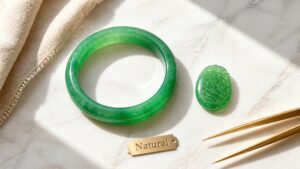
- Ignoring treatment disclosures: If you buy untreated “Type A” jadeite, it is natural with no polymer impregnation or dye. VirtuCasa’s products are explicitly labeled as natural, giving you peace of mind.
- Overlooking size and fit: A beautiful bracelet that is too loose may slip off, or a ring that is too tight can be uncomfortable. Always measure and refer to the product’s size specifications.
- Assuming all green jadeite is equally valuable: The tone and saturation matter greatly. A pale, washed-out green is worth less than a rich, evenly distributed green, even if both are natural.
- Neglecting the setting quality: Jewelry settings should complement the jade. The tassel earrings’ 18K gold-plated chains and the cabochon ring’s 18K white gold, sapphires, and diamonds enhance the jadeite’s beauty, but a poor setting can detract from it.
Top Picks
Based on VirtuCasa’s current inventory, here are five standout pieces for different preferences:
- Natural Ice-type Jadeite Bracelet with Floating Green Patterns ($1,517) – Ideal for collectors who want high transparency with artistic green veins. The 16 mm beads make a bold statement.
- Natural Full-Green Jadeite Saddle Ring ($2,437) – Perfect for those who appreciate classic, even green color in a traditional setting. The size 24 fits most fingers.
- Natural Ice-type Violet Jadeite Cabochon Ring Set ($1,926) – Best for fashion-forward buyers seeking a modern, elegant piece with a rare lavender hue.
- Natural Three-Color Jadeite Bracelet ($668) – A budget-friendly entry point that introduces the beauty of multi-hued jadeite with a comfortable fit.
- Natural Ice-type Tricolor Jade Necklace ($740) – Excellent for daily wear or layering; the small 3.5 mm beads are delicate and versatile.
Final Tips / Conclusion
Mastering jadeite color and transparency grading takes time, but the effort pays off in a more rewarding purchase. Always examine pieces under both natural and artificial light to see how color shifts. Ask for detailed photos if buying online, and trust sellers who clearly describe their jade as natural and untreated. VirtuCasa provides detailed descriptions for every item, including germplasm quality, dimensions, and weight. As you explore, remember that the best jadeite piece is one that speaks to your personal aesthetic while meeting your quality expectations. For further reading, Jewea’s jadeite buying guide offers additional trade terms and tips to refine your knowledge. Happy collecting!
FAQ
What is the difference between ice-type and regular jadeite?
Ice-type jadeite is highly translucent with a glassy, almost transparent appearance, similar to frozen water. Regular jadeite can be opaque or only slightly translucent. The ice-type material is generally more valued because its clarity allows light to pass through, enhancing the color and visual depth.
How does color affect the price of jadeite?
Color is the most influential factor. Vivid, evenly distributed green (especially imperial green) commands the highest prices. Rare hues like lavender and three-color combinations also increase value. Pale or unevenly distributed colors are generally less expensive. Transparency and texture also matter, but color is the primary driver.
What does ‘natural’ mean in jadeite grading?
Natural jadeite, often called Type A, has not been treated with polymers, dyes, or heat. It is the only category suitable for long-term wear and investment. VirtuCasa explicitly labels all its products as natural, ensuring you receive untreated, genuine jadeite.
Can jadeite be worn every day?
Yes, jadeite is a durable gemstone (hardness 6.5–7 on Mohs scale). However, because it can chip or crack with hard impacts, it is best to avoid activities that might knock the jewelry against hard surfaces. Rings and bracelets with secure settings are safe for daily wear if you take reasonable care.