Introduction: Why Jade Matters in Chinese Culture
For over five millennia, no gemstone has carried the cultural weight of jade in China. Known as the Stone of Heaven, jade is more than a beautiful mineral—it is a vessel of philosophy, morality, and spiritual protection. Whether you are a collector of Chinese antiques or a first-time buyer of jadeite jewelry, understanding the symbolic meanings behind jade enriches your appreciation and helps you choose pieces that resonate with your values.
In this article, we explore five core symbolic meanings of jade in Chinese culture. You will learn how jade has been revered from ancient imperial rituals to modern everyday adornment, and how these meanings translate into the jadeite pieces you see today. By the end, you will be equipped with insights that go beyond surface beauty, allowing you to select jade with intention—whether for yourself or as a meaningful gift.
Background: The Stone of Heaven
Historical Roots and Imperial Significance
Jade’s importance in China is ancient and profound. According to Gem-A’s exploration of jade in China, jade tablets (gui) were used by emperors to communicate with supernatural forces, and when worn by the emperor, jade became a symbol of power. This imperial association set the tone for jade’s enduring status as a stone of authority, virtue, and divine connection.
What Is Jade? Jadeite vs. Nephrite
In Chinese culture, the term “jade” historically referred to nephrite, but today the most prized form is jadeite—a rarer and more intensely colored gemstone. Both are valued, but jadeite’s vivid greens and translucency have made it the preferred choice for fine jewelry. Understanding the difference is essential, as jadeite is the type most commonly used in modern high-end pieces, such as those found in our jadeite collection.
The Main Body: Five Core Symbolic Meanings
1. Purity and Moral Integrity
Confucian philosophy elevated jade to a moral emblem. The classic text Book of Rites describes jade as possessing eleven virtues, including benevolence, wisdom, and righteousness. The stone’s smooth texture and gentle luster were seen as reflections of a cultivated person’s character. Wearing jade was a reminder to act with integrity and kindness.
This association is so strong that the Chinese idiom “君子无故,玉不去身” (a gentleman never parts with his jade without reason) underscores how jade served as a constant moral companion. Today, many people choose jadeite pendants as personal talismans of their own ethical aspirations. For those seeking a piece that embodies purity, a jadeite pendant can serve as a daily reminder of one’s values.
2. Protection and Good Luck
Jade has long been regarded as a protective stone. In ancient times, jade amulets were buried with the deceased to safeguard their journey to the afterlife. In daily life, jade bangles were believed to protect the wearer from harm—a common belief holds that if a bangle cracks, it has absorbed the impact meant for you.
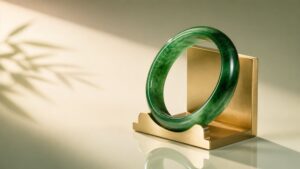
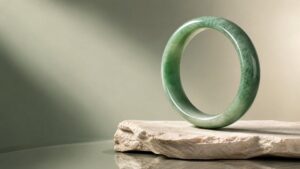
This protective quality extends to general good fortune. Jewelry guides explain that jade symbolizes harmony, prosperity, and longevity, making it a favored gift for newborns, graduates, and newlyweds. A jade bangle, in particular, is often passed down through generations as a family heirloom that carries protective blessings.
3. Prosperity and Success
Jade is also a magnet for abundance. Its vibrant green color is associated with spring, growth, and renewal—elements that naturally connect to wealth and success. In Chinese business culture, jade carvings of auspicious symbols like the ruyi (a scepter of fulfillment) or the pi yao (a mythical creature that attracts wealth) are commonly placed in offices and homes.
For personal adornment, jadeite rings and bracelets are popular choices for those seeking to invite prosperity. The color green itself is considered lucky in many Asian cultures, and jadeite’s imperial green is the ultimate expression of that fortune. If you are considering an investment piece, a jadeite bracelet can be both a fashion statement and a symbol of your aspirations.
4. Harmony and Balance
In Chinese cosmology, jade is believed to balance the body’s energies, or qi. The stone’s cool, soothing touch is thought to calm the mind and promote emotional equilibrium. This harmonizing effect is why jade is often used in meditation and traditional healing practices.
The concept of yin and yang also applies: jade’s gentle energy is considered yin, which balances the more active yang of daily life. Wearing jade close to the skin, such as in a ring or bangle, is said to help maintain this equilibrium. For those new to jade, understanding its balancing nature can guide you in selecting a piece that supports your well-being.
5. Wisdom and Longevity
Jade is a symbol of wisdom accumulated over time—much like the stone itself, which forms over millennia. In Chinese culture, elders are often given jade carvings of peaches or cranes, symbols of longevity. The stone’s durability mirrors the wish for a long, healthy life.
This meaning resonates with collectors of Chinese antiques, where jade artifacts often carry inscriptions or motifs that express these wishes. Whether you are drawn to a modern jadeite ring or an antique jade carving, you are connecting with a tradition that values wisdom and the passage of time.
Practical Tips for Choosing Jade with Symbolic Meaning
- Choose the color that matches your intention: Imperial green for prosperity, lavender for spiritual insight, and white for purity. Each hue carries its own nuance.
- Consider the type of jewelry: Bangles are traditionally worn for protection, while pendants are often chosen for moral reminders. Rings can be a personal, everyday symbol.
- Verify authenticity: Ensure your jade is natural Type A jadeite, as treated stones may not carry the same energetic or cultural significance. Learn how to verify Type A jadeite before buying.
- Understand the carving motifs: Common symbols like the dragon (power), phoenix (rebirth), and lotus (purity) add layers of meaning. Research the motif to find one that speaks to you.
- Buy from reputable sources: Trusted sellers provide certification from recognized labs. Familiarize yourself with top jade testing labs to ensure your purchase is genuine.
Common Mistakes to Avoid
- Assuming all green stones are jade: Jadeite can be confused with serpentine, aventurine, or even glass. Always request a certificate or have the stone tested.
- Ignoring the type of jade: Nephrite and jadeite differ in value and hardness. Make sure you know which one you are buying.
- Overlooking treatments: Many jade stones are bleached, polymer-impregnated, or dyed (Type B and C). These treatments affect both value and durability. Read our guide on spotting Type A jadeite to avoid costly mistakes.
- Buying based solely on price: A low price may indicate a treated stone. Conversely, a high price does not guarantee quality. Focus on certification and color consistency.
- Neglecting care: Jade, though tough, can be damaged by harsh chemicals or extreme heat. Follow proper care routines to preserve its beauty—our jadeite care tips can help.
Conclusion: The Enduring Legacy of Jade
Jade in Chinese culture is far more than ornament; it is a living philosophy that encapsulates purity, protection, prosperity, harmony, and wisdom. Whether you are drawn to the protective embrace of a bangle or the moral symbolism of a pendant, each piece of jadeite carries centuries of meaning.
As you explore your own connection to jade, remember that the best choice is one that resonates with your personal story. For further guidance, consider reading about the differences between jadeite bead necklaces and bangles or delve into the practicalities of viewing jadeite under different lighting. These resources will help you make an informed and meaningful purchase.
Ultimately, jade is a companion for life—a stone that grows with you, reminds you of your values, and connects you to a rich cultural heritage. Choose wisely, wear it with intention, and let jade’s timeless symbolism enrich your journey.
FAQ
What does jade symbolize in Chinese culture?
Jade symbolizes purity, moral integrity, protection, good luck, prosperity, harmony, wisdom, and longevity. These meanings stem from Confucian philosophy and ancient imperial traditions.
Is jadeite the same as jade?
Jade is a general term that includes two minerals: nephrite and jadeite. Jadeite is rarer and more intensely colored, making it the most prized form in modern jewelry.
How can I tell if my jade is natural Type A?
Type A jadeite is natural and untreated. To verify, seek a certificate from a reputable lab, or consult guides that explain testing methods and visual cues. Avoid stones that have been dyed or polymer-impregnated.
Why do jade bangles break?
In Chinese culture, a jade bangle that cracks is believed to have absorbed negative energy or protected the wearer from harm. It is often seen as a sign that the bangle fulfilled its protective purpose.