Introduction: Why Jade Outranked Gold in Imperial China
Few materials in world history have carried as much prestige as jade in China. While gold measured wealth, jade measured character, legitimacy, and the favor of heaven. Emperors wore it, were buried in it, and stamped their authority with it. Understanding why Chinese emperors valued jade above gold opens a window into how power, morality, and belief were woven together in imperial China — and it also helps modern collectors and jewelry buyers read jade with more informed eyes.
In this article you will learn the cultural and philosophical reasons jade outranked gold, how that hierarchy showed up in imperial ritual and daily life, and how the distinction between jadeite and nephrite fits into the story. We will also translate these old ideas into practical guidance for anyone shopping for jadeite jewelry or Chinese antiques today.
This is not just trivia. When you understand the values behind jade, you begin to see why certain colors, carvings, and forms are prized — and why careful verification matters when you buy.
Background and Key Concepts
To understand the imperial preference for jade, it helps to separate a few foundational ideas: what jade actually is, what it symbolized, and how the two main jade families differ.
Jade Is a Family, Not a Single Stone
In gemology, ‘jade’ refers to two distinct materials: nephrite and jadeite. Nephrite was the classic stone of ancient and imperial China, prized for its tough, interlocking structure and its soft, waxy luster. Jadeite, a harder and often more vividly colored stone, became especially fashionable in later Chinese history, particularly from the Qing dynasty onward. A general jade guide covering meaning, history, and jadeite versus nephrite is a useful starting point if you want the full material picture.
Both materials are tough and take a high polish, which made them ideal for carving everything from ritual blades to personal ornaments. That durability mattered: a material that could survive centuries echoed the idea of enduring virtue and lasting dynastic rule.
Virtue, Not Just Beauty
The core reason jade outranked gold was philosophical. In Confucian thought, jade’s qualities — its warmth to the touch, its subtle translucency, its resistance to scratching — were read as metaphors for the ideal gentleman and ruler: benevolent, principled, and unyielding in integrity. Gold was associated with wealth and display; jade was associated with moral worth. For an emperor whose authority rested on the idea of virtue and the Mandate of Heaven, jade was the more meaningful material.
This symbolic weight is why jade appears in ritual, ceremony, and burial rather than merely in treasure rooms. A broader survey of Chinese jade history, meaning, and cultural significance shows how consistently these ideas recur across dynasties.
Jadeite vs. Nephrite in the Imperial Story
Much of the oldest imperial jade lore concerns nephrite, the stone of ancient ritual objects. Jadeite entered the Chinese luxury mainstream later, when trade routes brought it from what is now Myanmar. Its vivid greens and lavender tones captured Qing-era taste, and it became a favorite for jewelry and fine carving. For modern buyers, the practical takeaway is that ‘jade’ spans two materials with different histories and value drivers — which is why labels and testing matter so much.
The Main Body: How Jade Functioned as Imperial Power
The preference for jade was not abstract. It shaped objects, ceremonies, and the way emperors presented themselves to the world.
Ritual Objects and the Language of Heaven
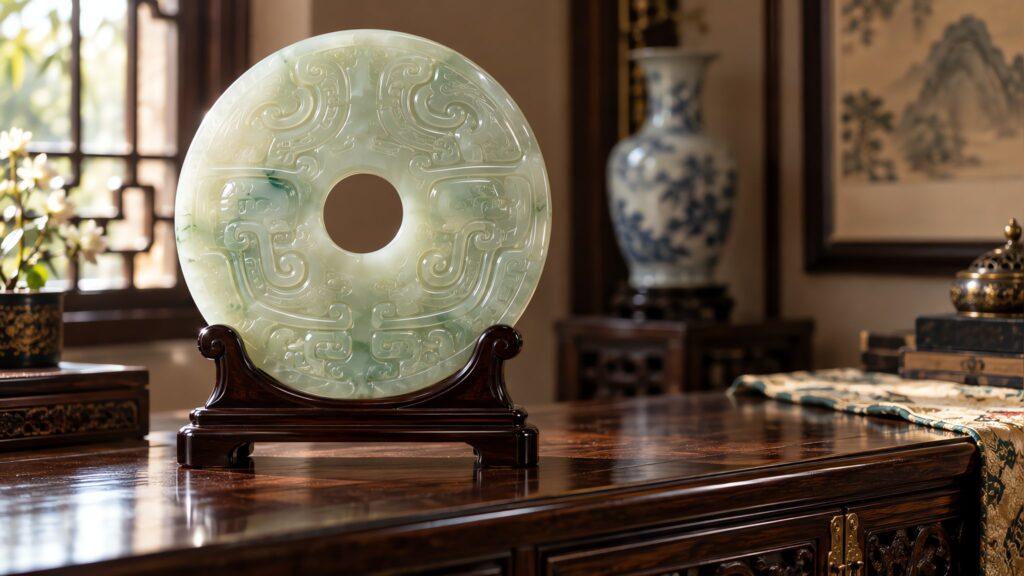
In early China, jade was used in ritual paraphernalia — discs, tubes, blades, and ornaments tied to ceremony and cosmology. These objects were not everyday decoration; they mediated between the human and the divine. Because they were made of jade, they carried an aura of sacred legitimacy that gold could not match. A Chinese jade guide covering meaning, history, and imperial objects illustrates how these ritual forms developed and how museums in Beijing display them today.
Over time, the vocabulary of jade expanded into a full symbolic system. Dragons, phoenixes, and other motifs each carried specific meanings, and carvers used them to communicate wishes for prosperity, protection, or longevity. If you are interested in how these patterns are read, an overview of Chinese jade carving meanings and symbols explains the conventions behind common designs.
The Imperial Seal: Authority You Could Hold
Perhaps the clearest sign of jade’s superiority was the imperial seal. Seals carved from jade served as instruments of state authority — the physical mark of legitimate rule. A gold seal could be valuable, but a jade seal carried the added weight of virtue and heaven’s approval. This is why jade seals were reserved for the highest levels of power and why they remain among the most studied objects in Chinese art history.
The same logic extended to personal adornment. Emperors and courtiers wore jade ornaments as markers of refinement, and jade appeared in belts, pendants, and hairpins. To wear jade was to signal that one’s worth came from character, not merely from wealth.
Burial, Permanence, and the Afterlife
Imperial burials often included jade, sometimes in elaborate forms intended to preserve or protect the body and spirit. The choice of jade over gold in these contexts reflects a belief in permanence and purity. Gold could be melted down and exchanged; jade was understood as enduring and morally charged. In a culture that thought carefully about legacy, that distinction was powerful.
From Imperial Symbol to Modern Market
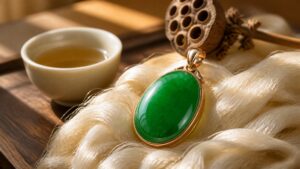
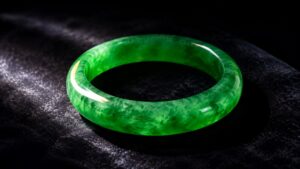
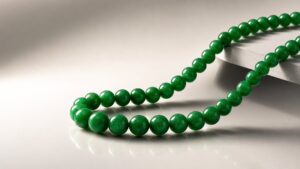
Today, the imperial association still shapes value. Collectors prize jadeite for its color, translucency, and craftsmanship, and the old symbolism gives certain forms and motifs enduring appeal. If you are browsing fine pieces, you can explore natural jadeite jewelry to see how these traditions translate into pendants, rings, and bracelets. For those interested in the wider material culture of China, the Chinese antiques collection offers another way to connect with the same heritage.
Because jade carries such prestige, the market also attracts treated and imitation material. That is why understanding labels and verification is essential. A good primer is Type A vs B vs C jade and what the labels really mean, which explains the difference between natural and treated stone.
Practical Tips for Modern Jade Buyers
If the imperial story has inspired you to look at jade seriously, these practical steps will help you buy with confidence.
- Learn the labels. Understand what Type A, B, and C mean before you shop, so you know whether a stone is natural or treated.
- Ask for documentation. Reputable sellers provide lab reports. Learn how to check them with this guide on how to verify a jade certificate is real.
- Judge color and clarity together. Neither alone tells the whole story; balance both when comparing pieces.
- Consider the carving. Traditional motifs carry meaning and can add depth to a piece beyond its material.
- Match the form to the wearer. Bracelets, pendants, and rings each suit different preferences and occasions.
- Buy from sellers who explain provenance and treatment. Transparency is a good sign of quality.
Common Mistakes to Avoid
- Assuming all jade is the same. Nephrite and jadeite differ in hardness, appearance, and history.
- Confusing value with color alone. A vivid color does not guarantee natural, untreated stone.
- Skipping verification. Trusting a verbal claim instead of a lab report is a frequent error.
- Ignoring treatment labels. Type B and C stones are treated and should be described as such.
- Overlooking craftsmanship. A well-carved piece can be more desirable than a larger, poorly finished one.
- Buying on impulse. Take time to compare and to ask questions before committing.
Conclusion: What Jade’s Prestige Means for You
Chinese emperors valued jade above gold because jade embodied virtue, legitimacy, and permanence in a way gold never could. It was the material of ritual, of the imperial seal, and of burial — a stone that spoke to character and heaven’s favor rather than mere wealth. That symbolic inheritance still shapes how jade is appreciated today.
For modern buyers, the lesson is twofold: appreciate the cultural depth behind jade, and bring the same rigor to your purchases that the emperors brought to their rituals. Learn the labels, verify the certificates, and choose pieces that speak to you. Whether you are drawn to jadeite jewelry or to Chinese antiques, that combination of meaning and care is what makes jade enduring.
FAQ
Why did Chinese emperors prefer jade over gold?
Jade was associated with virtue, moral integrity, and the Mandate of Heaven, while gold represented material wealth. In Confucian thought, jade’s physical qualities symbolized the ideal ruler, so it carried greater symbolic authority than gold.
What is the difference between jadeite and nephrite?
Jadeite and nephrite are two distinct materials both called jade. Nephrite was the classic stone of ancient and imperial China, while jadeite, which is harder and often more vividly colored, became especially popular in later Chinese history, particularly from the Qing dynasty onward.
How can I tell if jade is natural or treated?
Natural, untreated jade is often labeled Type A, while treated stones are labeled Type B or C. Reputable sellers provide lab reports, and you should learn to verify those certificates before buying.
Does the imperial association affect jade’s value today?
Yes. The historical and cultural prestige of jade continues to influence collector and buyer interest, especially for fine jadeite and traditional carved forms, though material quality, treatment, and craftsmanship remain the primary value drivers.