Introduction
For collectors and jewelry lovers alike, understanding how to grade jadeite quality is essential to making confident, informed purchases. Unlike other gemstones, jadeite is prized for its subtle interplay of color, transparency, and texture — qualities that are best appreciated by eye and touch rather than by standard gemological metrics. Whether you are drawn to the icy translucency of a fine bead necklace or the deep, even green of a saddle ring, knowing what to look for transforms you from a casual shopper into a discerning buyer.
At VirtuCasa, we specialize in natural, untreated jadeite jewelry and Chinese antiques. Our collection includes pieces ranging from delicate earrings to substantial bracelet sets, each with its own unique grading profile. This guide will walk you through the key quality factors — as recognized by GIA’s jade quality factors and industry standards — and show you how to apply them to real products in our catalog.
Understanding Quality
Color
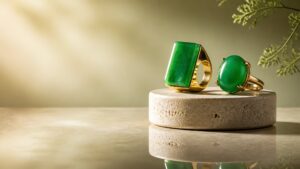
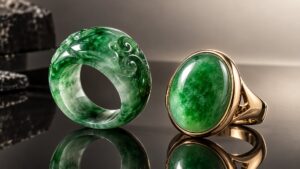
Color is the single most important factor in jadeite grading. The most desirable hues are vivid, pure, and evenly distributed. Our product data reveals a range of natural colors: deep green, lavender, yellow, white, and even tricolor combinations. For instance, the Natural Full-Green Jadeite Saddle Ring ($2437) features an even “full green” coloration that is dense yet translucent, while the Natural Ice-type Violet Jadeite Cabochon Ring Set ($1926) showcases a vivid violet hue. According to Jewea’s jadeite buying guide, color is often evaluated under both fluorescent and incandescent light to see how it shifts.
Transparency
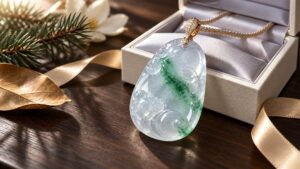
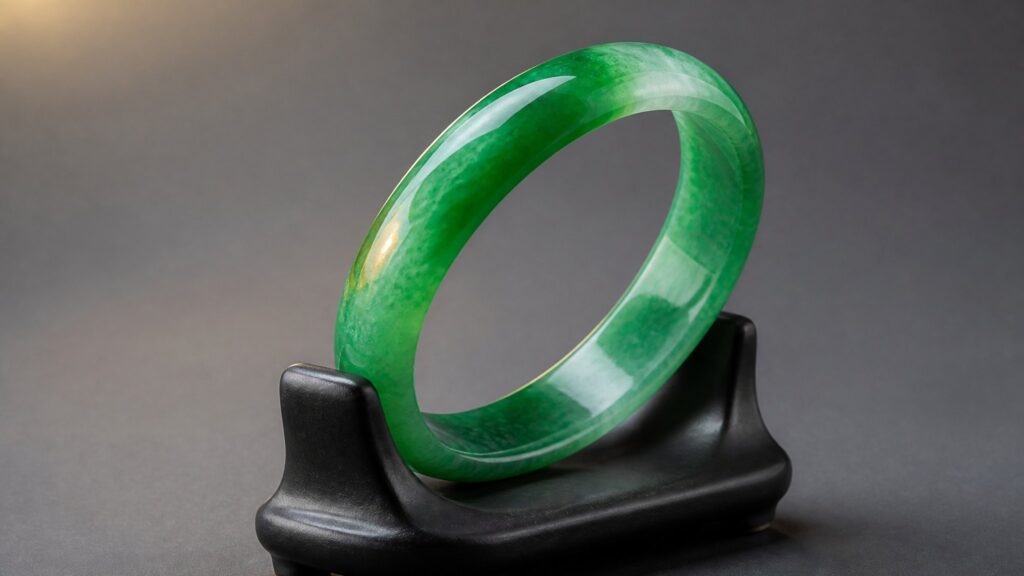
Transparency — often called “water” in Chinese jade culture — ranges from opaque to highly translucent. Ice-type jadeite is prized for its glass-like clarity. Our collection includes several ice-type pieces, such as the Natural Ice-type Jadeite Bracelet with Floating Green Patterns ($1517), which is described as having a “transparent and delicate texture” with a “cool and lustrous glassy sheen.” The Natural Ice-type Violet Jade Bead Necklace ($6649) is noted for its “translucent, glossy appearance.” Higher transparency generally commands higher prices, but even moderately translucent pieces can be beautiful if the color and texture are fine.
Texture
Texture refers to the fineness and compactness of the jadeite’s crystal structure. Terms like “fine and smooth,” “delicate,” and “compact” appear repeatedly in our product descriptions. For example, the Natural Jadeite Bracelet ($1008) is described as having “delicate and smooth” texture with “uniform color distribution.” A fine texture allows light to pass through more evenly, enhancing the gem’s luster and overall beauty. The Natural Ice-type Tricolor Jade Necklace ($825) boasts a “delicate and transparent” texture that creates a clear, bright luster.
Luster
Luster is the surface glow of the polished jadeite. Vitreous (glass-like) luster is typical of high-quality jadeite. Our data mentions “vitreous luster” for several pieces, including the Natural Jadeite Bracelet ($1008) and the Natural Full-Green Jadeite Saddle Ring ($2437). Waxy or dull luster indicates lower quality or treatment. The Natural Jadeite Tassel Earrings ($852) exhibit a “refined glassy luster,” reinforcing their premium grade.
Types & Styles
Jadeite jewelry comes in many forms, from bead bracelets and necklaces to carved rings and earrings. Our product category page — Jadeite — showcases the diversity. Bead necklaces are particularly popular because they allow the jadeite’s color and transparency to be appreciated from every angle. The Natural Ice-type Tricolor Jade Necklace ($740) features small 3.5 mm beads for a refined, delicate look, while the Natural Ice-type Violet Jade Bead Necklace ($6649) uses larger 10-12 mm beads for a bolder statement.
Bracelets are another classic style. The Natural Three-Color Jadeite Bracelet ($668) offers a harmonious blend of yellow, white, and light green, while the ice-type bracelet with floating green patterns appeals to those who prize translucency. Rings, such as the saddle rings, are carved from single pieces of jadeite and highlight the material’s texture and color saturation.
How to Choose the Right Size & Fit
When selecting jadeite jewelry, especially bracelets and rings, size is crucial for comfort and security. Our bracelet listings include specific measurements. For example, the Natural Jadeite Bracelet ($1008) is composed of 19 beads each 10mm in diameter, with a total circumference of about 18 cm — suitable for wrists measuring 16-19 cm. The Natural Ice-type Jadeite Bracelet ($1517) has 13 beads of 16mm each, offering a substantial fit. For rings, the Natural Jadeite Saddle Ring with Floating Green ($719) is a size 26, while the ice-type cabochon ring is a size 15. Always measure your finger or wrist before purchasing, and note that elastic cord bracelets offer some flexibility.
Price & Value
What drives the price of jadeite? The most valuable pieces combine exceptional color, high transparency, fine texture, and substantial size. Our collection spans a wide spectrum: entry-level pieces like the three-color bracelet ($668) and the tricolor necklace ($740) offer beautiful natural jadeite at accessible prices. Mid-range options include the lavender jadeite bracelet ($1008) and the tassel earrings ($852). Premium pieces, such as the ice-type violet jade bead necklace ($6649) and the full-green saddle ring ($2437), are investments that reflect their rarity. For a deeper look at value factors, Nanyang Jade’s buying guide emphasizes that only natural Type A jadeite — like all VirtuCasa offerings — retains long-term value.
Common Mistakes to Avoid
- Confusing jadeite with nephrite. Jadeite is the rarer, more valuable form of jade. Always check for “natural jadeite” in the description.
- Ignoring transparency. A piece that looks opaque may be lower quality. Look for terms like “ice-type” or “translucent.”
- Not checking for treatments. Treated jade (dyed or polymer-filled) is common in the market. VirtuCasa sells only natural, untreated jadeite.
- Focusing solely on color. Color is important, but texture and luster are equally critical for overall quality.
- Skipping size verification. A beautiful bracelet that doesn’t fit is unwearable. Always check bead diameter and circumference.
Top Picks
Based on our grading criteria, here are five standout pieces from VirtuCasa, each suited to different preferences:
Natural Ice-type Violet Jade Bead Necklace ($6649) — For the serious collector. Its large beads, exceptional translucency, and soft lavender hue make it a centerpiece piece.
Natural Full-Green Jadeite Saddle Ring ($2437) — Ideal for those who love classic Chinese jade aesthetics. The even green color and vitreous luster are top-tier.
Natural Ice-type Jadeite Bracelet with Floating Green Patterns ($1517) — A perfect balance of transparency and color. Great for daily wear or special occasions.
Natural Jadeite Tassel Earrings ($852) — Lightweight and elegant, these earrings are ideal for adding a touch of jade to any outfit without overwhelming weight.
Natural Three-Color Jadeite Bracelet ($668) — An affordable entry point that still offers natural jadeite’s charm and unique multicolored patterns. Perfect for first-time buyers.
Final Tips / Conclusion
Grading jadeite quality is as much an art as a science. By paying attention to color, transparency, texture, and luster, you can confidently evaluate any piece. Always buy from a trusted source that guarantees natural, untreated jadeite. VirtuCasa provides detailed product descriptions, real measurements, and transparent pricing so you can shop with peace of mind. Whether you are adding to a collection or buying your first piece of jade, apply these grading principles and you will make a choice you can treasure for a lifetime. Explore our full Jadeite collection to see these quality factors in action.
FAQ
What is the most important factor in jadeite quality grading?
Color is generally considered the most important factor, but transparency (especially ice-type) and texture are equally critical. A fine, compact texture and vitreous luster elevate any piece.
How can I tell if jadeite is natural or treated?
Look for terms like ‘natural jadeite’ in the product description. Treated jade may have unnatural color saturation or a waxy feel. Reputable sellers like VirtuCasa guarantee natural Type A jadeite.
What does ‘ice-type’ mean in jadeite?
Ice-type refers to jadeite with high transparency and a cool, glass-like appearance. It is one of the most desirable grades and commands higher prices.
Do I need to size a jadeite bracelet differently than a regular bracelet?
Yes. Since jadeite beads are rigid, you need to measure your wrist circumference and compare it to the bracelet’s internal circumference. VirtuCasa lists both bead count, bead diameter, and total circumference for accurate fitting.