Introduction
Choosing between a jadeite saddle ring and a cabochon ring can feel like a delightful dilemma. Both styles showcase the timeless beauty of natural jadeite, yet they offer distinctly different aesthetics and wearing experiences. Whether you’re drawn to the classic, masculine elegance of a saddle ring or the refined, feminine allure of a cabochon, understanding the nuances will help you make a confident purchase.
At VirtuCasa, we specialize in natural jadeite jewelry and Chinese antiques, and we’re here to guide you through this decision. This comprehensive guide will walk you through the key quality factors, style differences, sizing considerations, and value drivers, so you can choose the ring that truly resonates with your personal taste and lifestyle.
Let’s dive into the world of jadeite rings, where ancient tradition meets modern sophistication.
Understanding Quality
Color
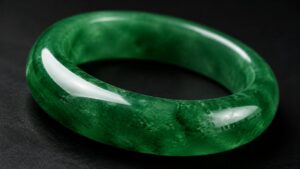
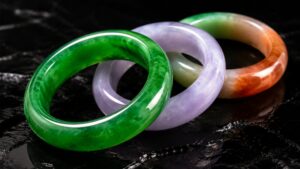
Color is the most important quality factor in jadeite, often commanding the highest premium. The finest jadeite exhibits a vivid, intense green, but lavender, yellow, and white varieties are also highly valued. In our collection, you’ll find a range of hues, from the Natural Full – Green Jadeite Saddle Ring with its even, rich green, to the soft lavender tones of the Natural Ice-type Violet Jade Bead Necklace. When evaluating color, look for evenness and saturation—the more uniform and intense the color, the more valuable the piece.
Transparency
Transparency, often referred to as ‘water’ in Chinese jade culture, is another critical factor. Ice-type jadeite, which is highly transparent and cool to the touch, is particularly prized. The Natural Ice-type Jadeite Bracelet with Floating Green Patterns exemplifies this quality with its translucent body and floating green patterns. In rings, transparency can make the stone appear to glow from within, adding a luminous, gem-like quality.
Texture
Texture refers to the fineness and compactness of the jadeite’s internal structure. High-quality jadeite feels smooth and dense, with a vitreous luster. Both the saddle and cabochon rings we offer are crafted from natural jadeite with fine, smooth textures, ensuring durability and a pleasing tactile experience. For a deeper understanding of what makes jadeite quality, you can refer to GIA’s jade quality factors, which outline the importance of color, transparency, and texture.
Cut and Carving
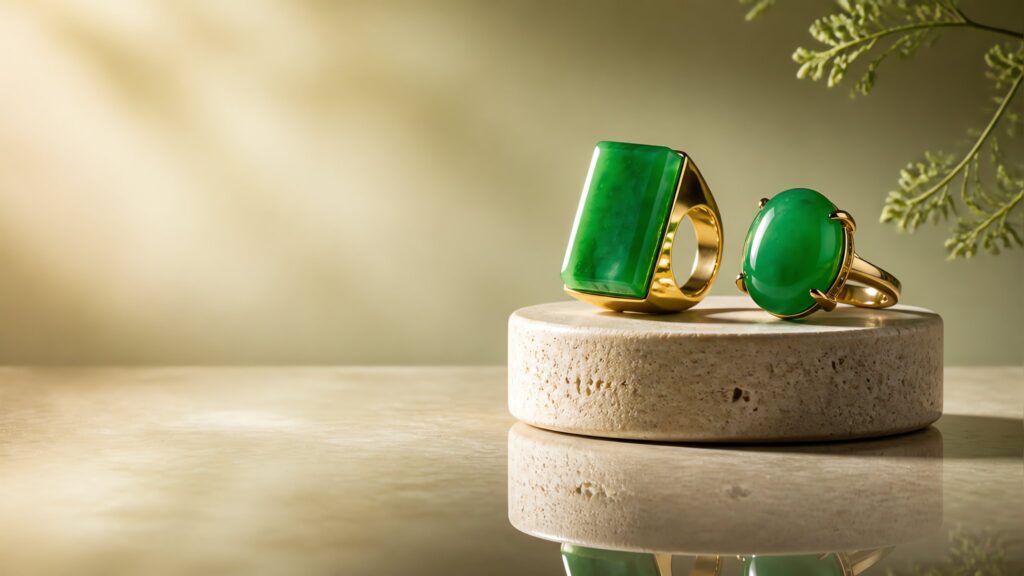
The cut of a jadeite ring determines how light interacts with the stone and how it sits on the finger. Saddle rings are typically cut from a single piece of jadeite, with a flat or slightly curved top that spans the finger. Cabochon rings feature a domed, polished top, often set in metal to enhance the stone’s color and protection. Both cuts require skilled craftsmanship to maximize the stone’s natural beauty.
Types & Styles
Saddle Rings
Saddle rings, also known as ‘ma an’ rings, have a distinctive shape that resembles a horse’s saddle, with a flat or gently curved top. They are traditionally worn by men but have gained popularity among women for their bold, statement-making look. Our Natural Full – Green Jadeite Saddle Ring is a prime example, featuring an even ‘full green’ coloration and a classic design that rests comfortably on the finger. For a more subtle option, the Natural Jadeite Saddle Ring with Floating Green offers elegant green patches floating on a light base, showcasing the unique patterns of natural jade.
Cabochon Rings
Cabochon rings feature a polished, domed stone that is typically set in a metal band. This style is beloved for its smooth, rounded shape that catches light beautifully. Our Natural Ice-type Violet Jadeite Cabochon Ring Set with 18K White Gold, Sapphires, and Diamonds is a stunning example, combining a vivid violet cabochon with the brilliance of diamonds and sapphires. Cabochon rings are often more delicate and feminine, making them a popular choice for everyday elegance.
Beaded Jewelry as an Alternative
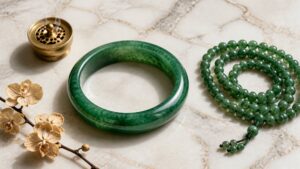
If you’re drawn to the versatility of jadeite, consider beaded bracelets and necklaces, which offer a different way to wear this gemstone. The Natural Jadeite Bracelet features soft lavender-white beads, while the Natural Ice-type Tricolor Jade Necklace showcases a rare combination of yellow, green, and white. These pieces can be layered with your ring for a coordinated look.
How to Choose the Right Size & Fit
Proper fit is essential for comfort and security. Saddle rings are available in specific ring sizes, such as the 24-ring size of the Natural Full – Green Jadeite Saddle Ring and the 26-ring size of the Natural Jadeite Saddle Ring with Floating Green. These sizes are designed to fit fingers with a moderate circumference, but it’s crucial to measure your finger accurately before purchasing.
For cabochon rings, the Natural Ice-type Violet Jadeite Cabochon Ring Set is a size 15, suitable for moderate finger circumferences. Remember that ring sizes can vary between manufacturers, so always check the specific measurement provided. If you’re between sizes, consider the style—saddle rings may fit more loosely, while cabochon rings with metal bands may require a snugger fit to prevent spinning.
When trying on a jadeite ring, ensure it slides over your knuckle with slight resistance and sits comfortably at the base of your finger. A ring that’s too tight can be uncomfortable, while one that’s too loose may slip off. If you’re unsure, consult a jeweler for professional sizing.
Price & Value
Several factors influence the price of jadeite rings, including color, transparency, texture, and the presence of any treatments. Natural, untreated jadeite (Type A) commands the highest prices, as it’s the most genuine and durable. The Natural Full – Green Jadeite Saddle Ring is priced at $2437, reflecting its even, rich color and substantial 9.5g weight. In contrast, the Natural Jadeite Saddle Ring with Floating Green is more accessible at $719, offering a lighter base with elegant green patches.
For cabochon rings, the Natural Ice-type Violet Jadeite Cabochon Ring Set is priced at $1926, reflecting the premium ice-type quality and the added value of 18K white gold, sapphires, and diamonds. When comparing prices, remember that higher transparency and more vivid colors typically command higher prices. For a broader understanding of jadeite pricing, you can refer to expert tips on buying jade online.
It’s also worth noting that jadeite prices have been rising due to increasing demand and limited supply. Investing in a high-quality piece now can be a wise financial decision, as natural jadeite tends to appreciate over time.
Common Mistakes to Avoid
- Ignoring treatment status: Always confirm that the jadeite is natural and untreated (Type A). Treated jadeite (Type B or C) is less valuable and may deteriorate over time. Our products are all natural, but it’s a crucial question to ask any seller.
- Overlooking color distribution: Even color distribution is key. A piece with patchy or uneven color may be less desirable, though some collectors appreciate unique patterns like ‘floating green’.
- Neglecting transparency: Transparency greatly affects value. Ice-type jadeite with high transparency is more valuable than opaque varieties, so don’t settle for dull stones.
- Choosing the wrong size: A ring that doesn’t fit properly can be uncomfortable or even lost. Always measure your finger accurately and refer to the product’s size specifications.
- Forgetting about durability: While jadeite is tough, it can chip if struck hard. Consider your lifestyle and choose a setting that protects the stone, especially for daily wear.
Top Picks
Based on our collection, here are our top recommendations for jadeite rings:
- For the Traditionalist: The Natural Full – Green Jadeite Saddle Ring ($2437) is a timeless choice. Its even, full green color and classic saddle design make it a statement piece that suits both formal and casual occasions.
- For the Budget-Conscious: The Natural Jadeite Saddle Ring with Floating Green ($719) offers excellent value, with its elegant green patches and comfortable 26-ring size.
- For the Modern Woman: The Natural Ice-type Violet Jadeite Cabochon Ring Set ($1926) is a stunning fusion of jade and diamonds, perfect for those who appreciate contemporary elegance.
- For the Collector: If you’re looking to expand your jadeite collection, consider the Natural Ice-type Violet Jade Bead Necklace ($6649) as a complementary piece, though it’s not a ring, it showcases the same ice-type quality.
Final Tips / Conclusion
Choosing between a saddle ring and a cabochon ring ultimately comes down to personal preference. Saddle rings offer a bold, classic look that’s perfect for those who want to make a statement, while cabochon rings provide a more refined, versatile elegance. Consider your lifestyle, wardrobe, and the occasions you’ll wear the ring for.
Remember to prioritize natural, untreated jadeite for the best value and longevity. Always review the product details for size, weight, and material specifications to ensure a perfect fit. If you have any questions, our team at VirtuCasa is here to help you find the jadeite piece that speaks to you.
Explore our full jadeite collection to discover more treasures, from rings to bracelets and necklaces. Happy jadeite hunting!
FAQ
What is the difference between a saddle ring and a cabochon ring?
A saddle ring features a flat or slightly curved top that resembles a horse’s saddle, often carved from a single piece of jadeite. A cabochon ring has a domed, polished stone that is typically set in a metal band. Saddle rings tend to have a bolder, more traditional look, while cabochon rings offer a more refined, gem-like appearance.
How do I know if a jadeite ring is natural?
Natural jadeite (Type A) is untreated and has not been polymer-impregnated or dyed. Look for a certificate of authenticity from a reputable gemological lab, and ask the seller for details about the stone’s origin and any treatments. At VirtuCasa, all our jadeite is natural and untreated.
What size ring should I choose if I’m between sizes?
If you’re between sizes, consider the style of the ring. Saddle rings may fit more loosely, so you might prefer a snugger size. Cabochon rings with metal bands can be adjusted by a jeweler, but it’s best to choose the size that fits comfortably over your knuckle without being too tight.
Are jadeite rings suitable for daily wear?
Yes, jadeite is a durable gemstone, but it can chip if struck hard. For daily wear, choose a ring with a protective setting, such as a bezel or a metal band that shields the stone. Avoid wearing your jadeite ring during heavy manual work or sports to prevent damage.