Introduction
If you have shopped for jadeite jewelry, you have almost certainly seen pieces described as ‘Grade A,’ ‘Grade B,’ or ‘Grade C.’ These labels are widely used in the Chinese jade trade, but they are not a universal grading system — and they say nothing about color or texture quality. Instead, jade A, B, C grades describe how the stone has been treated. Understanding them is essential whether you are buying a pendant, a bangle, or a collector’s piece, because treatment affects durability, value, and how the jade should be cared for. In this article you will learn what each label really means, how treatment is detected, and the practical checks that help you buy with confidence.
Background / Key Concepts
In fine jewelry, ‘jade’ usually means jadeite, a tough, fine-grained material prized for its color and translucency. Jadeite may be enhanced — sometimes called ‘stabilized’ — and the degree of enhancement is different from color and texture quality. The A/B/C nomenclature is a trade convention, not a legal standard, and definitions can vary between labs and markets. That is why a label alone should never replace a reputable lab report or a careful physical inspection.
What the letters refer to
In broad terms, ‘A’ refers to natural jadeite with no chemical bleaching or polymer impregnation; ‘B’ refers to jadeite that has been bleached and impregnated with a polymer (often called resin); and ‘C’ refers to jadeite that has been dyed. Some stones are both bleached/impregnated and dyed, sometimes called B+C. According to the AGL enhancement disclosure for jadeite, merchants sometimes present these as ‘grades,’ but enhancement degree is separate from color and texture quality.
Why the labels matter
Treatment can change the stone’s appearance and its long-term behavior. Bleaching and polymer impregnation can improve apparent clarity and color, while dye can introduce color that was not present naturally. These treatments are not necessarily ‘fake,’ but they should be disclosed, and they affect value. A natural, untreated piece is generally more desirable to collectors — but ‘natural’ does not automatically mean ‘high quality.’ Color, texture, translucency, and craftsmanship still matter.
The Main Body
Type A: natural, untreated jadeite
Type A jadeite is natural jadeite that has not been chemically bleached or polymer-impregnated. It may still have been waxed — a traditional surface finish — but it has not been structurally altered by bleaching and resin. Collectors value Type A because its appearance is inherent to the stone. When you shop, look for clear disclosure and, where available, a lab report that states ‘natural jadeite’ or ‘Type A.’ Our guide to Type A vs treated jadeite explains what collectors should verify.
Type B: bleached and polymer-impregnated
Type B jadeite has been bleached to remove impurities and then impregnated with a polymer to improve clarity and stability. The treatment can make the stone look cleaner and more translucent, but the polymer may degrade over time with heat, light, or harsh chemicals. Disclosure is essential. A stone described simply as ‘jade’ without treatment information deserves extra scrutiny.
Type C: dyed jadeite
Type C jadeite has been dyed to alter or enhance color. Dye can fade or migrate, and it may not be stable under UV light or with cleaning. Some stones are both bleached/impregnated and dyed (B+C). Dye is not always obvious to the naked eye, so a lab report or a knowledgeable jeweler’s inspection is valuable.
How treatment is detected
Gemological labs use magnification, spectroscopy, and other instruments to detect bleaching, polymer, and dye. At home, a UV light can sometimes reveal fluorescence from polymers or dyes, but results are not definitive. UV testing for jade is a useful screening tool, not a substitute for a lab report. For a structured approach, see our collector’s checklist and our guide on how to read a jadeite lab report.
Practical Tips
- Ask for the treatment status in writing — ‘natural jadeite, no bleaching or polymer impregnation’ is clearer than ‘Grade A.’
- Request a lab report from a recognized gemological laboratory when the value justifies it, and verify the report number with the lab if possible.
- Inspect the stone under magnification and UV light, and look for unusual surface texture or color concentration in cracks.
- Compare color and texture quality separately from treatment status — a treated stone can still be attractive, but it should be priced accordingly.
- Buy from sellers who disclose treatments clearly and offer returns; see our guidance on spotting a fake jade certificate.
Common Mistakes to Avoid
- Assuming ‘Grade A’ means top color or flawless texture — it refers to treatment, not quality.
- Treating the A/B/C labels as a universal standard; definitions vary, so read the actual disclosure.
- Relying on a UV light alone to confirm natural jade — it is a screening aid, not proof.
- Ignoring care needs: polymer-impregnated and dyed stones may be more sensitive to heat, chemicals, and prolonged sunlight.
- Buying without a return policy or documented treatment disclosure.
Conclusion / Key Takeaways
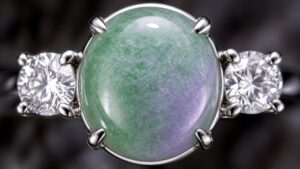
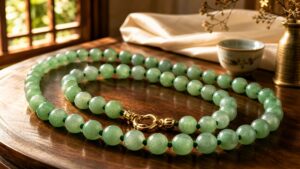
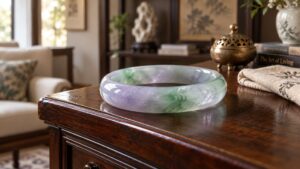
Jade A, B, C grades are shorthand for treatment status, not a quality ranking. Type A is natural and untreated (aside from traditional waxing); Type B is bleached and polymer-impregnated; Type C is dyed. Because the nomenclature is a trade convention rather than a universal standard, the safest approach is to ask for explicit written disclosure and, when appropriate, a lab report. Evaluate color, texture, and craftsmanship on their own merits, and choose sellers who are transparent about treatments. With these checks, you can enjoy jadeite jewelry with confidence — whether you are browsing jadeite jewelry, comparing jadeite bracelets, or exploring Chinese antiques.
FAQ
What is the difference between Grade A, B, and C jade?
Grade A generally refers to natural jadeite with no bleaching or polymer impregnation. Grade B has been bleached and impregnated with polymer, and Grade C has been dyed. Some stones are both B and C. These labels describe treatment, not color or texture quality.
Is Grade A jade always better quality?
Not necessarily. Grade A means untreated, but quality also depends on color, texture, translucency, and craftsmanship. A treated stone can be attractive, but it should be disclosed and priced accordingly.
Can I test jade at home to tell if it is treated?
A UV light can sometimes reveal fluorescence from polymers or dyes, but it is only a screening tool. Definitive identification of treatments usually requires a gemological laboratory.
Are A, B, C grades an official standard?
They are widely used in the Chinese jade trade but are not a universally standardized grading system. Definitions can vary, so always ask for explicit written disclosure and, when appropriate, a lab report.