Introduction
Few materials carry as much cultural weight as jade. In China, jade is not simply a gemstone to be admired for its color or luster; it is a symbol of virtue, a talisman of protection, and a link to thousands of years of tradition. If you have ever wondered what wearing jade actually means — or whether the beliefs behind it still matter today — this article will guide you through the history, symbolism, and practical considerations that surround jade jewelry in Chinese culture.
Understanding the meaning of jade helps you appreciate why people wear it, how it is traditionally given as a gift, and what to look for when choosing a piece for yourself or a loved one. You will learn about the core concepts of jade symbolism, the different types of jade and their cultural associations, and the everyday practices that keep this tradition alive. Whether you are drawn to jade for its beauty, its spiritual significance, or both, a little cultural context will make your experience far richer.
By the end of this article, you will be able to distinguish between myth and widely accepted tradition, and you will have a clear framework for selecting and caring for jade jewelry that honors its cultural roots. We will also point you toward reliable resources for further reading, so you can continue exploring this fascinating subject with confidence.
Background and Key Concepts
Jade has been revered in China for millennia. It is often described as having a special place in Chinese culture, associated with virtue, harmony, respect, and cultural heritage, as noted in this jade guide. The stone is traditionally divided into two main types: nephrite and jadeite. Nephrite, known as soft jade, has a long history of use in China, while jadeite, known as hard jade, became popular later and is prized for its vivid colors and translucency.
Jade as a Symbol of Virtue
In Confucian thought, jade is often linked to moral character. Its smooth, cool surface and its ability to take a fine polish are said to mirror the qualities of a noble person: integrity, humility, and refinement. This association with virtue is one of the reasons jade has been worn not just as ornament but as a reminder of personal ideals. For a deeper look at how jade functions as a cultural symbol, this overview of Chinese jade culture provides helpful context.
Protection and Good Fortune
Many people wear jade as a protective charm. It is believed to ward off negative energy and bring good luck. This belief is not unique to China; jade, known as pounamu in Māori culture, also carries spiritual significance and is used for adornment and protection, as discussed in this article on jade and good luck. In Chinese tradition, jade is often given to children and travelers as a blessing for safety and health.
Health and Harmony
Traditional beliefs also connect jade with physical well-being. Some people believe that wearing jade can help regulate the body’s energy or promote calmness. While these claims are not scientifically proven, they remain part of the cultural fabric. The stone’s association with purity, serenity, and nurturing is explored further in this discussion of jade’s spiritual meaning.
The Main Body: What Wearing Jade Means in Practice
Understanding the symbolism is one thing; applying it to everyday wear is another. In this section, we break down the practical and cultural aspects of wearing jade, from choosing the right piece to the customs surrounding its care and gifting.
Types of Jade and Their Cultural Associations
Jadeite and nephrite are both considered jade, but they have different histories and cultural roles. Nephrite has been carved in China for thousands of years and is often associated with traditional motifs and antique pieces. Jadeite, with its wider range of colors, became especially popular in the Qing dynasty and is now a favorite for fine jewelry. When shopping, you will encounter terms like Type A, B, and C, which describe treatments. Type A jade is natural and untreated, and it is the most valued in cultural and investment terms. For a clear explanation of these grades, see this guide to jade A, B, C grades.
Common Forms of Jade Jewelry
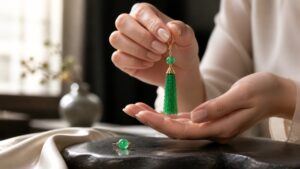
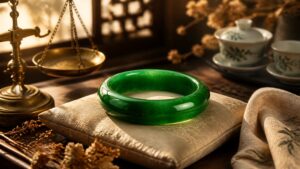
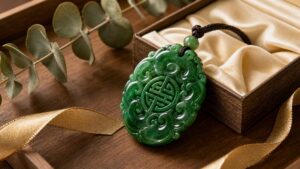
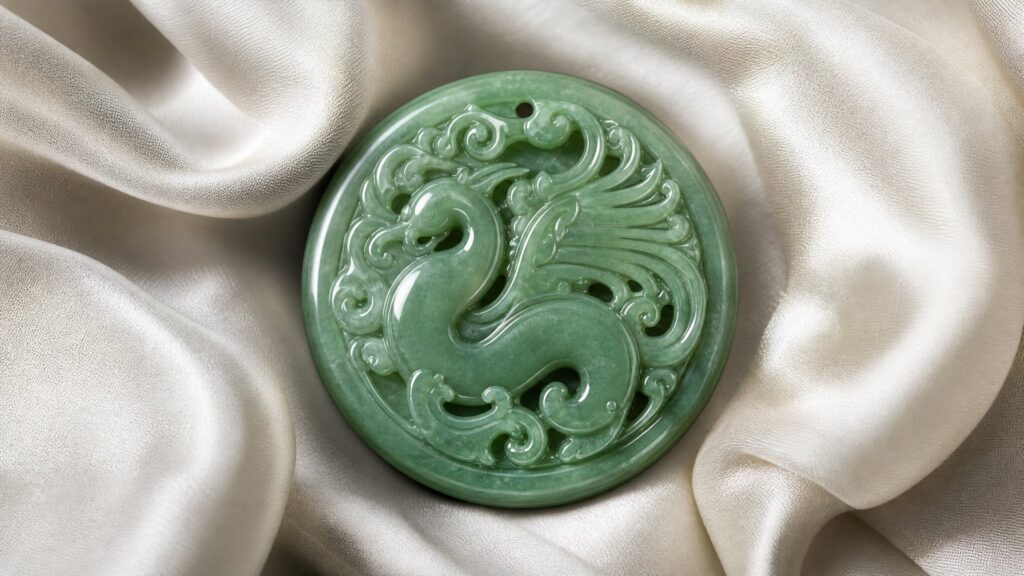
Jade is worn in many forms, each with its own traditional meaning. Pendants are perhaps the most iconic; they are often carved with auspicious symbols like the Buddha, dragons, or peaches. Bracelets, especially bangles, are classic gifts for milestones and are thought to bring good luck. Rings and earrings are also popular. If you are exploring jadeite jewelry, you can browse VirtuCasa’s jadeite collection to see the variety of forms available. For those interested in antiques, the antiques section offers pieces with historical character.
Gifting and Symbolism
In Chinese culture, jade is a meaningful gift. It is often given to mark important life events such as births, weddings, and graduations. The act of giving jade conveys wishes for health, prosperity, and protection. When choosing a gift, consider the recipient’s personal style and the symbolic meaning of the carving. For example, a pendant with a gourd symbolizes good fortune and longevity, while a bamboo motif represents resilience and integrity.
How to Choose and Care for Jade Jewelry
When selecting jade, look for pieces that speak to you personally, but also pay attention to quality. Natural, untreated jade (Type A) is generally preferred for both daily wear and investment. To learn more about why Type A jade holds its value, read this article on jadeite investment. In terms of care, jade is relatively durable but should be protected from harsh chemicals and extreme temperature changes. Clean it with a soft cloth and mild soap, and store it separately to avoid scratches.
Modern Perspectives
Today, wearing jade is not limited to those with Chinese heritage. People around the world are drawn to its beauty and the positive qualities it represents. Whether you wear jade for its aesthetic appeal, its cultural significance, or its perceived protective properties, the stone carries a rich legacy that adds depth to any piece of jewelry.
Practical Tips
Here are some actionable tips to help you wear and care for jade with confidence:
- Choose natural jade: Opt for Type A (untreated) jade whenever possible, as it is the most authentic and culturally valued form. Learn how to identify it with this collector’s checklist.
- Consider the symbolism: Select carvings and shapes that resonate with your intentions—protection, luck, health, or personal growth.
- Wear it regularly: In many traditions, jade is believed to absorb the wearer’s energy over time, so wearing it often is encouraged.
- Clean gently: Use a soft cloth and mild soap; avoid ultrasonic cleaners and harsh chemicals.
- Store carefully: Keep jade pieces in a soft pouch or separate compartment to prevent scratches and chips.
- Respect cultural context: If you are new to jade, take time to learn about its history and significance, and wear it with appreciation.
Common Mistakes to Avoid
Even well-intentioned buyers can stumble. Here are some pitfalls to watch for:
- Confusing treated jade with natural jade: Treatments like bleaching and dyeing can affect both value and cultural authenticity. Always ask about the grade.
- Ignoring fit and comfort: A bracelet or ring that is too tight or too loose can be uncomfortable and may even damage the stone. For bracelets, check this guide to bead size and wrist fit.
- Overpaying for low-quality pieces: Educate yourself on quality indicators such as color, translucency, and texture before making a purchase.
- Neglecting care: Jade can be damaged by knocks and chemicals; treat it with the same care you would give any fine jewelry.
- Assuming all jade is the same: Nephrite and jadeite have different properties and cultural histories; know what you are buying.
Conclusion / Key Takeaways
Wearing jade in Chinese culture is far more than a fashion statement. It is a practice steeped in symbolism, from virtue and harmony to protection and good fortune. By understanding the cultural background, choosing natural and well-crafted pieces, and caring for your jade properly, you can connect with a tradition that has endured for thousands of years. Whether you are drawn to jade for its beauty, its spiritual meaning, or its investment potential, it is a stone that rewards thoughtful selection and appreciation.
As you explore jade jewelry, remember that the most meaningful pieces are those that resonate with you personally. Take the time to learn about the different types of jade, the significance of various carvings, and the customs surrounding its wear. With this knowledge, you can wear jade with confidence and respect for its rich heritage. For further reading, the resources linked throughout this article offer authoritative insights into jade’s cultural and practical aspects.
FAQ
What does wearing jade symbolize in Chinese culture?
Jade symbolizes virtue, harmony, protection, and good fortune. It is often associated with moral integrity and is worn as a talisman for health and safety.
Is it good luck to wear jade?
Many people believe jade brings good luck and wards off negative energy. This belief is common in Chinese culture and other traditions, though it is not scientifically proven.
How can I tell if jade is natural (Type A)?
Natural Type A jade is untreated and retains its natural color and texture. Look for certification from a reputable lab and avoid pieces with suspiciously uniform color or unusual transparency. For detailed guidance, see our article on jade A, B, C grades.
Can I wear jade every day?
Yes, jade is durable enough for daily wear, but it should be protected from harsh chemicals and knocks. Clean it gently and store it separately to maintain its beauty.