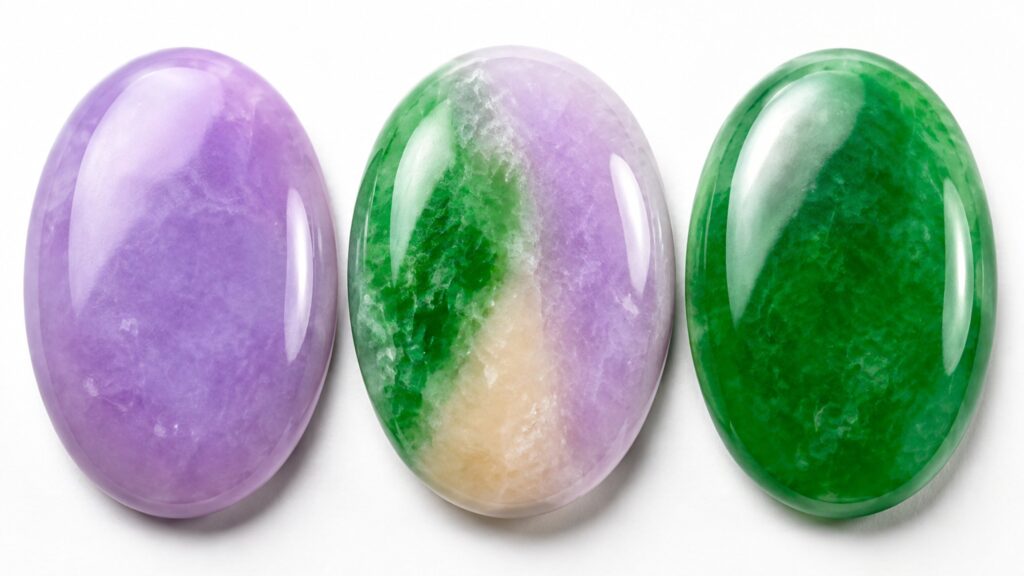
Jadeite, the rarer and more valuable form of jade, captivates collectors and jewelry lovers with its remarkable range of colors. Unlike nephrite, jadeite appears in vivid greens, soft lavenders, and even three-color combinations that occur naturally in a single stone. Understanding jadeite color types is essential for anyone looking to buy with confidence, because color is the single most influential factor in a stone’s beauty and value. This guide covers the primary color families—green, lavender, and tricolor—and explains how quality, size, and craftsmanship affect your purchase.
Understanding Quality in Colored Jadeite
Color alone does not determine worth; it must be combined with transparency, texture, and evenness. According to GIA’s jade quality factors, the three most important attributes, in order, are color, transparency, and texture. Vivid, evenly distributed hues command higher prices, while stones with a translucent, icy structure (often called “ice-type”) are prized for their ethereal glow.
Color Intensity and Evenness
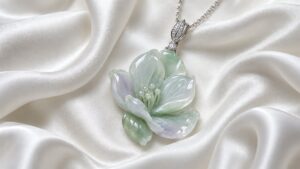
A saturated, uniform color is ideal. For green jadeite, a rich emerald or imperial green is most sought after. Lavender tones range from pale lilac to deeper violet. Tricolor jadeite must show clear, harmonious transitions between hues. The natural jadeite products from VirtuCasa illustrate these differences: a Natural Full-Green Jadeite Saddle Ring ($2437) displays an even full-green coloration with a warm vitreous luster, while a Natural Ice-type Violet Jade Bead Necklace ($6649) features a soft lavender hue with a translucent, glossy appearance.
Transparency and Texture
Transparency ranges from opaque (mutton-fat) to semi-translucent (ice-type). The finer the texture, the higher the luster. Ice-type jadeite, such as the Natural Ice-type Jadeite Bracelet with Floating Green Patterns ($1517), has a cool, glassy sheen that lets light pass through, creating a floating effect. Texture is described as fine and delicate in these pieces, reinforcing their quality.
Types & Styles of Colored Jadeite
Jadeite jewelry comes in many styles—bracelets, rings, earrings, necklaces—and each color type offers a distinct aesthetic.
Green Jadeite
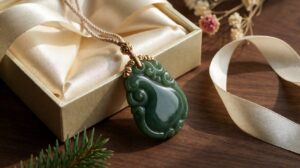
Green is the classic and most valued color. It can appear as an even full-green or as “floating green” patterns on a lighter base. The Natural Jadeite Tassel Earrings ($852) use deep green beads with a refined glassy luster, while the Natural Jadeite Saddle Ring with Floating Green ($719) shows elegant green patches on a light base with moderate transparency.
Lavender Jadeite
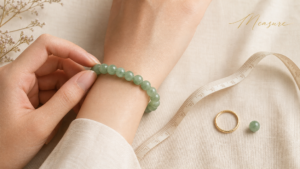
Lavender jadeite ranges from pale white-lavender to vivid violet. It is rarer than green and highly prized for its delicate, feminine appeal. The Natural Jadeite Bracelet ($1008) presents a soft lavender-white hue with a gentle vitreous luster, composed of 19 beads each 10mm in diameter. For a more intense violet, the ice-type cabochon ring set in 18K white gold with sapphires and diamonds (Natural Ice-type Violet Jadeite Cabochon Ring Set, $1926) offers excellent transparency and a gem-like glow.
Tricolor Jadeite
Tricolor jadeite combines two or three distinct hues in one stone—commonly green, yellow, and white. This rare variety is celebrated for its natural artistry. VirtuCasa’s Natural Three-Color Jadeite Bracelet ($668) features yellow, white, and light green beads with a warm, gentle luster. The ice-type versions, such as the Natural Ice-type Tricolor Jade Necklace ($825) and the Natural Ice-type Tricolor Jade Necklace ($740), showcase delicate bead strands with harmonious color transitions.
How to Choose the Right Size & Fit
Size and fit depend on the jewelry type. For bracelets, measure your wrist circumference and compare it to the product’s total circumference or bead diameter. The Natural Jadeite Bracelet ($1008) has a total circumference of about 18cm, suitable for wrists 16-19cm. The Three-Color Bracelet ($668) uses an elastic cord for adjustability. For rings, refer to the ring size provided—like size 24 or 26—and ensure it matches your finger. Necklaces come in various bead diameters: 3.5mm, 5.3mm, or 10-12mm, affecting the visual weight and comfort. Lightweight pieces like the tassel earrings (8g total) are ideal for daily wear, while substantial bead necklaces (158g) make a bold statement.
Price & Value: What Drives Cost
Jadeite pricing is determined by color, transparency, texture, and craftsmanship. Among VirtuCasa’s offerings, prices range from entry-level tricolor bracelets to premium lavender necklaces. The most affordable product is the Natural Three-Color Jadeite Bracelet at $668, offering unique multicolor appeal. Mid-range options include the lavender-white bracelet ($1008) and tricolor necklaces ($740 and $825). Premium pieces such as the full-green saddle ring ($2437) and the ice-type violet bead necklace ($6649) command higher prices due to their rare colors, excellent transparency, and larger sizes. The cabochon ring set ($1926) combines high-quality violet jadeite with precious metal settings and accent gems, adding value through fine craftsmanship.
Common Mistakes to Avoid
- Ignoring treatment disclosure: Always verify that jadeite is natural and untreated (Type A). All VirtuCasa products are described as natural jadeite.
- Focusing only on color: Transparency and texture are equally important. A vivid stone that is opaque may be less valuable than a paler translucent one.
- Overlooking size and fit: Buying rings or bracelets without checking measurements can lead to uncomfortable pieces.
- Assuming all greens are equal: Even green jadeite varies from full-green to floating green patterns. Understand the difference before purchasing.
Top Picks for Every Collector
Based on personal style and budget, here are five recommended products:
- For lovers of classic green: Natural Full-Green Jadeite Saddle Ring ($2437) — a timeless piece with even color and a single-piece carving.
- For lavender enthusiasts on a budget: Natural Jadeite Bracelet ($1008) — soft lavender-white beads with delicate luster and a comfortable fit.
- For rare tricolor fans: Natural Ice-type Tricolor Jade Necklace ($825) — icy transparent beads with yellow, green, and white, perfect for daily wear.
- For a statement piece: Natural Ice-type Jadeite Bracelet with Floating Green Patterns ($1517) — large 16mm beads with a glassy sheen and floating green highlights.
- For a luxurious gift: Natural Ice-type Violet Jadeite Cabochon Ring Set ($1926) — set in 18K white gold with sapphires and diamonds, showcasing vivid violet jadeite.
Final Tips
When shopping for jadeite, always ask for confirmation of natural origin and any treatments. Use the jadeite category on VirtuCasa to explore all available colors and styles. For further reading, this beginner’s buying guide offers helpful context on grading, and VirtuCasa’s own guide on common buying mistakes can save you from pitfalls. Trust your eye—choose the color that speaks to you, and verify quality through transparency and texture.
FAQ
What are the main color types of jadeite?
The main color types are green (including full-green and floating green), lavender (from pale white-lavender to vivid violet), and tricolor (combining two or three hues such as green, yellow, and white). Each type has unique value factors based on intensity, evenness, and transparency.
Is tricolor jadeite more valuable than single-color jadeite?
Tricolor jadeite is rarer and highly prized for its natural artistry, but value depends on the quality of each hue, transparency, and texture. A well-proportioned tricolor piece with vibrant, distinct colors can command a premium, but a top-quality full-green or lavender piece may be more valuable.
How can I tell if a jadeite bracelet will fit my wrist?
Check the product’s total circumference or bead diameter. For example, a bracelet with a circumference of about 18cm fits wrists 16-19cm. Some bracelets use elastic cords for adjustability. Always measure your wrist before purchasing.
What does ‘ice-type’ mean in jadeite?
Ice-type jadeite refers to stones with high translucency and a cool, glassy luster, similar to frozen water. It typically has a fine, delicate texture and allows light to pass through, enhancing the visual depth of colors like floating green or lavender.