Introduction: Why Jade Still Matters
Few materials carry as much cultural weight as jade. In China, jade is not simply a pretty stone or a luxury accessory; it is a symbol of character, a link to the ancestors, and a language of blessings that has been spoken for thousands of years. If you have ever wondered why a jade bangle is passed down through generations, or why a small carved pendant is given to a newborn, understanding jade in Chinese culture unlocks the meaning behind those gestures.
This article offers a short, reader-friendly history. You will learn what jade meant to early Chinese societies, how its symbolism evolved through dynasties, why certain colors and carvings carry specific messages, and how to appreciate jade today without falling for common misconceptions. Whether you are a collector, a gift-giver, or simply curious about Chinese art, this overview will help you read jade with more confidence and respect.
Jade’s story is also a practical one. Because jade has been valued for so long, it has accumulated a rich vocabulary of shapes, colors, and carving motifs. Knowing that vocabulary turns a beautiful object into a meaningful one — and helps you make wiser choices when buying or inheriting jade.
Background and Key Concepts
Before tracing the history, it helps to clarify a few fundamentals. The word “jade” in English actually covers two distinct minerals, and Chinese culture has its own long-standing categories and values. Getting these basics straight will make everything that follows easier to follow.
Two Minerals, One Name
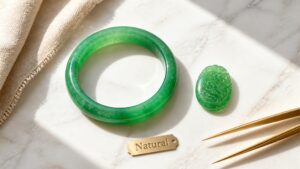
What the world calls jade is usually one of two minerals: nephrite and jadeite. Nephrite is the older of the two in Chinese history, softer in luster and found in a range of greenish and creamy tones. Jadeite, which became prominent later, is harder and can display vivid greens, lavender, and other colors. Both are treasured, but they have different histories and market characteristics. On VirtuCasa you can explore natural jadeite jewelry and carvings to see how the harder stone is used today.
Jade as a Symbol of Virtue
The most enduring idea in Chinese jade culture is that the stone embodies virtue. Ancient texts describe jade as calm, restrained, and enduring — qualities a cultivated person should aspire to. This is why jade was associated with gentlemen and scholars, and why wearing it was seen as a quiet statement of character rather than mere display. As one guide to Chinese jade carving symbolism explains, jade has long been linked with refinement, warmth, and cultivated character.
Ritual, Protection, and Status
Beyond virtue, jade served ritual and protective roles. It was used in ceremonies, placed in tombs, and carved into amulets. Over time, specific figures such as the Pixiu became associated with protection and attracting good fortune. Reputable cultural overviews note that jade is worn for protection, balance, and longevity, not just ornament. You can read more about these beliefs in this comprehensive jade guide covering meaning, types, and symbolism.
The Main Body: A Short History of Jade in China
Jade’s role in China did not appear overnight. It developed across thousands of years, shaped by burial customs, court rituals, trade, and eventually global commerce. The following sections trace the broad arc.
Early China: Jade in Ritual and Burial
Archaeological finds show that jade was worked in China in prehistoric times, well before written history. Early cultures carved jade into discs, tubes, and axes that were likely ceremonial rather than practical. In later Bronze Age and early imperial tombs, jade objects were placed with the dead, reflecting beliefs about preserving the body and the spirit. These burial jades are among the most studied artifacts in Chinese archaeology because they reveal how early societies thought about life, death, and cosmic order.
The Classic Age: Jade and the Confucian Ideal
During the classical period, jade became closely tied to Confucian ideals. The stone’s smooth surface, cool touch, and resistance to decay were read as metaphors for the perfected person. Ritual texts described jade as appropriate for ceremonies and for marking rank. This is the era when jade’s association with moral character became firmly established, an idea that still shapes how jade is described and valued today.
Imperial China: Court Workshops and Carving Arts
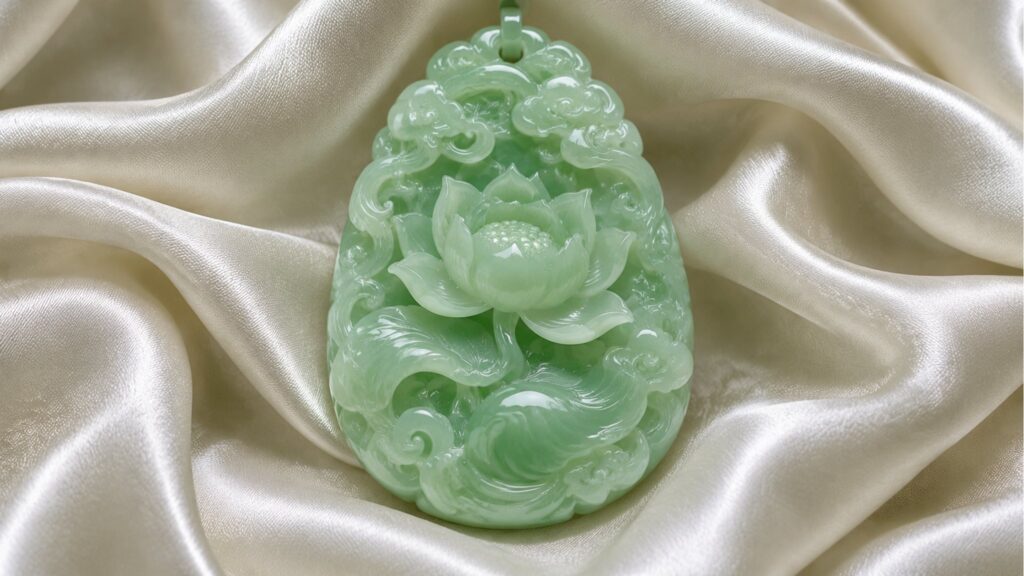
As dynasties rose and fell, jade carving became a sophisticated court art. Workshops produced vessels, ornaments, seals, and figures with increasingly elaborate designs. Carvers developed motifs that carried specific blessings — bats for fortune, peaches for longevity, dragons for power, and lotus for purity. Many of these conventions survived into the modern era. A helpful editorial look at jade’s enduring meaning notes that ancient texts describe jade as reflecting moral character — calm, restrained, and enduring — and that wearers still turn to it for protection and significance.
Jadeite’s Arrival and the Modern Market
Jadeite entered Chinese appreciation later than nephrite, but it quickly became prized for its hardness and vivid color. By the late imperial period and into the modern era, jadeite jewelry — bangles, pendants, rings — became a mainstream way to wear jade. Today, jadeite is graded and discussed with a specialized vocabulary. Buyers often encounter labels such as Type A, B, and C, which describe whether the stone has been treated. Understanding these labels is essential; this explanation of what jade A, B, and C grades really mean is a good starting point.
Color and Motif: The Language of Jade
In Chinese culture, jade’s color and carving are not arbitrary. Green suggests vitality and growth; lavender is associated with nobility and romance; white can signify purity; and darker tones may convey depth and protection. Motifs matter too: a gourd for blessings, a fish for abundance, a bamboo for integrity. VirtuCasa has a focused article on jade color symbolism in Chinese culture if you want to go deeper into what each hue is understood to represent.
From Amulet to Heirloom
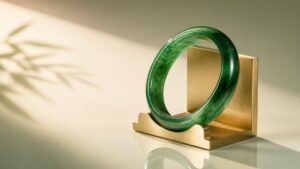
One of the most distinctive features of jade in Chinese culture is its role as an heirloom. A jade bangle worn by a grandmother may be passed to a daughter, carrying memory and affection as much as monetary value. This continuity is why jade is often given at weddings, births, and milestones. It is also why wearers speak of jade “connecting” to a person over time. For a closer look at these beliefs, see what wearing jade means in Chinese culture.
Practical Tips for Appreciating and Choosing Jade
Whether you are buying your first piece or evaluating an inherited one, a few practical habits will help you engage with jade thoughtfully.
- Learn the mineral first. Ask whether a piece is nephrite or jadeite, since the two differ in hardness, color range, and market expectations.
- Understand treatment labels. Type A generally refers to natural, untreated jadeite; B and C indicate treatments. Always ask for clear disclosure before buying.
- Look at color in neutral light. Jade can look different under shop lighting; view it in daylight if possible.
- Consider the motif’s meaning. Choose a carving whose symbolism resonates with the occasion — longevity, protection, abundance, or love.
- Think about fit and wear. Bangles and beads should feel comfortable for daily wear. This guide to jadeite bracelet bead size versus wrist fit can help you choose sensibly.
- Buy from sellers who explain provenance and treatment. Transparency is a better signal than dramatic claims.
Common Mistakes to Avoid
Jade’s long history has also produced plenty of myths. Avoiding these common pitfalls will keep your appreciation grounded.
- Assuming all green stones are jade. Many materials imitate jade; color alone is not proof of identity.
- Ignoring treatment disclosure. Untreated and treated jadeite are not equivalent, and reputable sellers will say which is which.
- Treating symbolism as superstition. Motifs and colors are cultural language, not guarantees of luck; appreciate them as heritage.
- Overpaying for vague claims. Be cautious with promises of “investment grade” without documentation or clear grading.
- Neglecting care. Jade is durable but not indestructible; avoid harsh chemicals and hard knocks, especially with bangles.
- Buying only by photo. Lighting and screens distort color; ask for additional images or video when possible.
Conclusion: Key Takeaways
Jade’s importance in Chinese culture rests on a simple but powerful idea: the stone stands for character. From prehistoric ritual objects to Confucian ideals, from imperial carving workshops to modern jadeite jewelry, jade has remained a material through which people express virtue, hope, and connection to family. Its colors and motifs form a symbolic language that is still readable today.
For modern buyers, that heritage is both a pleasure and a responsibility. Learn the difference between nephrite and jadeite, ask about treatments, and choose pieces whose meaning you understand. If you are ready to explore, browse jadeite pendants or the broader Chinese antiques collection to see how these traditions live on in objects you can wear and keep. Jade rewards patience and curiosity — and a little history makes every piece more meaningful.
FAQ
What is the difference between nephrite and jadeite?
Nephrite and jadeite are two different minerals both called jade. Nephrite has a longer history in China and a softer luster, while jadeite is harder and can show vivid greens and other colors. They differ in hardness, color range, and market expectations.
Why is jade associated with virtue in Chinese culture?
Ancient Chinese texts describe jade as calm, restrained, and enduring, qualities associated with a cultivated person. This link between the stone’s appearance and moral character became central to how jade is understood and valued.
What do jade color and carving motifs mean?
Colors and motifs carry symbolic meanings. Green often suggests vitality, lavender nobility, and white purity, while carvings such as bats, peaches, and dragons represent blessings like fortune, longevity, and power. These are cultural conventions rather than guarantees.
What should I check before buying jadeite jewelry?
Ask whether the piece is nephrite or jadeite, confirm whether it is untreated (Type A) or treated, view it in neutral light, and buy from sellers who clearly disclose treatment and provenance. Consider fit and comfort for bangles and beads.